

Arizona’s housing stock is aging. A large portion of the Greater Phoenix Valley’s residential neighborhoods were built during the 1960s, 1970s, and 1980s, when electrical codes and materials were very different from today’s standards. What was safe and code-compliant for a household of that era may be inadequate, deteriorated, or genuinely hazardous now.
Electrical fires are one of the leading causes of residential fire deaths in the United States, and a significant percentage of those fires are traced to outdated or faulty wiring. Knowing the warning signs that your Arizona home may need electrical rewiring is one of the most important things you can do to protect your family and your property.
At Penguin Air, Plumbing & Electrical, our licensed electricians conduct home rewiring assessments across the Phoenix Valley. Here is what we look for and what you should watch for at home.
Your Home Was Built Before 1980
Age is the single most reliable predictor of wiring problems. Homes built before 1980 in the Phoenix area are far more likely to have aluminum branch circuit wiring, which was commonly used during a period when copper prices spiked. Aluminum wiring is prone to oxidation at connection points, which creates resistance, generates heat, and significantly increases fire risk.
If your Greater Phoenix home was built in the 1960s or 1970s, a licensed electrician should inspect the wiring to determine whether it is aluminum, assess the condition of all connections and junction boxes, and recommend appropriate remediation. Options range from installing special connectors at every connection point to full rewiring with modern copper conductors.
Flickering or Dimming Lights
Occasional light flicker when a large appliance starts is relatively normal. What is not normal is consistent, unpredictable flickering throughout your home or lights that dim without any obvious cause. This type of behavior often indicates loose wiring connections, undersized circuits, or wiring that has deteriorated to the point where the resistance in the circuit is causing voltage fluctuations.
In Arizona, thermal cycling from our extreme temperature swings, from near-freezing winter nights to 115-degree summer days, can stress wire insulation and loosen connections at outlets, switches, and junction boxes over time. If your lights flicker consistently and the problem persists after ruling out a failing light fixture, a wiring inspection is the next step.
Burning Smell or Discoloration Around Outlets and Switches
A burning smell near an outlet, switch, or electrical panel is a serious warning sign. So is any brown or black discoloration around outlet covers or switch plates. These signs indicate that wiring or connections in that location have been overheating, potentially from arcing, loose connections, or insulation that has deteriorated to the point of burning.
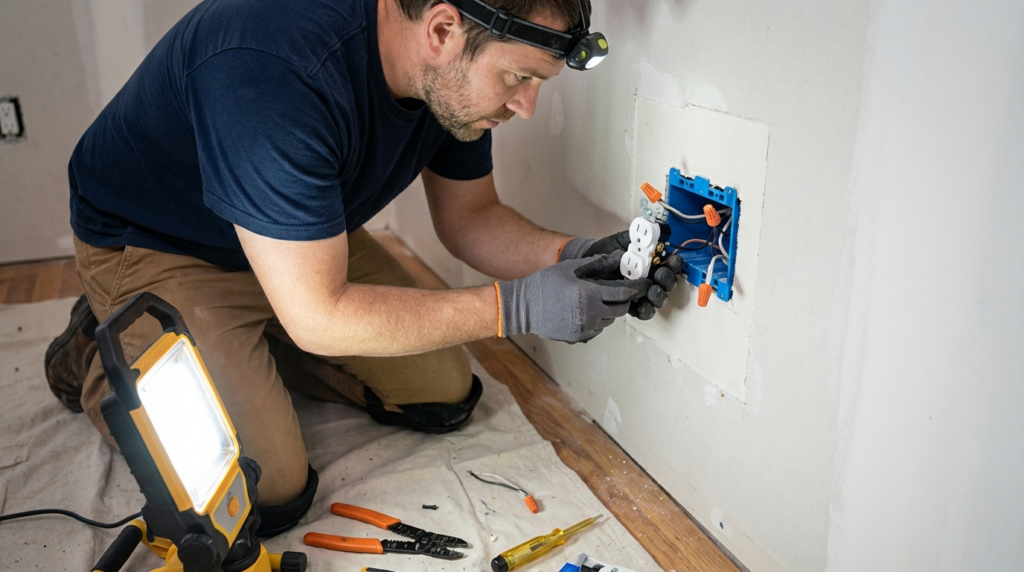
If you notice either of these symptoms in your Phoenix-area home, do not ignore them. Turn off the affected circuit at your breaker panel and call a licensed electrician promptly. Ongoing arcing behind a wall is a fire hazard that does not resolve on its own.
Frequently Tripping Breakers or Blown Fuses
One tripped breaker now and then is normal. Breakers that trip repeatedly on the same circuit, even when you have not added any new appliances or significantly changed how you use the circuit, suggest a wiring problem. The circuit may be undersized for the load it is carrying, or degraded wiring may be causing intermittent shorts that trigger the safety devices.
In older Arizona homes, some circuits were originally sized for far less current than modern appliances draw. A kitchen circuit designed for a few small appliances in 1972 is not equipped to reliably serve a modern Phoenix kitchen with a dishwasher, microwave, refrigerator, and espresso machine on the same circuit. Rewiring and adding circuits are the proper solution.
Outlets That Feel Warm, Spark, or Have No Ground
Outlets should never feel warm to the touch during normal use. If an outlet feels warm, this indicates heat buildup from resistance in the wiring or connections behind it. Outlets that produce sparks when you plug in a device, particularly if those sparks are large or persistent, are another sign of wiring trouble.
Two-prong outlets without a ground are common in pre-1970 Arizona homes. While not inherently dangerous in every application, ungrounded outlets cannot provide the safety protection that modern three-prong receptacles offer. This is particularly relevant for electronics, appliances, and any location where GFCI protection is now required by code, such as bathrooms, kitchens, garages, and outdoor areas.
Visible Wiring Damage or Very Old-Looking Wiring
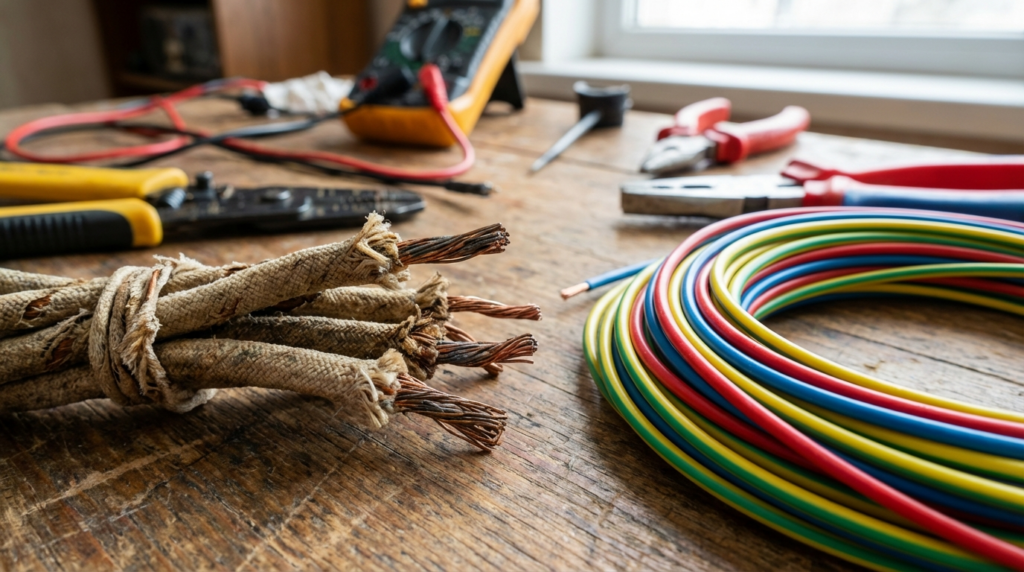
If you have ever looked in your attic, basement, or crawl space and seen wiring with cracked, brittle, or cloth-wrapped insulation, that is a sign that the wiring dates back several decades and has likely degraded significantly. Wiring insulation from the 1940s through the 1960s was often made from rubber or fabric-wrapped materials that break down much faster than modern PVC insulation.
Knob-and-tube wiring, recognizable by its ceramic knobs and tubes used to route wires through framing, was common in homes built before the 1940s. While some knob-and-tube wiring can remain serviceable if untouched, it should never be covered with insulation, spliced into with modern wiring, or used to support today’s electrical loads without a professional assessment.
You Are Adding Major Appliances or Renovating
Major renovations and appliance additions are often the moment when homeowners discover their existing wiring is no longer adequate. Adding an electric vehicle charger, installing a hot tub or pool, converting to electric appliances, or adding a home office or workshop with heavy equipment all require dedicated circuits with appropriate wiring capacity.
Before starting any major renovation project in your Greater Phoenix home, consult with a licensed electrician to assess whether the existing wiring and panel can support the new load, or whether targeted rewiring and panel upgrades are needed as part of the project. [See also: Do I Need an Electrical Panel Upgrade in My Greater Phoenix Home? — penguinair.com/blog/electrical-panel-upgrade/]
If any of these signs are present in your Arizona home, contact Penguin Air, Plumbing & Electrical for a professional rewiring assessment. We serve Phoenix, Mesa, Scottsdale, Chandler, Gilbert, Tempe, and the surrounding Phoenix Valley.
Frequently Asked Questions
How long does electrical rewiring take in a Phoenix home?
A full rewiring of a typical Phoenix-area home, usually 1,500 to 2,500 square feet, typically takes three to five days depending on the size, age, and construction type of the home. Partial rewiring projects targeting specific circuits or rooms can often be completed in one to two days. Penguin Air’s electricians will provide a detailed scope and timeline estimate during the initial assessment.
Is electrical rewiring required to sell a home in Arizona?
Arizona does not mandate rewiring before a home sale, but home inspectors routinely flag aluminum wiring, knob-and-tube wiring, and outdated electrical systems. These findings can affect a buyer’s financing, insurance rates, or willingness to proceed. Addressing wiring issues before listing can streamline the sale and prevent price reductions during escrow.
What is aluminum wiring and why is it a concern in older Phoenix homes?
Aluminum branch circuit wiring was used extensively in U.S. homes built between roughly 1965 and 1973 as a cost alternative to copper. Aluminum expands and contracts more than copper with temperature changes and oxidizes at connection points, creating heat-generating resistance. This makes aluminum wiring connections more prone to loosening and overheating over time. Homes with aluminum wiring should have all connections inspected and upgraded by a licensed electrician.
How much does home rewiring cost in Phoenix, AZ?
Home rewiring costs in the Phoenix area vary based on home size, wiring condition, and the scope of work. Pricing depends on factors such as the age of your existing wiring, the scope of the project, and local permit requirements. Penguin Air provides upfront estimates so you know exactly what to expect before any work begins.
Can I get homeowner’s insurance with aluminum wiring in Arizona?
Some insurance carriers in Arizona will insure homes with aluminum wiring, but many require inspections, higher premiums, or specific mitigation measures before issuing or renewing policies. Having a licensed electrician document the condition of aluminum wiring and install approved connectors throughout the home can help satisfy insurance requirements.
About Penguin Air, Plumbing & Electrical
Penguin Air, Plumbing & Electrical has been serving Greater Phoenix homeowners with trusted HVAC, plumbing, and electrical services since 2011. Founded by Wade Rusk and William Hallett, Penguin is locally owned and operated, available 24 hours a day, seven days a week. Our licensed, background-checked technicians serve Phoenix, Mesa, Scottsdale, Chandler, Gilbert, Tempe, Glendale, and communities throughout the Phoenix Valley.
Call Penguin Air at (480) 525-5400 to schedule a rewiring assessment today.