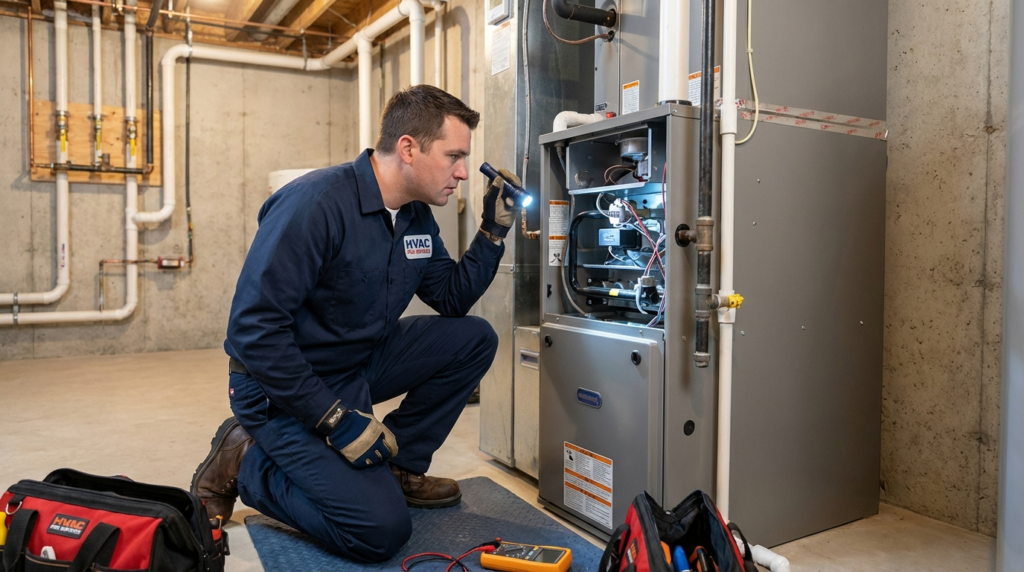
Phoenix winters may be mild by most standards, but once December and January roll in and overnight temperatures drop into the 30s or 40s, a furnace that is blowing cold air is a real problem. The issue catches many Phoenix Metro homeowners off guard because their heating systems go unused for eight or nine months of the year, making problems easy to miss until you actually need the heat.
The good news is that a furnace not blowing hot air is one of the more common HVAC complaints in the Phoenix area, and many of the causes are simple to identify. At Penguin Air, Plumbing & Electrical, our heating technicians diagnose and repair these issues every season. Here is what to check first and when to call a professional.
Check the Thermostat Settings First
Before assuming anything is wrong with the furnace itself, take a close look at your thermostat. This is the first thing our technicians ask about on every heating service call in the Phoenix Metro area.
Make sure the thermostat is set to Heat mode, not Cool or Auto. Confirm the fan setting is on Auto rather than On. When the fan is set to On, it runs continuously, including between heating cycles when the heat exchanger is not active. You will feel room-temperature air coming from the vents even though the furnace is technically working fine.
Also check the temperature setting. If the set temperature is below the current room temperature, the furnace has no reason to run. Raise the setting a few degrees and wait a few minutes to see if the system responds.
Replace or Clean the Air Filter
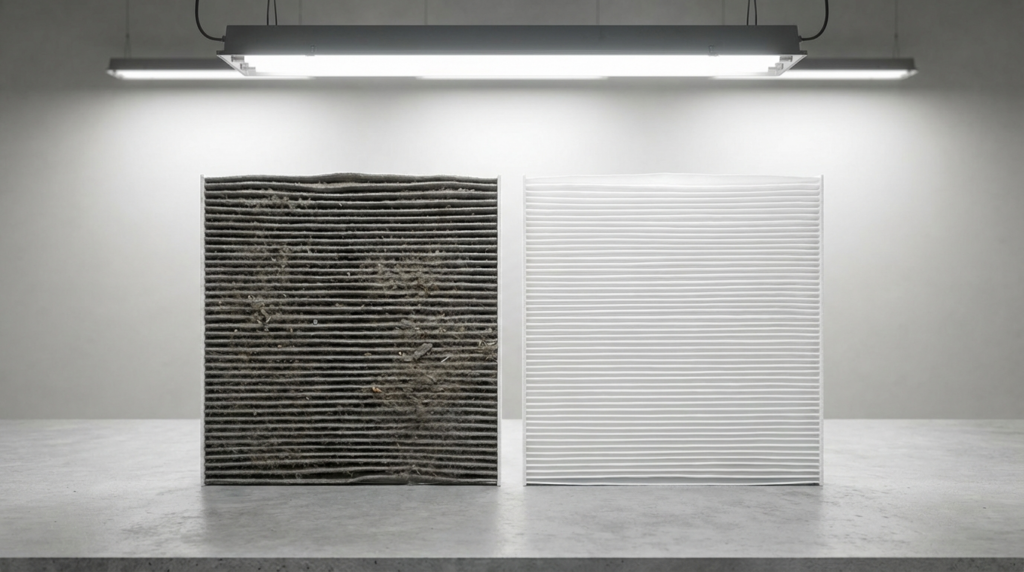
A clogged air filter is one of the most frequent causes of heating problems in Phoenix homes. Because many Valley homeowners rarely use their heating systems, they also rarely think to change the furnace filter. A dirty, clogged filter restricts airflow over the heat exchanger, which can cause the furnace to overheat and shut down as a safety measure.
If your furnace is blowing air but it is not warm, check the filter first. Filters in Phoenix homes should be replaced every one to three months during active use seasons. If the filter is visibly grey or clogged with dust, replace it immediately and see if heating resumes after a cycle or two.
Check the Pilot Light or Ignition System
Gas furnaces need a working ignition system to light the burner that heats the air. Older Phoenix-area furnaces have a standing pilot light that must remain lit to operate. If this pilot goes out, no heat is produced. Newer furnaces use an electronic igniter or hot surface igniter instead of a standing pilot light.

For older furnaces with a standing pilot: check whether the pilot flame is lit. If it has gone out, follow the manufacturer’s relighting instructions on the furnace door panel. If the pilot will not stay lit after relighting, the thermocouple, a safety device that senses whether the pilot is burning, may be worn out and need replacement.
For newer furnaces: a failed electronic igniter is a common cause of no-heat calls in the Phoenix Valley. You may hear the furnace attempt to ignite, click several times, and then shut down. This typically requires a technician to replace the igniter component.
Inspect the Gas Supply
If your furnace powers on but fails to produce heat, the issue may be with the gas supply to the furnace. Check that the gas shutoff valve on the supply line to the furnace is in the open position. Also verify that other gas appliances in your home, such as your water heater or stove, are working normally. If multiple gas appliances are not functioning, the issue may be with your main gas supply or with Southwest Gas service, and you should contact your utility provider.
If only the furnace is affected and the gas supply valve is open, the issue may be with the gas valve inside the furnace itself. This component requires professional diagnosis and replacement.
Look for Error Codes on Your Furnace
Most modern furnaces have a diagnostic LED system that flashes error codes to communicate what is wrong. On many Phoenix-area units, there is a small inspection window on the furnace cabinet where you can see the blinking LED light. The furnace door panel usually includes a legend that explains what each flash pattern means.
Common error codes point to problems like flame rollout, pressure switch failures, limit switch trips, and ignition lockouts. If your furnace is displaying an error code, note the pattern and share it with a heating technician. This can significantly speed up the diagnosis process.
Check the Condensate Drain Line (High-Efficiency Furnaces)
If you have a high-efficiency gas furnace, it produces condensation as a byproduct of the combustion process and routes this water through a condensate drain line. In Phoenix, where dust and debris are a constant factor, these drain lines can become clogged. When the condensate drain backs up, a float switch shuts the furnace off to prevent overflow damage.
If your high-efficiency furnace has stopped working, check the condensate drain line for obstructions. A simple flush with water or a wet-dry vacuum can often clear a minor clog. If the line is severely blocked or the issue recurs, a heating technician can inspect and service the drain system properly.
When to Call a Heating Technician
Some furnace problems are safe to troubleshoot yourself. Others require professional service to diagnose and repair safely. Call a licensed heating technician if your furnace produces a strange smell, especially a burning or sulfur odor. Call immediately if your carbon monoxide detectors activate.
Also call a professional if the furnace repeatedly shuts off after a few minutes, if the blower runs but no warm air reaches your vents, if you hear unusual sounds like banging or rattling, or if none of the basic troubleshooting steps above restore heat. Attempting to repair heat exchangers, gas valves, or combustion components without proper training and tools is dangerous.
Penguin Air, Plumbing & Electrical provides furnace repair and heating services throughout the Phoenix Metro area. Our technicians are available 24 hours a day, seven days a week, including holidays. Call us at (480) 525-5400 to schedule a heating service call.
[See also: Why Does My Power Keep Going Out? — penguinair.com/blog/why-does-my-power-keep-going-out/ | Do I Need an Electrical Panel Upgrade? — penguinair.com/blog/electrical-panel-upgrade/]
Frequently Asked Questions
Why does my furnace blow cold air for the first few minutes?
It is normal for a furnace to blow slightly cool air for the first minute or two after startup as the heat exchanger warms up. If cold air continues for more than three to five minutes, the furnace may be short-cycling, the pilot or igniter may not be lighting properly, or a safety limit switch may be cutting the heat cycle short.
How often should I service my furnace in Phoenix, AZ?
Annual furnace maintenance is recommended even in the Phoenix Metro area, where heating seasons are short. A pre-season tune-up before the first cold stretch of the year ensures the igniter, heat exchanger, gas valve, and safety controls are in good condition. Annual servicing also protects your manufacturer warranty on newer equipment.
Can I use my Phoenix furnace as a backup during mild winters?
Yes. Phoenix homeowners often use their furnaces primarily during overnight cold spells from November through February. Because these systems sit dormant for much of the year, it is worth running the furnace briefly in October to confirm it is working before you need it for warmth. This also burns off any dust buildup that accumulated during the off-season.
Is it dangerous to run a furnace with a cracked heat exchanger?
A cracked heat exchanger is a serious safety hazard. It can allow combustion gases, including carbon monoxide, to mix with the air circulating through your home. If a technician diagnoses a cracked heat exchanger, the furnace should be shut down until the heat exchanger is replaced. This is not an issue to delay addressing.
How much does furnace repair cost in the Phoenix area?
Furnace repair costs in Phoenix depend on the specific issue. Minor repairs like igniter replacement are generally less involved, while repairs to gas valves, control boards, or heat exchangers can be more significant. Penguin Air provides upfront pricing before any work begins so you can make an informed decision. Call (480) 525-5400 for a service assessment.
About Penguin Air, Plumbing & Electrical
Penguin Air, Plumbing & Electrical has been serving Greater Phoenix homeowners with trusted HVAC, plumbing, and electrical services since 2011. Founded by Wade Rusk and William Hallett, Penguin is locally owned and operated, available 24 hours a day, seven days a week. Our licensed, background-checked technicians serve Phoenix, Mesa, Scottsdale, Chandler, Gilbert, Tempe, Glendale, and communities throughout the Phoenix Valley.
Call Penguin Air at (480) 525-5400 to schedule heating service today.