
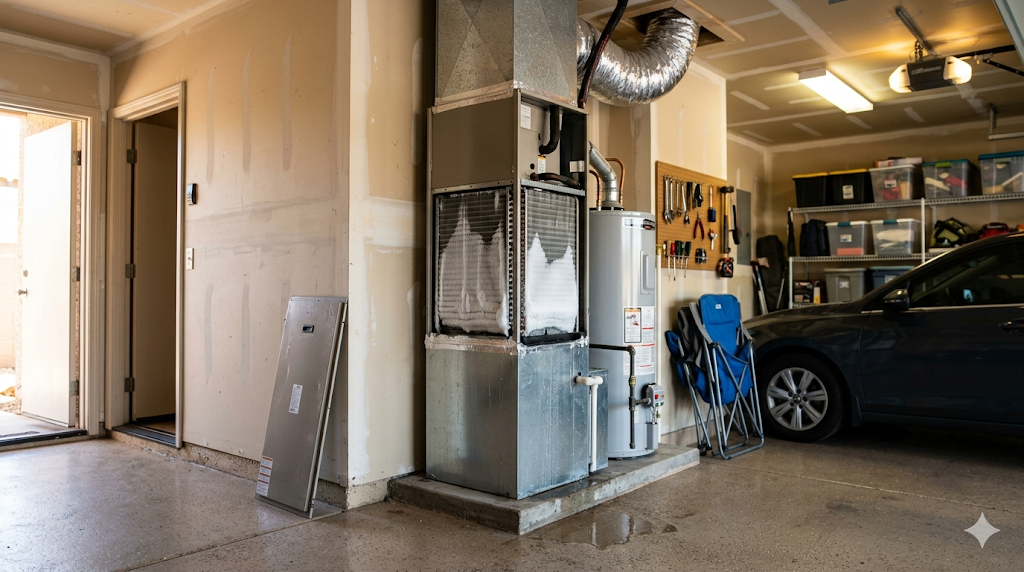
Walking outside in July and finding ice on your air conditioner feels like a plot twist. Temperatures are pushing 110°F, your AC is running hard, and somehow there’s frost coating the refrigerant line or a solid block of ice around the indoor coil. It seems impossible, but an AC freezing up is one of the most common summer service calls Penguin Air handles across the Phoenix metro area.
A frozen AC is not just strange to look at. It signals that something inside your system is out of balance, and running the unit in that state can cause expensive damage to the compressor. The good news is that most of the causes are fixable, and a few are things homeowners can check before calling for service.
This guide walks through why an AC freezes up in Arizona heat, how to spot the warning signs, what to do immediately, and how to prevent it from happening again.
How an AC Actually Freezes in 110° Heat
The refrigerant inside your AC system runs cold. Very cold. When everything is working correctly, refrigerant absorbs heat from the air moving across the indoor evaporator coil, carries that heat outside, and releases it at the outdoor condenser.
The system depends on two things to stay in balance: enough warm air moving across the coil, and the right amount of refrigerant flowing through it. When either side of that equation breaks down, coil temperature drops below freezing. Moisture in the air condenses on the coil, then freezes into ice. Once ice forms, it blocks airflow even more, which drops the temperature further, which builds more ice. The problem snowballs fast.
By the time you see frost on the copper lines outside or a puddle of water inside when the ice melts, your system has already been fighting itself for a while.
Top 7 Reasons Your AC Is Freezing Up in Phoenix

1. Dirty Air Filter
A clogged filter is the single most common cause of a frozen coil. Phoenix homes pull in fine dust from every dust storm, monsoon, and landscaping project in the neighborhood. That dust loads up filters faster than manufacturers usually suggest.
When the filter gets blocked, airflow across the evaporator coil drops. Less warm air hitting the coil means the refrigerant inside can’t absorb enough heat, and the coil temperature plunges. Check your filter first. If it looks grey, matted, or you can’t see light through it, replace it. Our guide to how to change an air conditioning filter walks through the process.
2. Blocked or Closed Supply Vents
Airflow problems don’t always start at the filter. Supply vents closed off in unused rooms, furniture pushed against a register, or collapsed flex duct in the attic all restrict the air volume your system needs to stay balanced. In a Phoenix summer, even a partial restriction can push an AC into a freeze cycle within a few hours.
Walk through the house and make sure every supply vent is open and unobstructed. Closing vents to “save energy” in spare rooms is a common habit that backfires on system performance.
3. Low Refrigerant Charge
Refrigerants don’t get used up the way gas in a car does. If your system is low on charge, there’s a leak somewhere. A refrigerant leak drops pressure inside the coil, which causes the remaining refrigerant to expand too much and run colder than designed. The coil ices over.
Low refrigerant is not a DIY fix. Handling refrigerant requires EPA certification, and simply topping off a leaking system wastes money and damages the environment. A technician needs to locate the leak, repair it, and recharge the system to factory specification. If you’ve already checked the filter and vents and your AC keeps freezing, a refrigerant issue is the likely culprit.
4. Dirty Evaporator Coil
Even with a clean filter, dust and biological buildup accumulate on the evaporator coil over time. Arizona’s combination of fine dust and the occasional humidity surge during monsoon season creates a sticky film that insulates the coil. Heat transfer drops, and the same freezing cycle kicks in.
A dirty coil usually can’t be reached without pulling apart the air handler, so this is a maintenance task, not a weekend project. Annual tune-ups include coil inspection and cleaning.
5. Blower Motor or Fan Issues
The indoor blower moves air across the coil. If the motor is failing, the capacitor is weak, or the fan speed is set incorrectly, airflow drops and the coil freezes. Signs of blower trouble often include unusual humming, grinding, or a burning smell. Our guide to loud noises your AC is making covers how to diagnose those sounds.
6. Running the AC When It’s Too Cool Outside
This one catches Phoenix homeowners off guard in the spring and fall shoulder seasons. Most residential AC systems are designed to operate when outdoor temperatures are above roughly 60°F. Running the AC on a 55° evening because someone in the house wants a cold room can drop pressures inside the coil enough to cause ice. If you’ve had a cold snap and noticed ice afterward, the outdoor temperature was likely the trigger.
7. Clogged Condensate Drain Line
A blocked drain line doesn’t directly cause freezing, but it causes the same end symptom: water where there shouldn’t be any. If you see water pooling around the indoor unit but no visible ice, check whether the drain is backed up. If you do see ice, the drain line may be frozen shut, which sometimes happens when a minor freeze-up escalates. Our post on a wet AC filter covers related moisture issues.
What to Do Right Now If Your AC Is Frozen

The instinct is to keep the AC running because it’s hot inside. That instinct is wrong, and it will cost you.
Here’s the correct sequence:
- Turn the AC off at the thermostat. Set it to “off,” not just a higher temperature. The compressor needs to stop.
- Switch the fan from “auto” to “on.” Running the fan without the compressor pushes warm indoor air across the frozen coil and melts the ice faster.
- Wait. This takes hours, not minutes. A heavily iced coil can take 4 to 24 hours to thaw completely. Do not try to speed it up with a hair dryer or by scraping the ice.
- Put towels down if water is dripping. Melting ice produces more water than the drain pan usually holds.
- Replace the air filter while you wait.
- Once fully thawed, run the AC again and watch the first hour carefully. If frost returns within an hour or two, the underlying cause is still there and the system needs professional diagnosis.
Running a frozen AC can burn out the compressor. Compressor replacement is one of the most expensive repairs on any HVAC system, so the few hours of discomfort while the unit thaws are worth it.
How to Tell Whether It’s the Indoor or Outdoor Unit
Phoenix homeowners often search for “ac freezing up outside” because they see frost on the copper line running into the outdoor condenser. That line is actually the suction line carrying refrigerant back from the indoor coil. Frost on the outdoor portion of that line is a symptom, not the source. The ice is forming on the indoor evaporator coil first, then the cold refrigerant travels outside and causes condensation to freeze on the exposed copper.
If you want to confirm, pull the access panel on the indoor air handler (usually in a closet, garage, or attic) and look at the coil. A solid white block of ice or a dense layer of frost confirms the diagnosis.
When to Call a Professional
Some AC freezing issues resolve themselves with a new filter and opened vents. Others point to deeper problems that only get worse. Call for service if:
- The AC freezes up again within a day of thawing
- You’ve confirmed the filter is clean and vents are open
- You notice hissing sounds, oily residue near the outdoor unit, or a chemical smell (refrigerant leak indicators)
- The coil is dirty and visibly coated
- Ice returns despite outdoor temperatures being well above 60°F
- The blower sounds abnormal
These are signs your system needs professional air conditioning repair rather than another DIY pass.
Preventing an AC Freeze-Up in Phoenix
A few habits keep most Phoenix systems running without a freeze-up year after year:
Change filters every 30 to 60 days during peak cooling season, and more often if you have pets or if a dust storm has rolled through. Keep all supply and return vents open, even in rooms you don’t use. Schedule annual air conditioning maintenance in the spring before the heat arrives. A technician will check refrigerant charge, clean the coil, test the blower, and catch small issues before they turn into a frozen coil in August. Leave the thermostat alone on cool nights in shoulder seasons, or switch to fan-only mode if the house feels stuffy.
If your system is more than 15 years old and has frozen up multiple times, it may be approaching the end of its service life. A worn-out system loses charge faster, runs harder, and freezes more readily. In those cases, air conditioning installation of a new high-efficiency unit often pays for itself in reduced repair bills and lower electric usage.
Call Penguin Air If Your AC Keeps Icing Over
A frozen AC won’t fix itself, and running it that way risks a compressor replacement you don’t want to pay for. Call Penguin Air, Plumbing & Electrical at (480) 525-5400 for fast, expert AC diagnosis and repair anywhere in the Phoenix metro area. Our technicians have seen every version of this problem and can get your system running cold and ice-free.
Frequently Asked Questions
Can I just chip the ice off my AC coil?
No. Evaporator coils are made of thin aluminum fins that bend or tear with almost any pressure. Chipping ice off will likely puncture the coil and cause a refrigerant leak, turning a minor issue into a major repair.
How long should I let a frozen AC thaw?
Plan on at least 4 hours, and sometimes up to 24 hours for a heavily iced system. Running the indoor fan (with the AC off) speeds things up. Don’t rush the process.
Will a frozen AC damage my compressor?
It can. Running the compressor while the coil is iced over forces liquid refrigerant back to the compressor, which is designed to handle gas. Repeated liquid slugging destroys compressor valves and bearings. That’s why turning the system off at the first sign of ice matters.
Why does my AC only freeze at night?
Nighttime temperatures in Phoenix can drop 25 to 35 degrees below daytime highs, especially in spring and fall. If your system is running when outdoor temps fall below 60°F, the pressure drop alone can trigger a freeze. Setting the thermostat higher overnight or using fan-only mode helps.
Is it cheaper to repair or replace a unit that keeps freezing?
It depends on the cause. A refrigerant leak in an older system is often more expensive to repair than the remaining value of the unit. A technician can run the numbers and give you a repair-versus-replace recommendation based on age, condition, and efficiency.
How often should I replace my AC filter in Phoenix?
Every 30 to 60 days during the May through October cooling season. Phoenix air carries more particulate than most regions due to dust, construction, and monsoon activity, so filters load up faster.
About Penguin Air
Penguin Air, Plumbing & Electrical has served Phoenix metro homeowners for decades with expert HVAC diagnosis, repair, and installation. Our technicians specialize in Arizona-specific cooling challenges, from dust-clogged systems to refrigerant leaks accelerated by extreme summer heat. When your AC freezes up, we find the real cause and fix it right the first time.