
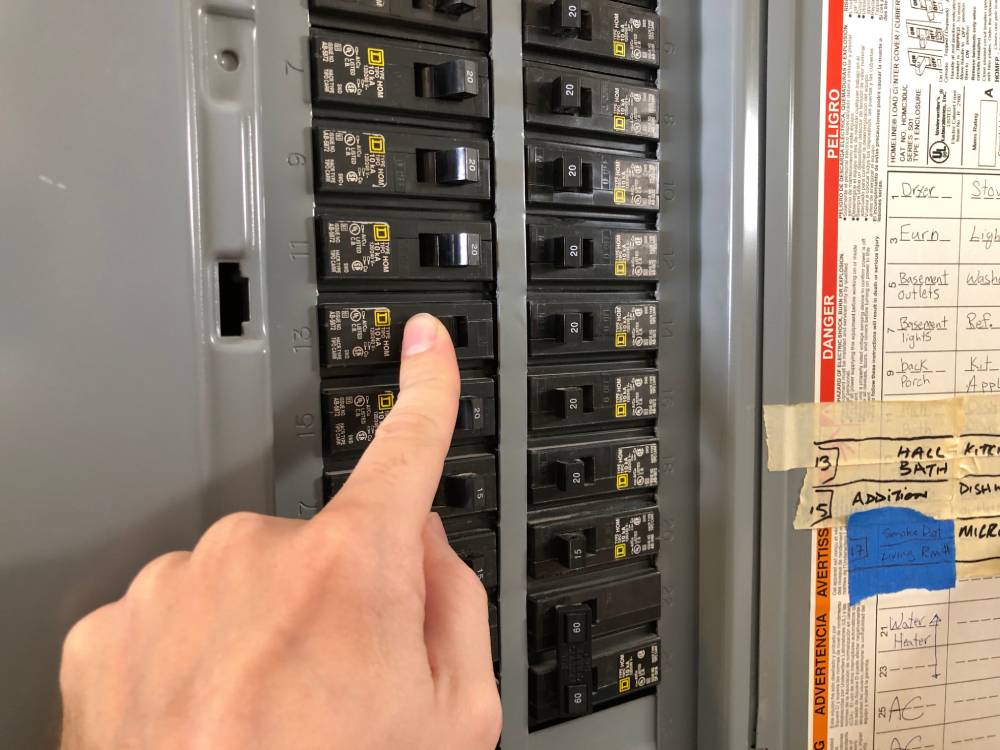
If you’ve ever opened your electrical panel and wondered what all those numbers mean, you’re not alone. Those little digits aren’t random—they tell you how much power each circuit in your home can safely handle. Knowing what they represent helps you prevent overloads, avoid electrical hazards, and keep your home’s power system running safely.
Whether you’re a new homeowner or just curious about how things work behind the scenes, understanding your breakers is one of the simplest ways to protect your home.
What Is a Circuit Breaker?
Your circuit breaker is your home’s first line of defense against electrical problems. It automatically cuts power when there’s too much current flowing through a circuit—preventing overheated wires, electrical fires, or damage to your devices.
Each breaker in your panel is designed for a specific electrical load. The number printed on it represents the amp rating—the maximum amount of current it can handle before shutting off.
What the Numbers on a Circuit Breaker Mean
Those numbers you see—10, 15, 20, 30, 40, 50—represent amperage, or how much current the breaker allows before tripping. Once that limit is exceeded, the breaker switches off to stop the flow of electricity and protect your wiring.
Here’s a quick breakdown of what those numbers typically mean in your home:
- 15 amps: Usually controls lighting and standard outlets in areas like bedrooms and hallways.
- 20 amps: Common for outlets in kitchens, bathrooms, and garages where higher-powered appliances are used.
- 30 amps and above: Reserved for large appliances like dryers, water heaters, or central air conditioners that require more energy.
If your system ever feels overloaded—lights flickering, breakers tripping, or outlets feeling warm—it could mean a circuit is carrying more power than it should.
Why Breakers Have Different Amp Ratings
Every appliance draws a certain amount of power, and not all circuits are designed to handle the same load. Smaller breakers protect wiring for low-demand areas like lighting, while larger ones manage high-power appliances.
Using the wrong breaker size can be dangerous. Use one that is too high, and it won’t trip during an overload—allowing heat to build up in your wiring. On the other hand, if it is too low, it may trip constantly, cutting power to essential areas.
Correctly matched breakers help your home run efficiently and safely.
Understanding Voltage Ratings
In addition to amperage, circuit breakers also list a voltage rating—most commonly 120 volts or 240 volts.
- 120-volt breakers: Used for everyday circuits like lighting and small appliances.
- 240-volt breakers: Used for heavy-duty equipment such as electric dryers, stoves, or HVAC systems.
Think of voltage as the “pressure” of electricity, and amperage as the “volume” of current flowing through. Together, they determine how much total power a circuit can deliver.
How to Choose the Right Breaker Size
If you ever replace or add a breaker, choosing the right size is crucial. You should consult with an experienced electrician to make sure you are getting what your home needs. Start by checking the wattage or amperage of the device or appliance you’re powering (you can find this on the manufacturer’s label). Then, do a quick calculation:
- For 120-volt circuits: Divide the total wattage by 120 to find the required amps.
- For 240-volt circuits: Divide the total wattage by 240.
For example, a 1,200-watt appliance on a 120-volt circuit draws 10 amps, while a 4,800-watt appliance on a 240-volt circuit draws 20 amps. If you’re unsure, it’s always safest to have a licensed electrician verify your setup.
Common Types of Circuit Breakers
Not all breakers do the same job. Here’s a quick overview of what you might find in your panel:
- Single-pole breakers: Used for 120-volt circuits (15–20 amps). These handle most outlets and lighting.
- Double-pole breakers: Handle 240-volt circuits (30 amps or more) for major appliances.
- GFCI breakers: Protect against electrical shock in wet areas like bathrooms, kitchens, and outdoors.
- AFCI breakers: Detect arcing faults caused by damaged or loose wiring and help prevent fires.
Each type plays a role in keeping your home’s power system balanced and safe.
How to Read Your Breaker Panel
Knowing how to navigate your breaker panel makes troubleshooting easier and safer. Here’s what to look for:
- Labels: Each breaker should list the area or appliance it controls, like “Kitchen” or “Washer/Dryer.”
- Amp rating: Printed on the switch or near the handle. This tells you how much current the circuit can safely carry.
- Tripped breaker: If a breaker has moved to the middle position—not fully “on” or “off”—that means it’s tripped. Reset it by flipping it off, then back on.
If you notice a breaker tripping repeatedly, that’s a sign of an underlying issue—not something to ignore.
Why You Should Never Override a Breaker
It might be tempting to install a higher-rated breaker if one keeps tripping, but that’s a serious mistake. A breaker that’s too large for the wiring it protects won’t trip when it should, creating a fire hazard. The breaker’s number is there for a reason—to match your wiring’s safe capacity.
If you’re experiencing frequent trips, have an electrician inspect your system instead of trying to bypass it. Safety always comes first.
Keep Your Electrical System Safe with Penguin
Those small numbers on your circuit breakers carry big responsibility—they’re what stand between your home and electrical overload. Understanding how to read them helps you protect your family, your appliances, and your peace of mind.
If you’re not sure whether your panel is up to code, or if you’ve been dealing with frequent breaker trips, it’s time for a professional checkup. The electricians at Penguin Air, Plumbing & Electrical can inspect your panel, verify your breaker sizes, and make sure your home is running safely and efficiently.
Stay safe, stay informed, and if something doesn’t look right, call Penguin for expert electrical service you can trust.