
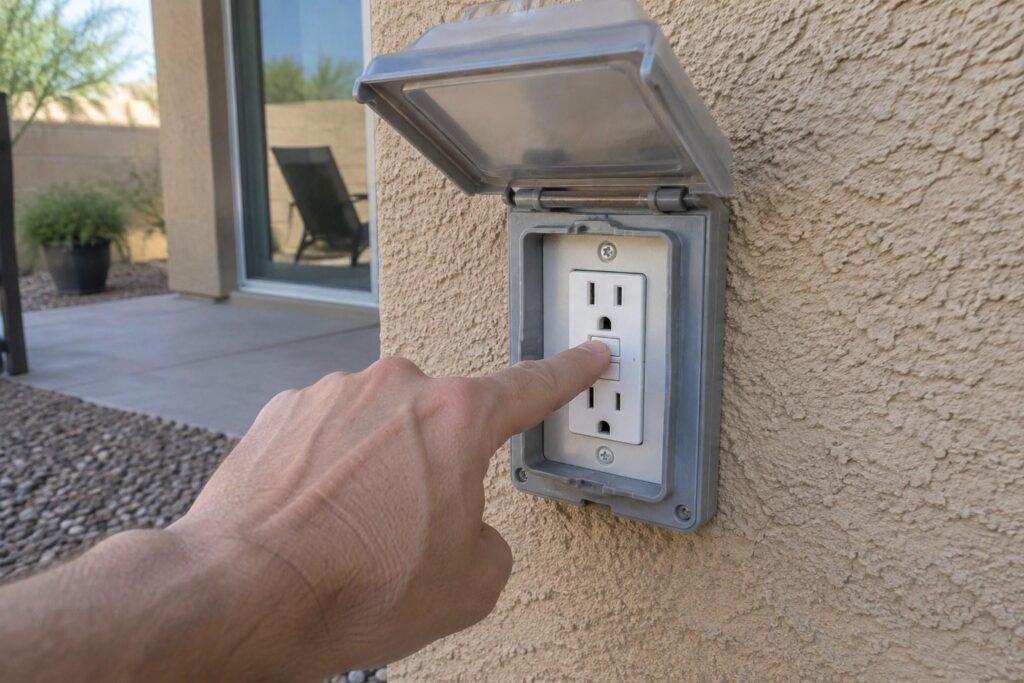
If your GFCI outlet keeps tripping, it is doing its job or telling you something has worn out, and the trick is figuring out which. A ground fault circuit interrupter cuts power the instant it senses electricity leaking somewhere it should not go, which is exactly what you want near water. At Penguin Air, Plumbing & Electrical, our technicians answer nuisance tripping calls from kitchens, bathrooms, garages and back patios all over the Valley. Some causes take two minutes to solve. Others point to a damaged appliance, water in a weatherproof box or a wiring problem hiding farther down the circuit. Below we walk through the eight most common culprits and how to narrow them down safely.
Tired of resetting the same outlet? Our electricians can track down the cause and fix it properly.
Key Takeaways
- A GFCI that trips is usually reacting to a real leak of current, so treat repeated tripping as a warning rather than an annoyance.
- Moisture is one of the most common causes in Phoenix homes, especially in outdoor and garage outlets hit by monsoon storms, sprinklers or hose spray.
- Unplugging everything and plugging devices back in one at a time is the fastest way to find a faulty appliance or cord.
- GFCI devices wear out, and an old outlet that trips at random or will not reset should be replaced.
- If the outlet trips with nothing plugged in, the problem is likely in the wiring downstream, and that calls for a licensed electrician.
- Never cover a tripping GFCI with tape, swap it for a standard outlet or keep resetting it while it is wet.
Unlike a circuit breaker, which reacts to too much current, a GFCI watches the balance between the hot and neutral wires. According to the definition in the National Electrical Code, a standard Class A GFCI trips at roughly 6 milliamps of imbalance and stays on below about 4 milliamps. That is a tiny amount of current, far less than it takes to hurt someone badly, which is the whole point. If you want a refresher on where these devices belong and why codes require them, our post on the importance of GFCIs covers the basics.
Because the trip threshold is so sensitive, small things can set one off. A little condensation, a cracked cord jacket or a motor with worn insulation can all leak enough current. The good news is that most causes follow clear patterns, and a few simple observations will tell you a lot about what is going on.
Why Your GFCI Outlet Keeps Tripping: The 8 Most Common Causes
Here are some of the most common causes in Valley homes.
1. Moisture in Outdoor and Garage Outlets
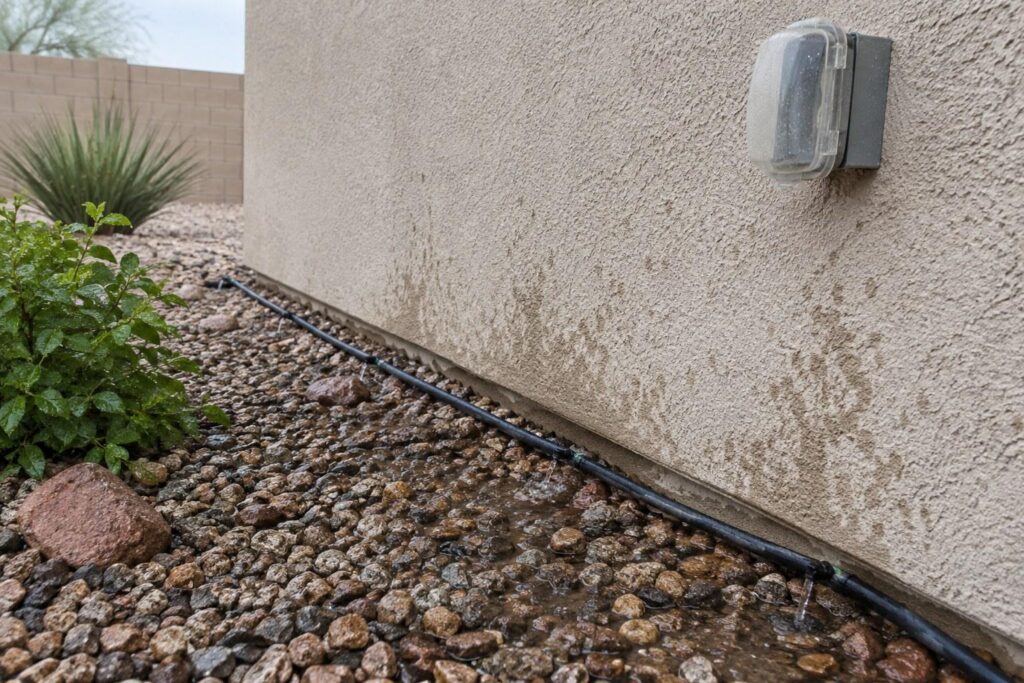
Water and electricity find each other quickly. Outdoor receptacles on patios, by pools and along side yards take a beating from monsoon downpours between mid-June and the end of September, plus blowing dust that holds moisture inside covers. Sprinkler heads and drip lines aimed at a stucco wall can soak an outlet every morning, so a GFCI that trips at the same time each day often lines up with the irrigation timer. Garage outlets collect condensation too, especially when a cool desert night follows a warm afternoon.
2. A Faulty Appliance or Tool
Older refrigerators, chest freezers, power tools, pool pumps and space heaters can develop insulation breakdown that leaks current to ground. The GFCI notices before you ever would. If the outlet trips the moment a particular device starts up, that device is the prime suspect.
3. Damaged Extension Cords and Power Strips
Cords that sit in the sun, get run over by the car or stay pinched in a door frame crack over time. Arizona heat speeds up that wear on vinyl jackets. A cord with a split or a crushed spot can leak current even when the device on the other end is fine.
4. Too Many Devices on One Protected Circuit
A GFCI does not trip because of overload alone, but heavily loaded circuits tend to combine several motors, heating elements and cords, and every one of them adds a small amount of normal leakage. Stack enough together and the total can creep toward the trip point. If the breaker for that circuit also trips, overload is part of the story, and our post on the top reasons a circuit breaker keeps tripping explains that side.
5. A Worn Out GFCI Device
GFCIs contain electronics and a mechanical trip mechanism, and both age. Heat in an attic-adjacent garage or exterior wall shortens that life. An old unit may trip randomly, refuse to reset or stop protecting you altogether. Since mid-2015, the UL 943 safety standard has required new GFCI receptacles to include auto-monitoring that periodically tests themselves, so a much older outlet is a good candidate for replacement.
6. A Ground Fault or Wiring Problem Downstream
One GFCI often protects several regular outlets after it on the same circuit, including spots you might not expect, like a bathroom outlet in another room or a receptacle on the back patio. A loose connection, a nicked wire or water in any of those downstream boxes can trip the GFCI upstream. This is why the outlet you keep resetting may not be the one with the problem.
7. Holiday and Seasonal Lights Outdoors
November is when strings of lights, inflatables and timers go up across Phoenix neighborhoods. Connections laid on damp grass, plugs sitting in a gutter and indoor-rated cords used outside are classic trip triggers, especially after overnight dew or a winter rain. Our Christmas electrical safety tips go deeper on setting up displays safely.
8. Incorrect Installation
Line and load terminals reversed, a shared neutral between circuits or a GFCI installed on a circuit with long runs of old wiring can all cause trouble. We also see GFCIs placed where a dedicated appliance circuit has been tied into a bathroom or kitchen run during a past remodel. These issues need a professional to sort out.
Not sure which of these fits your situation? We can test the circuit and give you a straight answer.
How to Tell What Is Causing the Trips
Paying attention to when and how the outlet trips narrows things down fast. Use the table below as a starting point.
| What you notice | Likely cause | What to do |
|---|---|---|
| Trips during or after rain or watering | Moisture in an outdoor or garage box | Leave it off, switch off the breaker if safe, and have an electrician inspect it before reuse. |
| Trips when one device turns on | Faulty appliance or tool | Unplug it and test the outlet with something else |
| Trips with a certain extension cord | Damaged cord or power strip | Replace the cord with an outdoor-rated one |
| Trips at random, often an older unit | Worn GFCI device | Have the GFCI replaced |
| Trips with nothing plugged in | Downstream wiring or ground fault | Stop resetting and call an electrician |
| Will not reset at all | Active fault or failed device | Leave it off and schedule service |
Do the Unplug Test
Unplug everything from the GFCI and from any outlets it protects. Press reset. If it holds, plug devices back in one at a time, waiting a minute or two between each. When it trips again, the last item you connected is your likely culprit. Leave that item unplugged and have it inspected or replaced before using it again.
Check for Hidden Downstream Outlets
If outlets elsewhere in the house lost power at the same time, they are probably downstream of the tripping GFCI. Look at them closely for scorch marks, loose plates, water stains or a cover that has been left open. A patio outlet with a missing in-use cover is a frequent find.
Note the Timing
Write down when trips happen for a few days. Trips at dawn may match the irrigation schedule. Trips in the evening may match when lights or a pool pump kick on. Trips only after storms point straight at water intrusion. That record also helps our technicians diagnose the problem faster when they arrive.
Phoenix-Specific Factors That Trip GFCIs
Our desert climate creates a few patterns you would not see in other parts of the country.
Monsoon Storms and Dust
The National Weather Service recognizes the monsoon season as running from June 15 through September 30. Sudden heavy rain driven sideways by strong winds can push water past older flip-up covers. Dust storms add fine grit that traps moisture and wears gaskets. For broader storm prep, see our guide on prepping your home electrical system for monsoon season.
Irrigation and Pool Equipment
Desert landscaping still runs on drip lines and sprinklers, and many outlets sit right at the base of a block wall where spray lands. Pool pumps, lights and heaters often share GFCI protection, and their motors and seals see a lot of wear from heat and hard water deposits. A pool area that trips repeatedly deserves an electrician’s attention because of the water involved.
Heat and UV Exposure
Summer sun bakes exterior boxes, covers and cords. Plastic gets brittle, gaskets shrink and covers crack, letting water in when the rain finally comes. A garage that hits extreme temperatures in July can shorten the life of the GFCI itself.
Cool Nights and Condensation
Our winters are mild, but desert nights still get chilly. When a cold night follows a warmer day, condensation can form inside outdoor boxes and garage outlets. That is one reason holiday displays trip more often in the early morning hours.
What to Do When Your GFCI Will Not Stay Reset
Most homeowners can take a few safe steps before calling for help. Here is the order we recommend.
Safe Steps You Can Take
- Unplug everything from the GFCI and its downstream outlets, then press reset firmly until it clicks.
- If the outlet or box is wet, leave it off, switch off the breaker and have an electrician check it before using it again.
- Inspect cords for cuts, cracks and crushed spots, and retire any that look damaged.
- Make sure outdoor outlets have an intact in-use (bubble) cover that closes with a cord plugged in.
- Adjust sprinkler heads so they do not spray toward outlets or the wall around them.
- Check the breaker for the circuit, and reset it if it has tripped too.
Safety Warnings
Never reset a GFCI while standing in water or touching anything wet. Do not open the outlet box, remove the receptacle or work inside your electrical panel. If you notice burning smells, smoke, buzzing, melted plastic or a hot outlet cover, turn off the breaker for that circuit if you can do so safely and keep everyone away. If you see fire or smoke, get out and call 911.
Above all, do not replace a GFCI with a standard outlet to stop the trips. That removes protection in exactly the places where shock risk is highest. The U.S. Consumer Product Safety Commission (CPSC) recommends testing GFCIs regularly, and its home electrical safety checklist walks through a simple test using the test and reset buttons.
Test Your GFCIs Monthly
Press the test button and the outlet should lose power with an audible click. Press reset and power should return. If pressing test does nothing, or reset will not latch, the device is not protecting you and should be replaced. Many electrical professionals suggest testing once a month, which is easy to tie to another monthly chore.
When to Call an Electrician
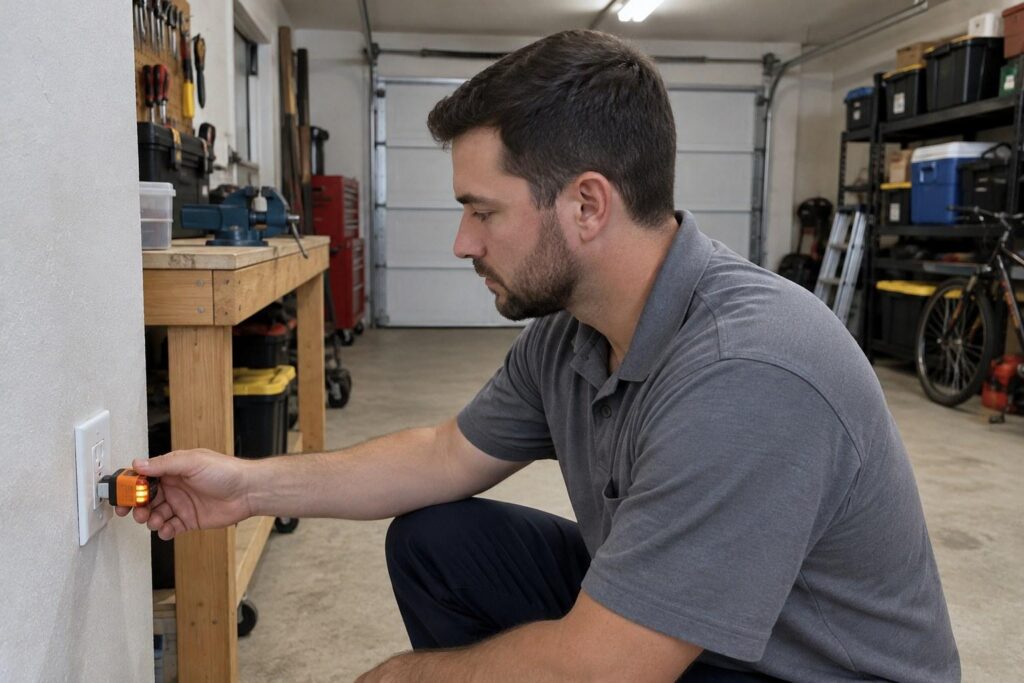
Some tripping problems are simply beyond safe DIY. Contact a professional if any of these sound familiar.
Signs It Is Time for Professional Help
- The GFCI trips with nothing plugged into it or any downstream outlet.
- It will not reset, even after drying out.
- You see scorching, discoloration or melted plastic, or the cover feels warm.
- Several GFCIs around the house trip at the same time.
- The breaker and the GFCI both trip repeatedly.
- Your home has older wiring, or the problem started after a remodel.
What Our Technicians Check
When we arrive, we trace which outlets are on the protected circuit, test the GFCI, measure insulation and leakage where needed, and open boxes to look for water, loose connections and damaged wires. We check whether the line and load sides are wired correctly and whether the circuit layout makes sense for the loads on it. If the device is worn, we replace it with a current model. Our switches and outlets service covers GFCI replacement, weather-resistant receptacles and in-use covers, while our electrical repair team handles deeper wiring faults.
Consider a Whole-Home Checkup
If tripping is one of several small electrical annoyances, an electrical safety inspection can find related problems before they turn into bigger ones. We look at the main panel, circuit breakers, visible wiring, grounding, outlets and switches. Pricing depends on the size of the home and what we find, and we provide upfront, flat-rate pricing before any work begins.
Ready to stop chasing a tripping outlet? Our team will find the cause and make it right.
Frequently Asked Questions
Is it dangerous if my GFCI keeps tripping?
Repeated tripping usually means the device sensed current leaking where it should not, so take it seriously. The GFCI is protecting you, but the underlying cause could be water, a damaged cord or a wiring fault. If it trips with nothing plugged in, will not reset or shows signs of heat or scorching, leave it off and have an electrician inspect the circuit.
Can a bad GFCI outlet trip for no reason?
Yes. GFCIs age, and heat in Phoenix garages and exterior walls can shorten their life. A worn unit may trip randomly or become overly sensitive. That said, apparently random trips often trace back to moisture or a downstream outlet you did not know was connected. Testing the device and checking the protected circuit will tell you which situation you are dealing with.
Why does my outdoor GFCI trip when it rains?
Rain or blowing monsoon moisture gets into the outlet box or a plug connection and creates a small path to ground. Older flip-up covers, cracked gaskets and boxes facing the weather are the usual weak points. Leave the circuit off and have an electrician identify water intrusion and assess the receptacle, wiring and cover before reuse.
Why does my GFCI trip when nothing is plugged in?
That points to a problem on the circuit itself rather than a device. Common causes include water in a downstream outlet, a loose or damaged wire, line and load wires reversed, or a failing GFCI. Because the fault is inside the walls or boxes, this is not a DIY job. Stop resetting it and have a licensed electrician trace the circuit safely.
How long do GFCI outlets last?
There is no fixed lifespan, since heat, humidity, power surges and frequent tripping all affect how long a GFCI keeps working. Units in outdoor walls and hot garages tend to wear faster. The best approach is monthly testing with the test and reset buttons. If the outlet fails to cut power when tested, or will not reset, replace it.
Can I replace a GFCI outlet with a regular outlet?
No. Electrical codes require GFCI protection in kitchens, bathrooms, garages, outdoor areas, laundry spaces and other wet or damp locations. Swapping in a standard outlet removes shock protection where you need it most and can create a code violation. If a GFCI trips constantly, the fix is finding the cause or replacing the GFCI with a new one, not removing protection.
Keep Your Phoenix Home’s GFCI Outlets Protecting You
When a GFCI outlet keeps tripping, the cause is usually moisture, a tired appliance or cord, an aging device or a fault farther down the line. Working through the unplug test, drying things out and checking covers solves many cases, but anything involving wiring belongs with a professional. If you cannot pin down why, contact Penguin Air, Plumbing & Electrical. We help homeowners in Phoenix, Mesa, Chandler, Gilbert, Scottsdale, Glendale and across the Valley get safe, reliable power back.
Ready to Get Started with Penguin Air, Plumbing & Electrical?
Penguin Air, Plumbing & Electrical is locally owned and has served Greater Phoenix since 2011. We offer upfront, flat-rate pricing, our Job Done Right guarantee and a 24/7 emergency service line for the problems that cannot wait. Penguin Air, Plumbing & Electrical is located at 3710 E University Dr #1, Phoenix, AZ 85034. Call us at (480) 525-5400.