Fall sneaks up fast here in Phoenix. One week you’re running your AC at full blast, and the next you’re waking up to a 40-degree morning with a heating system that has not been touched in months. A solid fall home maintenance checklist helps you catch small problems before they turn into expensive repairs. We have been serving Phoenix homeowners since 2011, and our BBB A+ accredited team of licensed HVAC, plumbing, and electrical technicians knows exactly what the desert climate does to your home between monsoon season and the first cold snap.
Ready to get your home ready for fall? Our team is here to help.
Key Takeaways
- A Phoenix fall home maintenance checklist should always include post-monsoon roof and exterior inspections before temperatures drop.
- Heating systems dormant since winter need a test run and professional inspection before the first cold night hits.
- Hard Phoenix water causes sediment buildup in water heaters, making a fall flush one of the most overlooked but important tasks.
- Outdoor plumbing and irrigation lines need attention in fall, especially in higher-elevation communities like Cave Creek and Carefree.
- Catching small issues in fall, like worn weatherstripping or clogged gutters, prevents bigger repair bills through winter.
That first October morning when you walk outside and it’s actually tolerable, you know the one. The triple-digit grind is finally over, and the Valley gets to breathe again.
But your home does not get to rest yet. Your AC ran hard from May through September. Your plumbing sat under a slab that hit 110 degrees. Your roof took five months of Sonoran Desert sun plus monsoon dust storms and microbursts. Systems that held together through all of that can still have hidden damage that only shows up when you switch modes.
The 10 tasks below are built specifically for Valley homes. They cover your HVAC system, plumbing, electrical, roof, and more. If you want a head start on the HVAC side, our HVAC tune-up checklist walks through exactly what a fall inspection covers. Keep reading for the full picture.
What Should Be on a Phoenix Fall Home Maintenance Checklist?
A Phoenix fall checklist should cover post-monsoon roof and exterior damage, a dormant heating system test, a water heater flush, an HVAC recovery inspection, electrical panel and surge review, and outdoor plumbing and irrigation adjustments. In short, it is a desert recovery-and-prep list, not a winterization guide written for Ohio or Minnesota.
That distinction matters because what your home just went through is completely different. Nobody in central Scottsdale is insulating pipes against a hard freeze. You are looking for what summer broke, what the monsoon stressed, and what needs attention before overnight lows drop into the 30s and 40s by late fall.
Your Home Just Survived an Extreme Summer
Think about what your house dealt with from June through September. Daytime highs above 110 degrees for weeks on end. Monsoon storms rolling in with haboobs, microbursts, and flash flooding. That combination does real damage that does not always show up right away.
The sustained heat expands and contracts copper and PVC plumbing lines repeatedly. It pushes your AC compressor and electrical panel to high-load conditions for months straight. Then the storms deposit caliche dust on condenser coils, drive moisture into exterior seals, and can shift soil around underground plumbing. Our team sees this pattern every single fall. Homeowners are surprised by problems that started in July and showed up in October.
A fall plumbing inspection is one of the smartest moves you can make right now, especially if you noticed anything unusual with water pressure or drainage during storm season.
What ‘Fall’ Actually Means in the Desert
In the Valley, fall means highs dropping from the 90s into the 70s, with overnight lows reaching the 30s and 40s later in the season. No frozen pipes in central Tempe or Mesa. But if you live out in Cave Creek or Carefree, those higher elevations can see harder overnight freezes, so outdoor plumbing and irrigation checks matter more there.
The bigger heating risk for most Valley homeowners is a furnace that has not run in months suddenly being asked to work on the first cold night. Check out our heating maintenance tips for winters to know what to look for before that first cold snap hits.
The 10-Task Phoenix Fall Home Maintenance Checklist
These 10 tasks address what a brutal desert summer actually does to your systems, not what a generic national checklist assumes about your climate.
1. HVAC Fall Tune-Up
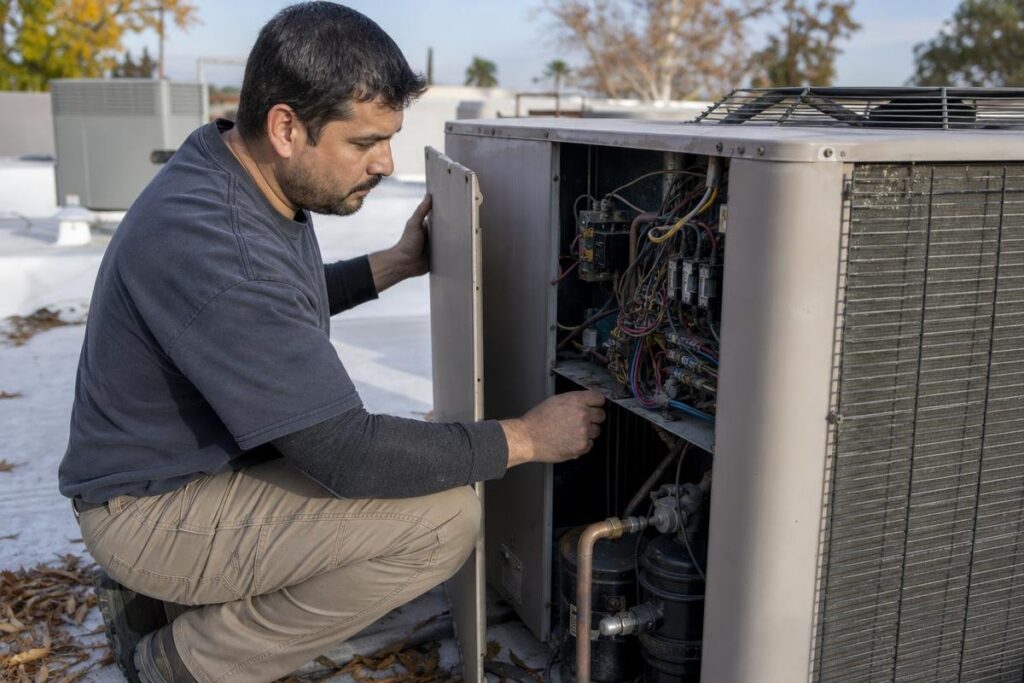
Your AC ran hard from April through September. Caliche dust coats condenser coils, capacitors wear down under sustained heat loads, and refrigerant levels drift. A recovery inspection catches all of that before you need the system again next spring. Review our HVAC tune-up checklist so you know exactly what the tech should be checking.
2. Test Your Heating System
Homeowners are often surprised when overnight lows drop into the 30s. Your furnace or heat pump has been sitting idle for months. Turn the thermostat to heat mode and let it run 10 to 15 minutes. A dusty smell on first run is normal. Gas odor, loud banging, or no heat at all means call a tech. Read our article on heating maintenance tips for winters before that first cold snap hits.
3. Replace or Check Air Filters
The Valley’s caliche dust and fall pollen are brutal on filters. A standard 1-inch filter clogs every 30 to 60 days here, compared to every 90 days in most U.S. cities. If you run a 4-inch media filter, plan on replacing it every 4 to 6 months. A clogged filter forces your system to work harder and tanks your indoor air quality, so this is one of the cheapest, highest-impact tasks on the list.
4. Roof and Exterior Inspection
Storm microbursts lift shingles and crack tile. Flat roofs common in Surprise and Goodyear need a check for ponding areas where water pooled and sat. Walk your roofline from the ground and look for displaced tiles, lifted shingle edges, and debris-clogged scuppers or downspouts. Catch a small crack now before winter rains turn it into a ceiling stain. If you spot cracked flashing or lifted tile, get it addressed before the first frontal rain rolls through in November.
Furnace been idle since spring? Schedule your fall heating inspection before the first cold night, when technician slots fill up fast.
5. Water Heater Flush
The Valley has some of the hardest water in the country. Calcium and magnesium scale settle at the bottom of your tank all summer. If you hear popping or rumbling, that sediment is already cooking. Find out what a popping or rumbling water heater actually means and whether a flush will fix it. While you’re at it, check your anode rod. It should be replaced every 3 to 5 years, and hard water accelerates that timeline.
6. Smoke and Carbon Monoxide Detectors
Test every detector in the house. Replace batteries. Replace any unit older than 10 years. Carbon monoxide risk goes up in fall because gas furnaces and space heaters fire up after sitting dormant for months. Arizona fire code calls for CO detectors within 10 feet of every sleeping area. This one costs almost nothing to check and can save a life.
7. Electrical Panel and Surge Protection
Summer in the Valley pushes electrical systems hard. Pool pumps, AC units, and outdoor lighting run at full load for months, and older panels in Chandler and Gilbert homes can sit close to capacity when everything runs at once. Check for breakers that trip repeatedly, outlets that feel warm, and lights that flicker. Lightning from the storm season is a real surge risk, so fall is a smart time to add whole-home surge protection before the next round of weather arrives.
8. Plumbing Inspection
Seasonal rains shift the clay-heavy soil under Valley homes, and that movement stresses the underground supply and drain lines running beneath your slab, which itself bakes to well over 100 degrees all summer. Check under every sink for drips, scan ceilings for water stains, and run infrequently used drains to clear buildup. Hard water also accelerates scale inside supply lines over time. See fall plumbing inspections in Phoenix, AZ if you want a tech to handle this one properly.
9. Irrigation Adjustment
Cut your irrigation run times 30 to 40 percent from your summer schedule. Desert landscapes need far less water once temperatures drop. Check drip emitters for mineral clogs from hard water, and shut off any zones serving summer annuals that are finished for the season. Higher-elevation communities can see harder overnight freezes, so outdoor plumbing and drip lines there deserve extra attention as lows fall.
10. Seal Air Leaks
The Valley’s mild winters still drive up heating bills when gaps exist at doors, windows, recessed lights, and ductwork. UV exposure degrades weatherstripping and caulk faster here than almost anywhere else in the country. Replace cracked weatherstripping, recaulk window frames, and check attic hatch seals. Small gaps add up fast on a gas or electric heating bill.
Phoenix-Specific Hazards Most Checklists Miss
Most fall maintenance tips Arizona homeowners find online were written for people in Ohio or Oregon. They cover raking leaves and bleeding radiators. That advice does nothing for you here in the Valley. These three hazards show up every fall and most generic checklists never mention them.
Post-Storm Damage You May Not Have Noticed Yet
Monsoon season ends in September, but the damage it leaves behind can hide for weeks. Dust storms and microbursts hit fast and hard, and the evidence is not always obvious.
Walk your property and check these spots:
- Fence posts for shifting or leaning after saturated soil dried out
- Window screens for tears from wind-driven debris
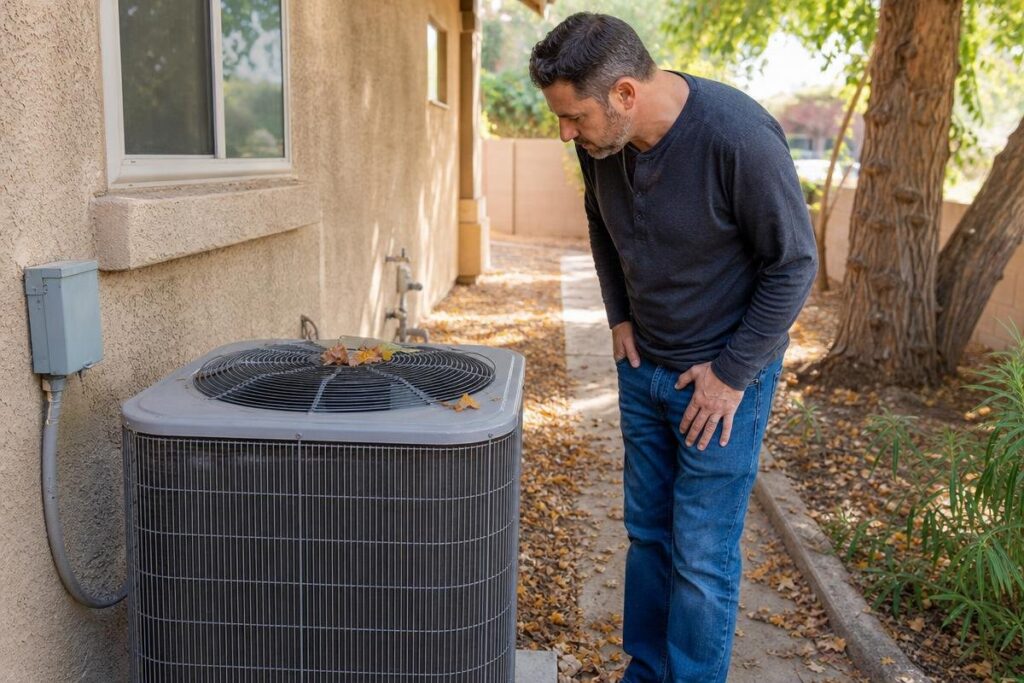
- AC condenser fins for bending and packed debris
- Low spots in the yard where water pooled and may have seeped toward the foundation
- Under-sink cabinets and storage rooms for mold from moisture that crept inside
Catching mold or bent condenser fins now costs far less than finding them in January. Our fall plumbing inspections in Phoenix, AZ cover what else to check after a wet storm season.
Hard Water: The Silent System Killer
Scottsdale, Tempe, and Surprise all share the same problem: water that ranks among the hardest in the country. High calcium carbonate levels build up inside pipes, clog faucet aerators, cut showerhead flow, and force your water heater to work harder than it should.
Fall is the right time to clean your aerators, flush sediment from your water heater, and think about whether a water softener makes sense for your home. A popping or rumbling water heater is often a hard water sediment problem, not a mechanical failure.
Sun Damage That Sneaks Up on You
The Valley averages over 300 days of sunshine per year. That UV load destroys caulking, weatherstripping, roof coatings, and exterior paint faster than almost anywhere else in the country. Your relatives in Seattle replace caulk every decade. You may need to do it every two to three years.
Check the foam weatherstripping on your garage door. It dries and cracks in desert heat and should be replaced every two to three years. Re-caulk around windows, doors, and pipe penetrations before the mild winter rains arrive. This is a core part of any Arizona fall home checklist that national guides simply skip.
Spotted post-storm damage or hard water buildup? Get a free estimate and our team will help you sort it out before it turns into a bigger problem. Call us at (480) 525-5400.
How Do You Prioritize Fall Maintenance When You Can’t Do Everything at Once?
Split the list into safety, high-stress systems, and lower-urgency tasks, then work them in that order. This is the honest triage our team walks through with homeowners across the Valley every fall, and doing it this way puts you ahead of most of your neighbors.
Start with Safety
Test your smoke detectors and carbon monoxide detectors first. Check your electrical panel for any breakers that trip repeatedly. These three tasks together take less than 30 minutes, and none of them can wait. A non-responsive detector or a breaker that keeps tripping is a same-day fix, not a weekend project.
This is non-negotiable. Everything else on the list can flex around your schedule. Safety items cannot.
Then Tackle the Systems That Worked Hardest
After safety, focus on the mechanical systems. Your AC ran hard for six or seven months straight. Your water heater has been fighting hard water scale all year. Your heating system has been sitting idle for months. These are the items most likely to fail at the worst possible moment, and in the Valley that moment is the first overnight low in the 30s. Technician availability tightens the second that cold snap arrives, so do not wait. Our HVAC tune-up checklist walks through exactly what that inspection covers.
We have been serving Phoenix homeowners since 2011 across the Valley, from Scottsdale and Tempe to the East Valley cities of Mesa, Chandler, and Gilbert, and we offer same-day availability for urgent HVAC and electrical repairs. For the water heater side of things, our fall plumbing inspections cover what to expect.
Irrigation adjustments, landscaping, and weatherstripping can wait a week or two. Your heating system and electrical panel cannot. Get the top five done and you are in good shape for the season.
Want the mechanical items handled by a licensed pro? Call for same-day service on urgent HVAC and electrical repairs.
When Should You Call a Pro vs. Handle It Yourself?
Not every fall maintenance task needs a technician. Some jobs are genuinely straightforward. Others carry real legal and safety risks if you handle them without a license. Knowing the difference saves you money and keeps your home covered by insurance.
Tasks Most Homeowners Can Handle
These are solid DIY jobs for most Valley homeowners with basic tools and a little time:
- Replace air filters. Check the size printed on your current filter, buy the same size, and swap it out. Takes five minutes.
- Test smoke and carbon monoxide detectors. Press the test button, replace batteries if needed. Do every detector in the house.
- Adjust your irrigation controller. Dial back run times now that temperatures are dropping. Most controllers have a seasonal adjust setting.
- Clean window screens. Pull them out, rinse with a hose, let them dry before reinstalling.
- Flush your water heater. If you are comfortable shutting off the gas or electric supply first, this is a manageable DIY task. Our post on a popping or rumbling water heater explains what sediment buildup actually sounds like so you know when flushing is overdue.
- Do a visual roof walk. Look for cracked or missing tiles, lifted flashing, and debris left from storm season.
Work That Requires a Licensed Technician
Some jobs are not just difficult. They are restricted by Arizona law. Unlicensed electrical panel work and gas line repairs are illegal in Arizona and can void your homeowner’s insurance if something goes wrong. That is not a scare tactic. It is the actual legal and financial risk.
Call a licensed tech for anything involving refrigerant (EPA 608 certification is federally required), gas furnace heat exchangers, live panel work, or a suspected slab leak. Valley homes with gas furnaces, pool heaters, and multi-zone HVAC systems have more licensed-tech touchpoints than a typical single-system home. For fall HVAC work specifically, our HVAC tune-up checklist covers exactly what a licensed technician checks during a fall inspection.
Our technicians are background-checked and licensed across HVAC, plumbing, and electrical. We operate out of 3710 E University Dr #1, Phoenix, AZ 85034 and hold a BBB A+ rating with accreditation going back to 2011.
Frequently Asked Questions
When is the best time to do fall home maintenance in Phoenix?
October through mid-November is your window. Monsoon season wraps up, temps are comfortable for outdoor work, and you still have time to book HVAC service before the first cold snap hits. Wait until late November or early December and you will be competing with every other homeowner in the Scottsdale and Tempe areas for the same technician slots.
Do Phoenix homeowners need to winterize their pipes?
Not the way homeowners in northern states do. Your focus here is summer recovery and heating prep. The one exception: if you are out in Surprise or at higher elevations near the Carefree area, check outdoor irrigation lines on nights that dip below freezing.
How often should I replace air filters in Phoenix?
Standard 1-inch filters every 30 to 60 days, given caliche dust and monsoon particulates. A 4-inch media filter can go 4 to 6 months. If you have pets or nearby construction, check more often. See our HVAC tune-up checklist for a complete breakdown.
What does a fall HVAC tune-up include?
Condenser coil cleaning, refrigerant level check, heat exchanger inspection, thermostat test, moving-part lubrication, and an electrical connection check. Plan on 60 to 90 minutes.
How do I know if my water heater needs flushing?
Popping or rumbling sounds, slower hot water recovery, and discolored water are all signs. Valley water is extremely hard, so annual flushing is a smart habit. If yours has not been flushed in three or more years, this fall is the time.
Is carbon monoxide a real risk in Phoenix homes?
Yes. Gas furnaces, space heaters, and gas fireplaces sitting dormant since winter can produce CO when they restart. A cracked heat exchanger is a serious source. Test your detectors every fall and have your furnace inspected before that first cold night.
Ready to knock out the mechanical items on this list? Our team at Penguin Air, Plumbing & Electrical handles fall HVAC tune-ups, plumbing inspections, and electrical panel checks across the Valley, with same-day availability for urgent repairs. October and November fill up fast once the first cool nights arrive, so book your fall inspection now. Call us at (480) 525-5400 or schedule online.
Ready to Get Started with Penguin Air, Plumbing & Electrical?
Call (480) 525-5400 to speak with our team directly. We’re ready to answer your questions, walk you through your options, and help you find the right solution for your needs. Whether you’re just starting to plan or ready to move forward, we’ll make the process simple and stress-free.
Reach out today and let’s talk about how we can help.