
A plumbing emergency doesn’t wait for a convenient time. A burst pipe, a sewage backup, or a water heater that stops working can cause serious damage within hours, especially here in Phoenix where slab foundations make leaks harder to spot and faster to spread. When you need an emergency plumber, you need someone who shows up fast, knows what they’re doing, and gives you straight answers. Our team at Penguin Air, Plumbing & Electrical has been serving Phoenix homeowners since 2011, and we’re available around the clock when things go wrong.
Plumbing emergency in Phoenix? Our licensed, ROC-certified team is ready to help right now.
Key Takeaways
- A true plumbing emergency includes burst pipes, sewage backups, slab leaks, and complete loss of water pressure.
- Phoenix’s slab foundations make slab leaks one of the most common emergency plumber calls in the Greater Phoenix area.
- Knowing what to do in the first few minutes, like shutting off your main water valve, can limit damage significantly.
- Our team is available 24 hours a day, 7 days a week for emergency plumbing service throughout metro Phoenix.
- Not every plumbing problem is an emergency, and we’ll help you tell the difference so you’re not paying after-hours rates you don’t need.
What Counts as a Plumbing Emergency?
A plumbing emergency is any situation where waiting until regular business hours risks serious water damage, a health hazard, or loss of an essential service. If you’re staring at a problem at midnight wondering whether to call, here’s a simple rule: active water loss or a health risk means call now. No active water loss and no health risk means it can probably wait.
Situations That Can’t Wait Until Morning
These problems get worse by the hour. In Chandler, Glendale, or anywhere across metro Phoenix, water damage spreads fast. During the dry season the desert air pulls moisture out quickly, but after a monsoon storm the sudden jump in indoor humidity can let mold take hold in drywall and baseboards within a day or two. That’s why a summer leak deserves a faster response than the same leak in January.
- Burst or ruptured pipe with water actively flowing
- Sewage backing up into your home through drains or toilets
- Active flooding from a broken supply line
- A water heater leaking onto the floor or into surrounding walls
- No water to the entire house
- Gas smell near any plumbing fixture
One Phoenix-specific note: losing hot water in July is a genuine hardship, not a minor inconvenience. When outdoor temps push past 110 degrees, your cold water line runs warm. A failed water heater can leave you with no usable water temperature at all. If you spot pooling water at the base of your tank, our leaking water heater guide walks you through the first steps to take.
Plumbing Problems That Can Usually Be Scheduled
Not every plumbing problem in Phoenix, AZ is a true plumbing emergency. These are real issues worth fixing, but they can wait for a regular appointment.
- Slow-draining sink or tub
- Running toilet
- Dripping faucet
- Low water pressure at one fixture
Our team will always be straight with you about which category your problem falls into. That honesty is how we do business.
What Happens When You Call an Emergency Plumber in Phoenix
If you’ve never called for emergency plumbing services before, the process is straightforward. You call, we gather the details we need, and we get a technician moving toward your home. Here’s exactly what to expect from start to finish.
The Call: What to Tell the Dispatcher
When you call us at (480) 525-5400, our dispatcher picks up around the clock, every day of the year. We run 24 hour plumber coverage across the region, including Scottsdale, Gilbert, Surprise, and surrounding areas.
Have a few things ready before you call. Your address. A description of what you see, hear, or smell. Whether water is still actively flowing. Whether anyone in the home is in immediate danger. That information helps us send the right technician with the right equipment on the first trip.
If you haven’t already shut off your main water supply, our dispatcher will walk you through that while we have you on the line.
What the Technician Does When They Arrive
Our background-checked technicians start with a visual inspection before touching anything. They identify the water source, confirm whether it’s still running, and determine the root cause. A burst pipe, a failed fitting, and a slab leak all look similar at first glance but require different repairs. Slab leak detection is especially common in older homes across metro Phoenix built before 1990, where aging copper pipe sits on expansive clay soil.
Before any work begins, your technician explains the repair plan and gives you flat-rate pricing upfront. No surprises after the job is done. You can read more about how our team approaches plumbing calls in our overview of emergency plumbing services.
How Long an Emergency Plumbing Visit Takes
Honest answer: it depends on what we find. A burst pipe or water heater shutoff typically runs one to three hours. A sewer backup or slab leak diagnosis can take two to five hours, especially if we need to locate the leak precisely before opening anything up.
We won’t rush a diagnosis just to get to the next call. Getting it right the first time saves you a second visit.
Facing one of these situations right now? Don’t wait for the water to spread.
The 5 Most Common Plumbing Emergencies Phoenix Homeowners Face
Emergency plumbing calls in Phoenix follow predictable patterns. Hard water, desert tree roots, aging pipes, and slab construction create conditions you just don’t see in other parts of the country. Here are the five problems our team responds to most often across the Greater Phoenix area.
1. Burst or Ruptured Pipes
Pipes in metro Phoenix homes don’t burst from freezing the way they do up north. Here, the culprits are water hammer, pressure spikes, and aging galvanized steel in homes built before 1980. When a pipe lets go, our team shuts the main, cuts out the damaged section, and replaces it with copper or PEX.
2. Sewage Backup
Mesquite and palo verde roots are aggressive. They find the smallest crack in a clay or cast-iron sewer lateral and take over. Grease buildup and monsoon-season surges make things worse. We run a drain camera to locate the blockage, then clear it with a rooter machine or hydro jetting depending on what we find.
3. When You Need an Emergency Plumber for a Water Heater Failure
Phoenix water commonly registers over 200 ppm hardness, according to the City of Phoenix Water Quality Report. That sediment settles at the bottom of your tank and accelerates failure. If your unit is leaking from the tank or you’re hearing the popping or rumbling sounds of sediment buildup, that’s a sign the tank is near the end of its life.
4. Slab Leaks
Most homes in Surprise, Chandler, and across the region sit on concrete slab foundations. Copper pipes underneath expand and contract through the desert’s extreme heat cycle, eventually developing pinhole leaks. We use electronic leak detection to find the exact location without tearing up your floor unnecessarily.
5. Clogged Main Drain Line
When every drain in your home backs up at once, the main line is blocked. Flushed wipes, grease, and root intrusion are the usual causes. A rooter service or hydro jetting clears the line fast. This is a true plumbing emergency in Phoenix, AZ homes, not something to wait on.
What to Do Before the Emergency Plumber Arrives
You called for an after hours plumber in Phoenix. Now you have a few minutes before our team shows up. Here is what to do right now to stop things from getting worse and keep your family safe.
Step 1: Shut Off the Water
Find your main shutoff valve first. In most Glendale and Gilbert homes, it sits at the water meter near the street, inside a small ground-level box. For a single fixture issue, check under the sink or behind the toilet for an isolation valve.
Turn it off immediately. This one step stops active flooding faster than anything else. If you are not sure where your shutoff is, our plumbing prevention guide covers it in detail. Worth a read once this is resolved.
Step 2: Protect Your Home From Further Damage
Move electronics, rugs, and valuables off the floor. Use towels or buckets to contain standing water. Then go to your electrical panel and cut power to any room with active water intrusion.
In many area homes, the electrical panel sits in the garage right next to utility areas. Water and live circuits are a serious hazard. When in doubt, shut the breaker off.
Step 3: Document What You See
Take photos and a short video of the leak, any visible pipe damage, and standing water. This helps with insurance claims and gives our technician a clearer picture before they even walk through the door.
A routine fall plumbing inspection can catch weak spots before they become a midnight emergency. Something to keep in mind once things are stable.
How Much Does an Emergency Plumber Cost in Phoenix?
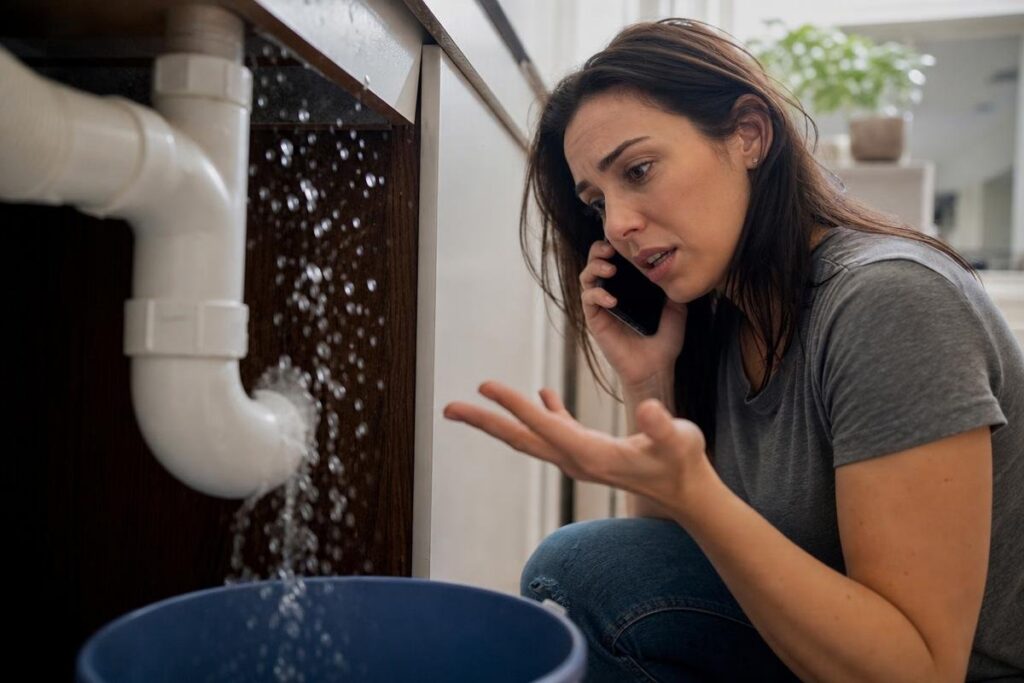
After-hours emergency plumbing service in Phoenix typically adds $100 to $200 on top of the repair cost itself. That range covers the dispatch fee for evenings, weekends, and holidays. It is an industry-standard charge, not a penalty for calling at midnight.
Standard vs. After-Hours Service Rates
A daytime call during regular business hours costs less because no after-hours dispatch fee applies. Call at 2 a.m. on a Sunday and that fee kicks in. The repair cost itself stays the same either way. What changes is the time-of-call surcharge. Our team shows you the full cost before any work begins, so there are no surprises on the invoice.
What Affects the Final Cost
Several factors push the total higher or lower:
- Type of repair. Clearing a drain costs far less than replacing a burst pipe or tracing a slab leak under a concrete foundation, which is one of the more involved jobs we handle in Scottsdale, Tempe, and neighboring cities.
- Parts required. Copper and PEX pipe costs differ. A new water heater unit adds significant material cost on top of labor.
- Access difficulty. An exposed pipe under a sink is straightforward. A slab leak requires detection equipment and concrete work.
- Permit requirements. Sewer line replacement in the City of Phoenix requires a permit. That adds time and a permit fee homeowners often do not anticipate.
If you want to understand what a plumbing emergency might cost before one happens, our guide to preventing plumbing problems is a good starting point.
Have questions about cost before committing to a repair? Call us and our team will walk you through what to expect.
Why Phoenix Homeowners Call Us for Plumbing Emergencies
A burst pipe at 2 a.m. in Scottsdale or a sewer backup on a Sunday morning in Surprise does not wait for business hours. Our team has been handling emergency plumbing services across metro Phoenix since 2011, and we have built our reputation one honest repair at a time. With 6,698 reviews averaging 4.7 out of 5 stars, the track record speaks for itself.
Available Around the Clock, Every Day of the Year
We dispatch around the clock, including holidays. A Sunday morning call gets the same response as a Tuesday afternoon call. Our customers put it simply: “Quick and great service for a Sunday.” A plumbing emergency does not care what day it is, and neither do we.
You can reach us any time at (480) 525-5400. Our office is located at 3710 E University Dr #1, Phoenix, AZ 85034, and we serve communities across the region including Surprise, Scottsdale, and Tempe.
Licensed, ROC-Certified, Background-Checked Technicians
Every plumber on our team is licensed through the Arizona Registrar of Contractors (ROC), insured, and background-checked before stepping into your home. When you hire an emergency plumber, working with an ROC-licensed contractor protects you if anything goes wrong on the job. We hold a BBB A+ Rating and have maintained BBB Accreditation since 2011. Our customers describe our technicians as “very knowledgeable and professional” and note they “fixed it quickly” without trying to oversell unnecessary work.
Founded in Phoenix, Built for Arizona Homes
We are not a national chain learning desert plumbing on the fly. Our team was founded by Arizona natives with over 30 years of combined industry experience. We know slab construction, hard water scale, monsoon-season pipe stress, and aging copper pipe in older neighborhoods. Read our plumbing maintenance tips to head off problems before they turn into emergencies.
Plumbing Services We Handle in Phoenix
Our emergency plumbing services in Phoenix cover far more than burst pipes. Whether you’re dealing with a backed-up sewer in Scottsdale, a failing water heater in Tempe, or a slow drain in Surprise, our team handles it all. Here’s a quick look at what we do.
Emergency and Urgent Plumbing
We handle burst pipes, active leaks, water line repairs, and gas line concerns near plumbing fixtures. Slab leak detection is one of our most common calls across metro Phoenix, and we use electronic locating equipment to pinpoint the leak before any concrete gets touched. No guesswork, no unnecessary demolition.
Drain and Sewer Services
We clear drains, run camera inspections, hydro jet stubborn blockages, and repair sewer lines using trenchless methods when possible. Root intrusion is a real problem in neighborhoods with older clay or cast-iron laterals. Mesquite, palo verde, and citrus trees common in area landscaping are frequent culprits, especially during monsoon season when saturated soil shifts and opens gaps in aging pipe joints.
Water Heater and Pipe Services
We repair and install both traditional tank and tankless water heaters, and we handle full repiping jobs on older homes. Hard water here accelerates scale buildup faster than most cities in the country, which is why water softener installation is also a service we offer regularly. If your water heater is acting up, our post on what to do about a leaking water heater is a good place to start while you wait for us to arrive.
Phoenix Plumbing: Why the Local Climate Makes Emergencies More Likely
If you moved here from another state, you may have noticed plumbing problems seem to happen more often here. That is not your imagination. A combination of extremely hard water, seasonal storm stress, and aging pipe materials in older neighborhoods creates conditions that push plumbing systems toward failure faster than in most American cities.
Hard Water and Pipe Scale
Water sourced from the Colorado River and Salt River Project canals measures over 200 ppm of dissolved calcium and magnesium, according to the City of Phoenix Water Quality Report. That puts our municipal water among the hardest in the country. Over time, that mineral load builds up inside pipes, water heater tanks, and fixtures, narrowing flow and stressing joints. If your water heater is making strange noises, hard water scale is usually the culprit. Our blog post on the popping and rumbling sounds a water heater makes explains exactly what is happening inside the tank.
Monsoon Season and Sewer Stress
June through September, monsoon storms drop heavy rain in a very short window. Older sewer laterals in Maryvale, Encanto, and similar neighborhoods were not built for that kind of surge. Homes with existing root intrusion from mesquite or citrus trees are especially vulnerable to backups during these storms. Soil saturation can also shift slab foundations slightly, stressing copper pipe joints underneath your floor.
Aging Housing Stock in Central Phoenix
Arcadia, Encanto, and Maryvale contain large numbers of homes built between the 1950s and 1980s. Many still have original galvanized steel or copper plumbing. Galvanized pipe corrodes from the inside out, slowly cutting water pressure before it fails completely. Copper in older homes develops pinhole leaks from our slightly acidic water chemistry. If your home was built before 1985, fall plumbing inspections can catch these issues before they become a full emergency.
Frequently Asked Questions
How quickly can an emergency plumber reach my Phoenix home?
Our team dispatches 24 hours a day, every day of the year, including holidays. We serve Chandler, Gilbert, Glendale, Scottsdale, and surrounding cities. Call (480) 525-5400 and you connect directly to our dispatch, not a voicemail box.
Is it worth calling an emergency plumber at night, or should I wait?
Call immediately if water is actively flowing, sewage is backing up, or you have lost all water service. A slow drip or a running toilet can usually wait until morning. Shut off your main water valve first. That buys you time and limits damage while you decide next steps.
What should I do if I smell gas near a plumbing fixture?
Leave your home right away without flipping any light switches or touching electrical controls. Call Southwest Gas from outside or from a neighbor’s phone. Once the utility has cleared the area, call a licensed plumber to inspect and repair the affected line. Never try to locate a gas leak yourself.
Does homeowner’s insurance cover emergency plumbing repairs?
Sudden accidental damage, like a burst pipe, is typically covered. Gradual leaks or damage from deferred maintenance are usually excluded. Take photos of everything before repairs begin and contact your insurer right away. Document the damage thoroughly so your claim is not delayed.
How do I know if I have a slab leak under my Phoenix home?
Watch for wet spots on floors, warm areas on tile, a sudden spike in your water bill, or the sound of running water when every fixture is off. Most homes here sit on concrete slab foundations, and the desert thermal expansion cycle puts real stress on pipes over time. Our team uses electronic leak detection to pinpoint the source, as described in our guide to emergency plumbing service, without unnecessary demolition.
Can you handle both the plumbing emergency and any related water damage?
Our licensed plumbers stop the leak, replace the damaged pipe or fixture, and restore your water service. Water extraction and structural drying require a separate water-damage restoration company. Once the plumbing source is secured, our team walks you through the recommended next steps so nothing falls through the cracks.
A plumbing emergency does not wait for a convenient time. If water is flowing where it should not, sewage is backing up, or you have lost water service entirely, call our team now at (480) 525-5400. Penguin Air, Plumbing & Electrical dispatches 24 hours a day, 7 days a week, including holidays, and our licensed plumbers are ready to respond. Do not let a small leak become a major repair. Call us and we will take it from there.
Ready to Get Started with Penguin Air, Plumbing & Electrical?
Call (480) 525-5400 to speak with our team directly. We’re ready to answer your questions, walk you through your options, and help you find the right solution for your needs. Whether you’re just starting to plan or ready to move forward, we’ll make the process simple and stress-free.
Reach out today and let’s talk about how we can help.