
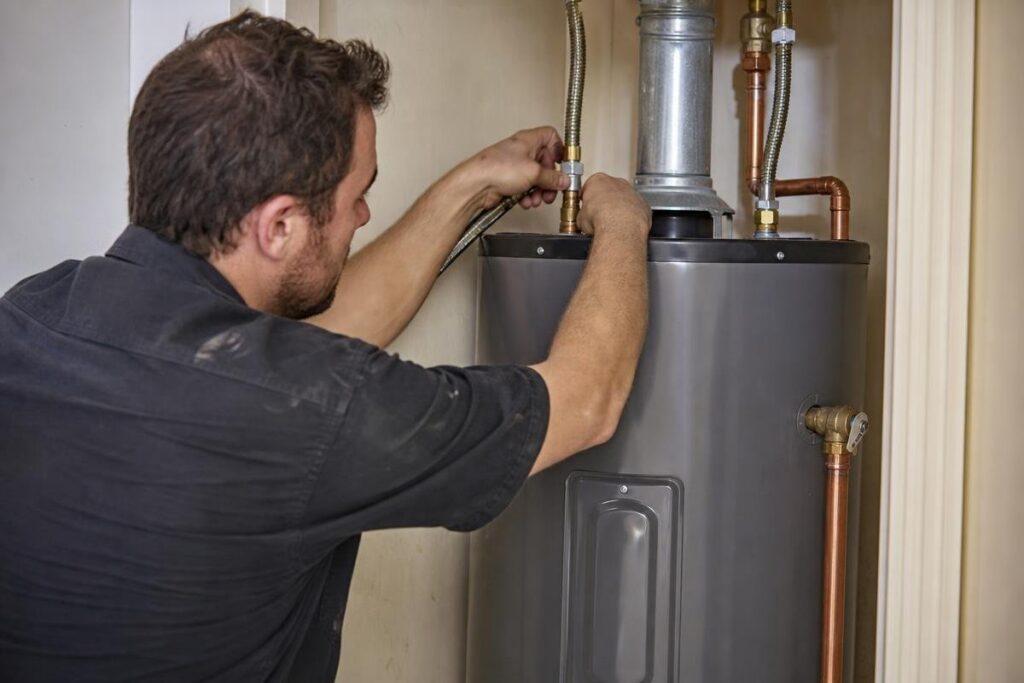
Water heater replacement cost in Phoenix runs higher than many homeowners expect, and the reason usually comes down to local conditions. Our mineral-heavy water, extreme summer heat, and the choice between gas, electric, and tankless units all affect your final price. We’ve been helping Valley homeowners navigate these decisions since 2011, and we give you a clear, itemized breakdown before any work begins, so there are no surprises on the invoice.
Need a straight answer on what a new water heater will cost your household? Our team is ready to help.
Key Takeaways
- The cost to replace a water heater in Phoenix typically ranges from $900 to $3,800 or more depending on unit type and installation complexity.
- The Valley’s hard water accelerates sediment buildup, shortening tank life and adding to long-term ownership costs.
- Tankless water heaters cost more upfront but can cut energy bills significantly for homeowners running the unit year-round.
- Labor, permits, old unit removal, and possible gas line upgrades are separate costs that affect your total project price.
You walk into your garage and spot a puddle spreading under your water heater. Or maybe you’ve been standing in a lukewarm shower for the third morning in a row, waiting for hot water that never quite arrives. Either way, you know something has to change.
Here in the Valley, water heaters take a beating that homeowners in other states just don’t see. Phoenix municipal water runs hard, typically measuring 200 to 400 ppm calcium carbonate, one of the highest levels in the country. That mineral load accelerates sediment buildup inside tank units and clogs the heat exchangers in tankless models faster than the national average. Add summer ambient temperatures that regularly push past 110°F in unconditioned garages, and your water heater’s thermostat and anode rod wear out well ahead of schedule. That’s why your unit may be failing years earlier than your parents’ did back in a milder climate.
This guide covers what water heater replacement cost actually looks like for Valley homeowners, broken down by unit type, labor, permits, and the local factors that push prices up or down. You won’t find generic national averages here. You’ll find numbers and context specific to this market.
Penguin Air, Plumbing & Electrical has been serving homeowners across the metro since 2011, holds Arizona ROC licensing, and has earned a BBB A+ rating along the way. If your water heater is already showing warning signs, our guide on what to do if your water heater is leaking is a good place to start while you weigh your options.
What Does Water Heater Replacement Typically Cost in Phoenix?
Most homeowners in the Valley pay between $1,100 and $3,800 installed for a water heater replacement, depending on the type of unit, the size, and how complex the installation turns out to be. That range covers everything from a straightforward tank swap to a full tankless conversion with gas line work.
The unit price alone does not tell the full story. Labor, permits, and local factors like water quality and gas line capacity all affect your final number. Here is what to expect by unit type.
Standard Tank Water Heater
A 40 to 50 gallon gas tank unit runs $1,100 to $2,200 installed. Electric tank units typically land between $900 and $1,800 installed. The 50-gallon size is the most common choice for three to four person households across Chandler and Gilbert.
Tank water heaters are the most straightforward replacement in most homes. If your current unit is the same fuel type and size, installation is usually a few hours of work. Sediment buildup from those mineral levels shortens tank life faster than in most U.S. cities, so if your unit is over 10 years old, replacement often makes more sense than repair. Our article on how to extend the life of your hot water heater covers maintenance habits that can slow that process down.
Tankless Water Heater
Gas tankless units run $1,800 to $3,800 installed. Electric tankless units typically fall between $1,500 and $3,200 installed. The higher upfront cost reflects the unit itself, plus venting changes and often a gas line upgrade.
Homes in older parts of Scottsdale or Peoria built before 1990 frequently have undersized gas lines. Upgrading to support a high-BTU tankless unit adds roughly $300 to $800 to the project. Scale is a real concern on these units too. Without a water softener protecting the heat exchanger, buildup can cause premature failure. If you are hearing popping or rumbling from your water heater, that is often sediment at work, and tankless units are not immune to the same problem.
Heat Pump Water Heater
Heat pump water heaters typically cost $1,400 to $2,800 installed. They pull heat from the surrounding air rather than generating it directly, which makes them more efficient than standard electric units.
Here in the Valley, this technology performs especially well. Even in winter, garage ambient temps stay warm enough for the heat pump to run efficiently year-round. The long-term savings are meaningful: at current APS rates, a heat pump water heater can save roughly $200 to $400 annually compared to a standard electric tank unit for a family of four. The tradeoff is a higher upfront cost and the need for adequate air space around the unit.
|
Unit Type |
Typical Installed Cost |
Best For
|
|---|---|---|
|
Gas Tank (40-50 gal) |
$1,100 to $2,200 |
Most homes, straightforward swap |
|
Electric Tank (40-50 gal) |
$900 to $1,800 |
Homes without gas service |
|
Gas Tankless |
$1,800 to $3,800 |
High-demand households, long-term savings |
|
Electric Tankless |
$1,500 to $3,200 |
Smaller households, no gas line |
|
Heat Pump |
$1,400 to $2,800 |
Energy-conscious homeowners with garage space |
What’s Actually Included in That Price? Breaking Down the Line Items
A water heater replacement cost in the Valley covers far more than the unit sitting on the shelf. It includes labor, permits, and disposal too. Here’s how those pieces break down.
Unit Cost vs. Labor
A standard 40 to 50 gallon tank water heater typically runs $400 to $900 depending on brand, efficiency rating, and fuel type. That’s just the equipment. Labor for a straightforward swap-out runs $300 to $700 and takes roughly two to four hours.
More involved jobs cost more. Converting from electric to gas, moving the unit to a new location, or switching to tankless can add another two to four hours of labor on top of the base install. If your home has an undersized gas line, that upgrade adds to the total as well. Our team will walk you through exactly what your install requires before any work starts.
Get a same-day estimate from our licensed plumbers, and know your full number before you commit.
Permit Fees
Water heater replacement requires a permit in Mesa, Tempe, and every other incorporated city across the Valley. This isn’t optional. Unpermitted work can create real problems when you sell your home.
Permit fees typically run $50 to $150. The exact amount depends on which city’s permit office handles your address, since each municipality sets its own fee schedule. Our team pulls the permit on your behalf as part of every install. You don’t have to call the city or fill out paperwork.
Old Unit Removal
Your old tank doesn’t disappear on its own. Hauling out a 40 to 50 gallon water heater is physical work, and disposal has a cost. Expect $50 to $100 for old unit removal if it’s listed as a separate line item.
Our team includes haul-away in the install price, but not every contractor does. Before you sign any quote for water heater installation cost in Arizona, ask directly whether disposal is included. A low headline price can climb once removal gets added back in.
Phoenix-Specific Factors That Affect Your Replacement Cost
Living in the Valley means your water heater works harder than it would almost anywhere else in the country. The combination of extremely hard water, brutal summer heat, and aging infrastructure in older neighborhoods can all push your water heater replacement cost higher than the national averages you’ll see online. Here’s what actually drives those extra costs here.
Hard Water and Sediment Buildup
Phoenix municipal water typically measures 200 to 400 ppm calcium carbonate. That puts it among the hardest water supplies in the entire U.S. All that mineral content settles at the bottom of your tank and bakes on over time, which is what you’re hearing when a unit starts to pop or rumble during heating cycles.
The result is a shorter lifespan. Most tank water heaters last 12 to 15 years nationally. Here in the Valley, we routinely see them fail at 8 to 10 years. You’re replacing the unit sooner, which means the cost hits you earlier than you’d expect. Tankless units aren’t immune either. They need annual descaling to stay efficient in our water conditions.
Extreme Summer Heat
Summer temperatures in the Valley regularly top 110°F. If your water heater sits in an unconditioned garage or an exterior utility closet, the ambient temperature around it can hit 90 to 100°F for months at a stretch. That constant heat stresses the thermostat and burns through the anode rod faster than it would in a cooler climate.
A degraded anode rod leads to tank corrosion and early failure. We’ve seen this pattern in homes across Goodyear and Glendale. Replacing a unit that failed at year nine instead of year thirteen adds up fast, especially when labor and disposal fees are part of the bill. You can read more about how to extend the life of your hot water heater with a few simple maintenance steps.
Gas Line Capacity in Older Homes
Many homes built before 1990 in neighborhoods like Maryvale, Central City, and around Surprise have undersized gas lines. A standard tank replacement usually works fine on the existing supply. But if you’re switching to a high-BTU tankless unit, the gas line often can’t keep up.
A gas line upgrade typically adds $300 to $800 to your project cost. Our team checks gas line capacity before recommending any unit. The last thing you want is to pay for a tankless water heater installation only to find out the gas supply can’t support it. That assessment upfront saves you from a costly surprise mid-project.
Tank vs. Tankless: Which Replacement Makes More Sense for Your Home?
This is one of the most common questions we get from homeowners across the metro. The honest answer: it depends on your home’s infrastructure, your plans, and your budget. Neither option is automatically better.
When a Tank Replacement Is the Right Call
A standard tank replacement often makes more sense than people think. If your budget is under $1,500, a like-for-like tank swap is usually the practical move. Same goes if you plan to sell within three to five years. You likely won’t recoup a tankless upgrade in that window.
Older homes in areas like Avondale sometimes have undersized gas lines that can’t support a high-BTU tankless unit without a line upgrade costing $300 to $800. If that’s your situation, a tank replacement keeps the project simple and affordable. High simultaneous hot water demand, think multiple showers running at once, can also push a single tankless unit to its limits.
When Tankless Pays Off
If you’re staying put for seven or more years, tankless starts to make real financial sense. A gas tankless unit typically saves $100 to $200 per year on energy compared to a standard electric tank. With APS and SRP electricity rates factored in, that gap matters. For families of three to five people with adequate gas pressure or 240V electrical capacity, the long-term math works. For more on how your utility choice affects operating costs, see our guide on why your electric bill may be so high in Phoenix.
One thing to know: those mineral levels in our water mean tankless units need annual descaling to stay efficient. That’s a real maintenance commitment. For details on keeping any unit running longer, our guide on how to extend the life of your hot water heater covers both types.
Our team looks at your actual gas line size, panel capacity, and usage patterns before making a recommendation. As one customer put it: “They didn’t try to oversell us on things but did give honest feedback.” That’s the approach we take every time.
See if your home qualifies for a tankless upgrade. Call us at (480) 525-5400 and we’ll give you a straight answer based on your setup.
Signs It’s Time to Replace Rather Than Repair
At some point, repairs stop making sense. The unit keeps failing, the bills keep climbing, and you’re throwing money at a water heater that’s already on its way out. Here’s how to read the signs before the next breakdown catches you off guard.
Age of the Unit
A standard tank water heater lasts 12 to 15 years in most parts of the country. Here in the Valley, that window shrinks to 8 to 12 years. As we covered in the local conditions section, our mineral-heavy water accelerates sediment buildup and wears down internal components faster than average.
Not sure how old your unit is? Check the serial number on the label. Most manufacturers encode the manufacture year in the first two digits. If your tank is pushing 10 years or older, replacement is usually the smarter call even if it’s still technically running.
Rust, Leaks, and Rumbling Sounds
Three symptoms almost always mean it is replacement time: rust-colored water from the hot tap, a visible puddle under the tank, or a loud popping and rumbling noise during heating cycles. That noise is sediment burning off the heating element. If you want to understand exactly what’s happening inside, our article on what popping and rumbling noises mean in Phoenix explains it in plain terms.
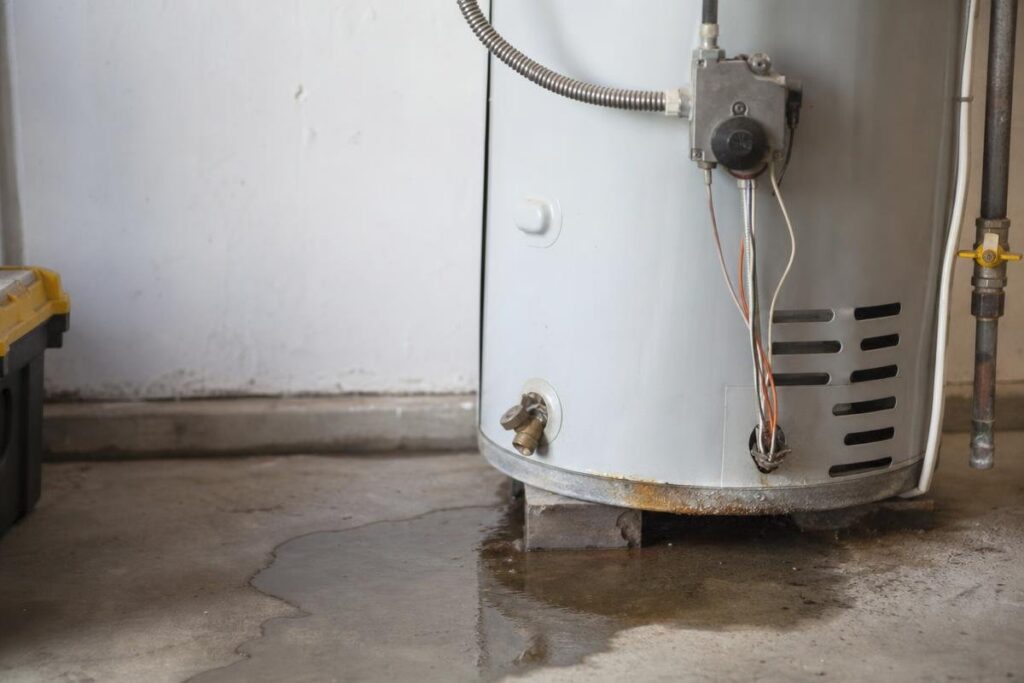
A puddle under the tank is never a minor issue. As we explain in our guide on what to do if your water heater is leaking, the tank wall has likely corroded through. Repairs on a unit showing any of these symptoms rarely buy you more than one to two years.
Rising Energy Bills
If your APS or SRP bill has crept up without any change in how you use hot water, your water heater may be working harder than it should to hold temperature. Aging heating elements and heavy sediment buildup both force the unit to run longer cycles. Our guide on why your electric bill may be so high in Phoenix covers this in more detail, including how to tell if your water heater is the culprit.
How to Get an Accurate Water Heater Replacement Quote in Phoenix
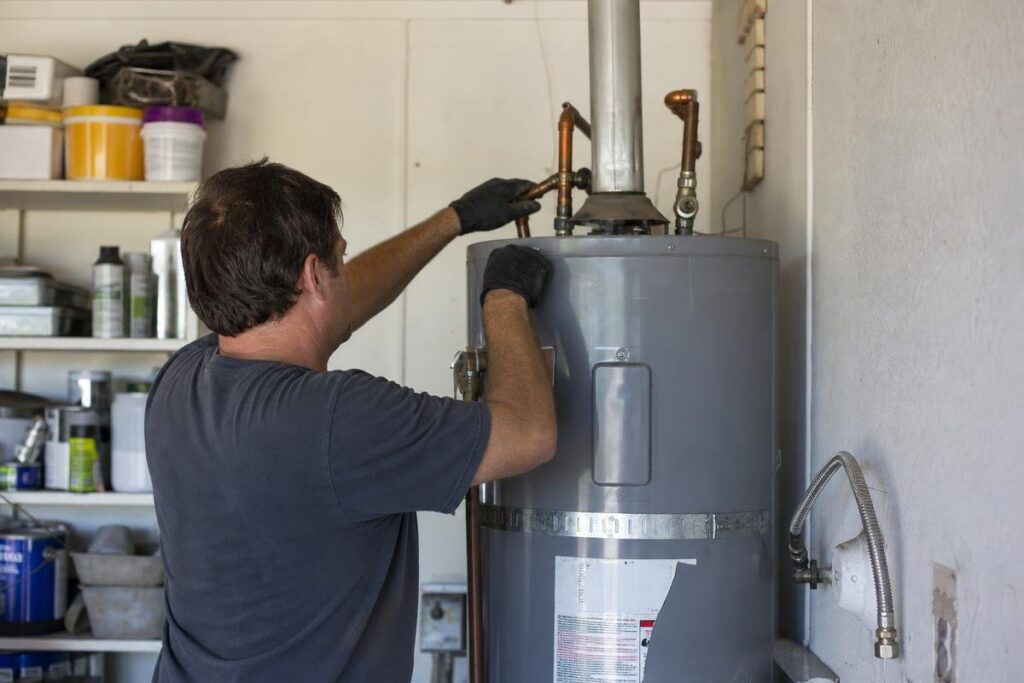
Getting a quote is straightforward if you come prepared. A few minutes of homework before you call means you get a number that actually reflects your home, not a generic ballpark that shifts once our team arrives.
What to Have Ready Before You Call
Check your current water heater’s label. You need four things: the age of the unit, whether it runs on gas or electric, the gallon capacity, and where it’s located in your home. Here in the Valley, most units sit in an unconditioned garage or an exterior utility closet. That location matters because it affects venting requirements and how much labor is involved.
Also note whether you have APS or SRP service. Your utility affects the gas vs. electric cost math, and our team can walk you through that when you call.
What a Good Quote Should Include
A fair quote breaks out four line items separately: the unit cost, labor, permit fee, and haul-away of your old unit. If a quote bundles everything into one number, ask for the breakdown. That’s the only way to compare water heater installation cost across multiple companies on equal terms. Our customers in the Tempe and Surprise areas tell us this transparency is what sets a trustworthy plumber apart.
One recent customer noted our install team was efficient and had everything done in three hours. That kind of speed matters when you’re without hot water.
How to Reach Our Team
Our team has served the Valley since 2011, holds Arizona ROC licensing, and carries a BBB A+ rating along with a Business Ethics Award. You can reach us at (480) 525-5400 or visit us at 3710 E University Dr #1, Phoenix, AZ 85034. You can also request one of our instant video quotes without waiting for a truck to roll out. If you want to review the full list of cities we cover, see our service area.
Frequently Asked Questions
How much does water heater replacement cost in Phoenix in 2026?
Total installed water heater replacement cost in the Valley runs from about $1,100 to $3,800, depending on the unit type and your home’s existing setup. A standard electric tank sits at the lower end. A gas tankless unit sits at the higher end. A full-service quote from our licensed plumbers includes the unit, labor, permit, and haul-away of your old water heater.
How long does a water heater last in Phoenix?
A tank water heater typically lasts 8 to 12 years here in the Valley, shorter than the 12 to 15 year national average. The reason is hard water. Municipal water in the metro measures 200 to 400 ppm calcium carbonate, which accelerates sediment buildup inside the tank. Flushing your tank annually slows that process. Our team put together a guide on how to extend the life of your hot water heater if you want to squeeze more years out of your current unit. Tankless units last 15 to 20 years with annual descaling.
Is a tankless water heater worth it in Phoenix?
For homeowners planning to stay 7 or more years, yes. A gas tankless unit typically saves $100 to $200 per year on energy compared to a tank. The Valley’s warm ambient temperatures also make heat pump water heaters more efficient here than in colder states. Your savings depend on whether you’re on APS or SRP and your current usage. If you want a deeper look at the fuel-type decision, our guide on why your electric bill may be so high in Phoenix covers how your utility rate affects operating costs.
Do I need a permit to replace a water heater in Phoenix?
Yes. The city and most surrounding incorporated municipalities require a permit for water heater replacement. A licensed plumber pulls the permit as part of the job. Skipping the permit can create problems when you sell your home, and some insurance claims can be denied for unpermitted work.
What size water heater do I need for a Phoenix home?
A 40 to 50 gallon tank covers most 2 to 4 person households in the area. Families of five or more typically need a 50 to 75 gallon tank or a tankless unit sized to your peak demand. Our team factors in your household size, number of bathrooms, and daily usage before recommending a size.
Should I repair or replace my water heater?
If your unit is under 6 years old with a single failed component like a thermostat or heating element, repair usually makes sense. If it’s over 10 years old and showing rust, active leaks, or sediment noise, replacement is the smarter call. We give you a clear price before any work begins, so you can make that decision without pressure.
Ready to stop guessing and get a real number? Call Penguin Air, Plumbing & Electrical at (480) 525-5400 to schedule a water heater assessment. Our licensed plumbers serve the greater metro area including Tempe, Surprise, Mesa, and surrounding cities. We’ll assess your home’s gas line, water quality, and hot water demand, then give you a clear recommendation and a price before any work begins.
Ready to Get Started with Penguin Air, Plumbing & Electrical?
Call (480) 525-5400 to speak with our team directly. We’re ready to answer your questions, walk you through your options, and help you find the right solution for your needs. Whether you’re just starting to plan or ready to move forward, we’ll make the process simple and stress-free.
Reach out today and let’s talk about how we can help.