
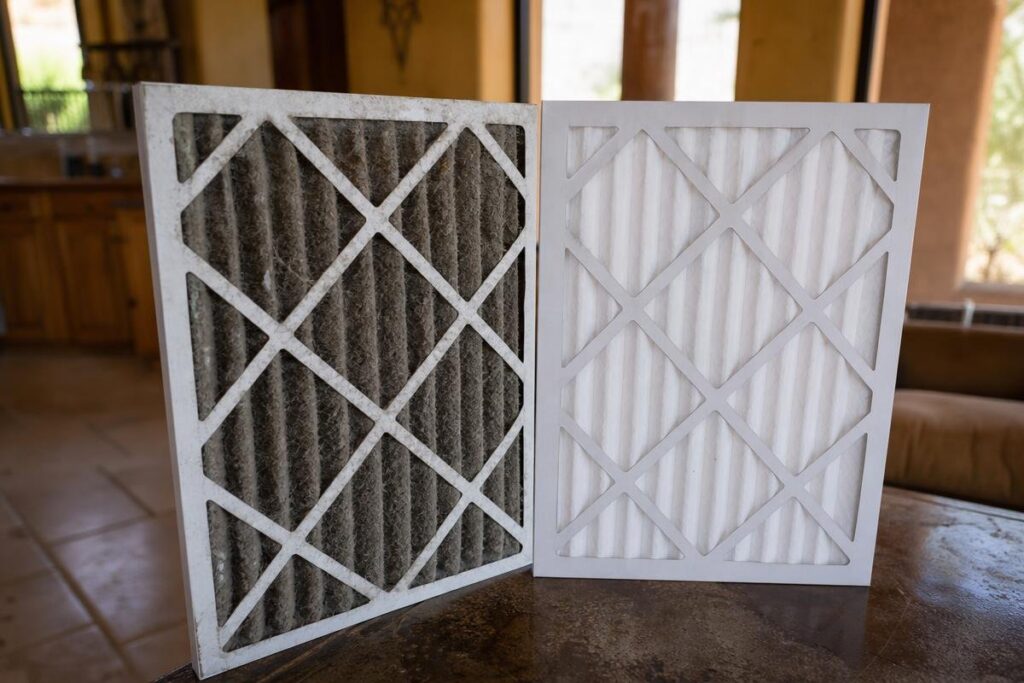
Phoenix dust doesn’t play around. Between haboob season, one of the most extended pollen calendars in the Southwest, and summer heat that runs your AC almost nonstop, your HVAC filter takes a beating that homeowners in most other cities never deal with. A filter that might last 90 days in Seattle can clog in a few weeks here in the Valley. Knowing when and how to handle HVAC filter replacement in Phoenix can mean the difference between clean air and a system that’s working twice as hard as it should.
Your filter might be more clogged than you think. Let our team take a look.
Key Takeaways
- Phoenix dust, pollen, and haboob season can clog an HVAC filter in weeks, not months.
- Most Valley homeowners need to replace their HVAC filter every 30 to 45 days during peak season.
- Using the right MERV rating matters as much as how often you change the filter.
- A dirty filter forces your system to work harder, which shortens equipment life and raises your energy bill.
- Monsoon humidity spikes can cause a loaded filter to trap moisture, creating conditions for mold inside your air handler.
Pull your HVAC filter out after a few weeks here in the Valley and it looks like a gray carpet. That is not normal wear. That is the desert doing what it does.
The air around Scottsdale, Tempe, and across the greater metro carries a combination of fine desert dust, cottonwood fluff, ragweed pollen, and monsoon particulate that hits filters harder than almost anywhere else in the country. Add haboob season on top of that, and a single storm can undo a fresh filter in a matter of days, something we cover in detail below.
Humidity swings make it worse too, especially during monsoon, and a dust-loaded filter caught in that moisture can turn an air quality issue into a mold problem. We have been pulling clogged filters out of Valley homes since 2011, and the volume of debris never stops being striking. Below we walk through how often to change your filter, which type fits your home, what MERV ratings actually mean, and the warning signs your filter is already overdue.
Why Phoenix Is So Hard on HVAC Filters
The desert around us gets under 8 inches of rain a year. That means dust stays loose, dry, and airborne almost every single day. Your HVAC filter is working harder here than it would in almost any other city in the country, and the Valley throws multiple threats at it across every season.
Desert Dust and Haboobs
Fine particulate matter, both PM2.5 and PM10, floats through the air here even on calm, clear days. Then haboob season hits, roughly May through September, pushing walls of coarse dust through neighborhoods like Ahwatukee, Laveen, and the West Valley. A single major storm can fully saturate a residential filter within days. If you are wondering how often to replace your HVAC filter in the Valley, a dust storm alone can reset that clock overnight.
Monsoon Season Particulate
The summer monsoon brings a different problem. Humidity can swing from under 15% to over 50% overnight. A filter already loaded with dust will trap that moisture. Wet, packed filters can create conditions for mold growth inside your air handler, which turns an air quality problem into a health problem fast. Once mold takes hold in the coil or blower housing, no amount of filter changing fixes it, and remediation gets expensive. Our guide on AC maintenance checklist covers what to inspect before and after the wet season to stay ahead of this.
Cottonwood, Pollen, and Year-Round Allergens
The Valley carries one of the most extended pollen seasons in the region, with tree, grass, and weed allergens overlapping across most of the calendar. Olive trees run February through April, cottonwood fluff peaks March through May, and ragweed takes over August into fall. All of it gets pulled straight into your return-air vents. Add pet dander on top of that and you have a filter fighting multiple overlapping loads at once. Choosing the right filter for Phoenix dust and pollen levels is not a one-size-fits-all answer, which is why filter type matters as much as replacement frequency.
How Often Should You Replace Your HVAC Filter in Phoenix?
Most Valley homeowners should replace their HVAC filter every 30 to 45 days during peak cooling season, not the 90-day interval printed on the box. That packaging guidance is written for moderate climates with mild summers, low dust, and an AC unit that runs a few months a year. That is not life in the desert Southwest.
The Standard Rule, and Why It Does Not Apply Here
Here in the Valley, your AC runs continuously for eight-plus months. A filter that would last 90 days in Denver or Portland can be fully saturated in three weeks in Scottsdale or Surprise. Add pollen from olive trees, cottonwood, and ragweed across a nearly year-round season, and your filter is fighting on multiple fronts at once.
A clogged filter also forces your blower motor to work harder to pull air through. That extra strain shows up directly on your electric bill. If your cooling costs seem high, a dirty filter is one of the first things to check. Our post on causes for high electric bills covers this and several other common causes.
A Phoenix-Specific Replacement Schedule
Use this as your baseline guide for AC filter replacement in the Valley:
- Single occupant, no pets: every 45 to 60 days
- Average household: every 30 to 45 days
- Pets or allergy sufferers: every 20 to 30 days
- During dust storm season (May through September): check every two weeks
- After a major dust storm: replace immediately, regardless of when you last changed it
The wet season adds another wrinkle. That same overnight humidity swing means a filter loaded with fine particulate can retain moisture and, as covered above, create conditions for mold inside your air handler. When in doubt, swap it out.
Not sure which filter your system actually needs? We’ll help you match the right size and MERV rating to your home and your air quality goals.
MERV Ratings Explained: Which Filter Is Right for Your Phoenix Home?
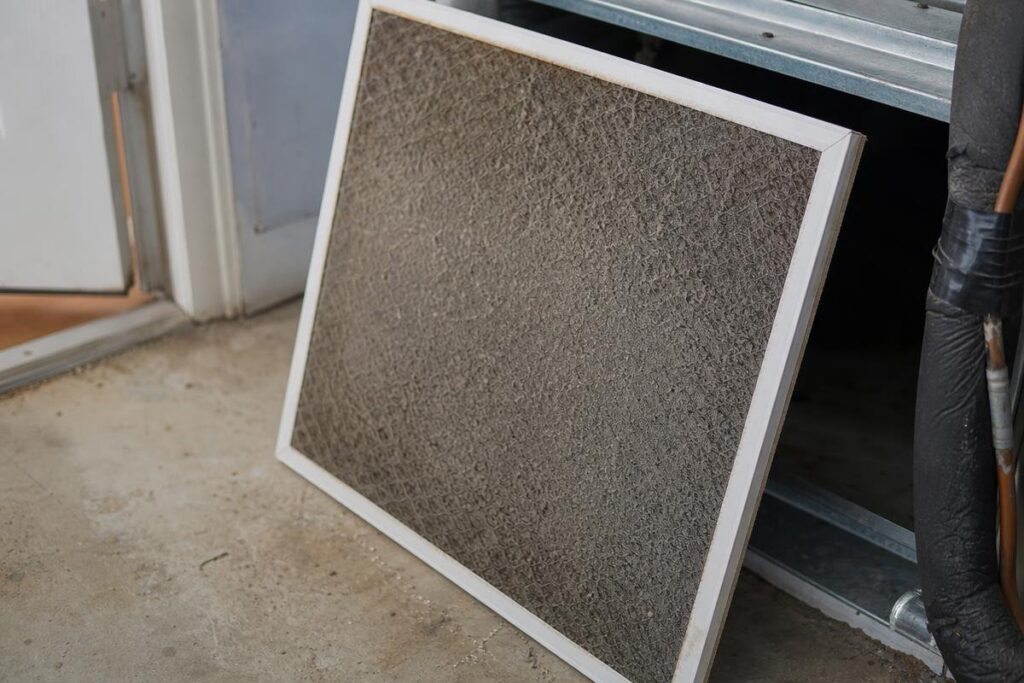
Walk into any home improvement store and you will find filters with numbers like 4, 8, 11, and 13 stamped on the box. Those numbers are MERV ratings, and picking the wrong one for your home can either leave your air dirty or damage your AC system. Here is what the numbers actually mean and which one makes sense for homes across the Valley.
What MERV Numbers Actually Mean
MERV stands for Minimum Efficiency Reporting Value. The scale runs from 1 to 20. A higher number means the filter catches smaller particles. A MERV 4 fiberglass filter traps large debris like hair and lint, but fine desert dust floats right through it. That is not a good fit for homes in Ahwatukee or Chandler, where cottonwood season and dust storms push a lot of fine particulate through your return vents.
The Best MERV Range for Phoenix Homes
For most Valley homes, MERV 8 to MERV 11 is the right range. A MERV 8 filter handles bulk desert dust and pollen without choking your airflow. If you have pets, or if you live near dense tree cover, stepping up to a MERV 11 adds protection against fine particulate and dander without putting extra strain on your blower motor.
Neighborhoods with heavy cottonwood trees, like parts of Gilbert and the older core of Mesa, benefit most from that MERV 11 upgrade. It is a simple change that makes a real difference during pollen season.
When a Higher MERV Rating Can Hurt Your System
A MERV 13 filter has tighter fibers that restrict airflow more than most residential systems can handle. In older systems built in the 1990s or 2000s, that restriction can cause your evaporator coil to freeze, overwork your blower motor, and push your energy bills higher. Our Phoenix AC maintenance checklist covers why airflow is one of the first things our team checks on older equipment.
If you want MERV 13-level air quality, a whole-home air cleaner or in-duct purifier is a safer path. It cleans the air without starving your system of the airflow it needs.
5 Warning Signs Your HVAC Filter Is Already Overdue for Replacement
Your filter will not send you an alert when it is done. But your system will give you signals. Here are five signs that your filter is already causing problems, especially relevant for homes in Peoria, Glendale, Queen Creek, and across the Valley where AC runs nearly nonstop through summer.
1. Airflow Feels Weak at Your Vents
Hold your hand near a supply vent. If the air barely moves, a clogged filter is likely strangling your blower. The motor is working hard, but the air has nowhere to go.
2. Your AC Runs Longer Cycles Than Normal
A restricted filter forces your system to work harder to move the same volume of air. Longer runtimes mean higher wear and bigger electric bills. In a Valley summer, that extra runtime adds up fast.
3. More Dust on Furniture and Surfaces
A saturated filter stops catching particles and starts releasing them back into your home. If you are dusting more than usual, your filter may have already given up. This is especially common after a major dust storm rolls through the area.
4. An Unexplained Jump in Your Energy Bill
A clogged filter increases your system’s energy draw. If your bill spiked without a change in your thermostat settings, the filter is a likely culprit. Our blog on common causes for high electric bills covers this in more detail.
5. Your AC Is Freezing Up
A dirty filter blocks warm return air from reaching the evaporator coil. Without that warm air, the coil gets too cold and ice forms. The system shuts down. Read more about causes and fixes of AC freezing up if you are seeing ice on your unit.
Noticing any of these signs? A filter swap may be all it takes to get your system back on track. Call our team at (480) 525-5400 and we will help you figure out the next step.
How to Replace Your HVAC Filter: A Step-by-Step Guide for Phoenix Homeowners
Replacing your filter takes about five minutes. Done right, it protects your system and keeps your air clean. Here is exactly how to do it.
Step 1: Find Your Filter Size
Look at the cardboard edge of your current filter. The size is printed right on it, something like 16x25x1 or 20x25x4. Homes built in the West Valley and Scottsdale during the 1990s and 2000s usually take a standard 1-inch filter in the return-air grille. Newer builds often have a 4-inch or 5-inch media filter cabinet in the air handler instead.
Step 2: Turn Off the System
Set your thermostat to OFF before you touch the filter. If the system is running while the slot is open, it pulls unfiltered air straight into the blower. That defeats the whole purpose of the swap.
Step 3: Remove the Old Filter and Check the Direction Arrow
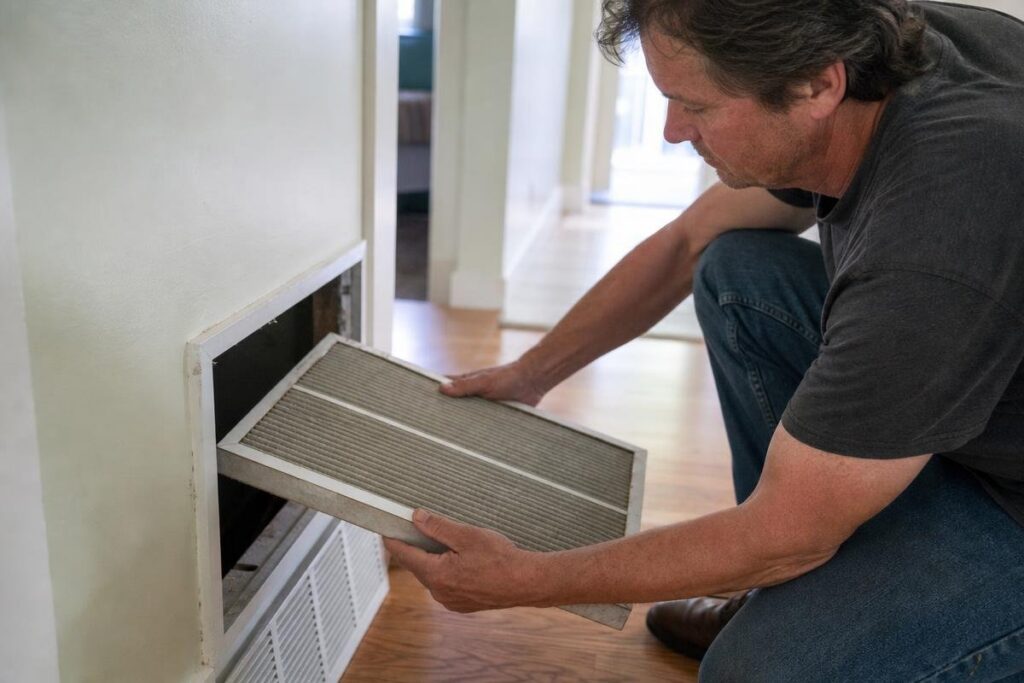
Slide the old filter into a trash bag the moment it clears the grille. Valley dust is fine enough to scatter instantly, and you do not want it drifting back into the room. Every filter has an airflow arrow printed on the frame. Note which direction it points before you toss the old one.
Step 4: Install the New Filter
The arrow on the new filter must point toward the blower, away from the return-air duct. Getting this backward is one of the most common DIY mistakes we see. Press the filter in firmly. No gaps around the edges. Any gap lets unfiltered air bypass the filter entirely, which is just as bad as skipping the change. For a full picture of what good AC maintenance looks like, check out our seasonal maintenance checklist for Valley homes.
Step 5: Log the Date and Set a Reminder
Write the installation date on the cardboard frame with a marker. Then set a phone reminder for 30 days out. Good intentions fade fast. A calendar alert does not. A clogged filter strains your system and can push your energy bill higher than it needs to be, something our team covers in detail in our article on why your electric bill is so high.
When Filter Replacement Is Not Enough: Signs Your HVAC Needs Professional Attention
Your System Still Struggles After a Fresh Filter
You put in a clean filter and your AC still isn’t keeping up. That’s a sign something else is wrong. Weak airflow, ice on the refrigerant lines, or rooms that won’t reach the set temperature after an AC freezes up all point to problems beyond the filter. Dirty evaporator coils, low refrigerant, or a failing blower motor can all produce the same symptoms a clogged filter does.
Dirty Filters May Have Already Damaged Your AC
Running a restricted filter for months puts real strain on your blower motor, evaporator coil, and compressor. In the Valley, where outdoor temps push past 115°F for weeks at a time, that strain compounds fast. A blower motor that might limp along for a season in a mild climate can fail quickly here. A system that ran restricted through a full cooling season may already have early wear that a filter swap won’t fix. An AC tune-up can catch that wear before it turns into a full breakdown.
When to Call for Professional Help
If your system is short-cycling, making grinding or rattling noises, or your electric bill keeps climbing with no clear reason, stop troubleshooting on your own. Our team is background-checked, uses flat-rate pricing, and is available same day. We’ve earned over 6,677 customer reviews averaging 4.7 out of 5 stars from homeowners across the Valley, and our technicians take time to explain exactly what they find. You can reach us at (480) 525-5400 or visit us at 3710 E University Dr # 1, Phoenix, AZ 85034.
Protecting Phoenix Air Quality Beyond the Filter
Air Duct Buildup Compounds the Problem
Yes, your ducts can absolutely make your air quality worse even when you change your filter on schedule. In older neighborhoods like Maryvale, Central Phoenix, and South Mountain, homes built in the 1970s and 1980s often have original ductwork that has never been cleaned or inspected. Decades of desert dust, debris, and humidity-driven mold accumulate inside those ducts and recirculate through your home no matter how clean your filter is.
Indoor Air Quality Upgrades Worth Considering
For households dealing with allergies, asthma, or heavy pet dander, swapping filters alone often is not enough. With allergens overlapping across most of the calendar here, your air handler needs real backup. These upgrades make a measurable difference:
- Whole-home air purifiers capture fine particulates a standard filter misses
- UV light systems installed in the air handler kill mold spores and bacteria
- Media filters offer deeper filtration without restricting airflow
Our team covers how air scrubbers work in detail in cleaning the air inside your home with an air scrubber. If you are ready to go beyond a standard filter for handling Valley dust, these systems are worth a serious look.
Frequently Asked Questions
How often should I replace my HVAC filter in Phoenix, AZ?
Replace it every 30 to 45 days during summer cooling season. If a major dust storm hits the Valley, check it within a day or two afterward. Pet owners and allergy sufferers in areas like Tempe or Scottsdale should check every 2 to 3 weeks.
What MERV rating is best for a Phoenix home?
MERV 8 handles desert dust and pollen well for most homes. Step up to MERV 11 if you have pets or someone with allergies. Go higher than MERV 13 only if your system is built for it, or you risk restricting airflow and straining the blower motor.
Can a dirty HVAC filter cause my AC to stop working?
Yes. A severely clogged filter starves the system of airflow and can freeze the evaporator coil solid. It can also overheat the blower motor over time. Swap the filter first. If the AC still won’t run right, read our post on why your AC freezes up and how to fix it and call us if the problem continues.
What size HVAC filter do I need for my home?
Check the cardboard edge of your current filter. Common sizes in Valley homes include 16x25x1, 20x25x1, and 20x20x1 for standard grilles. Homes with media filter cabinets often use 16x25x4 or 20x25x4.
Does your team replace HVAC filters as part of a maintenance visit?
Yes. Penguin Air, Plumbing & Electrical inspects and replaces the filter during every maintenance visit, along with the evaporator coil, blower motor, refrigerant levels, and electrical connections. See what a full visit covers on our Phoenix AC maintenance checklist.
Will replacing my filter lower my electric bill in Phoenix?
A clean filter lets the system reach your set temperature faster and shut off sooner. In summer heat where the AC runs nearly around the clock, a clogged filter adds real dollars to your monthly bill. A fresh filter is one of the cheapest efficiency upgrades you can make.
A clean filter is the single easiest thing you can do to protect your AC system here in the Valley. With another dust storm season and cooling season always around the corner, do not wait until your bill spikes or your coil ices over. Check your filter today. If your system is still struggling after a fresh filter, call us at (480) 525-5400 or schedule online. Our team has served Valley homeowners since 2011 from 3710 E University Dr # 1, Phoenix, AZ 85034. Same-day service, flat-rate pricing, and straight answers about what your system actually needs.
Ready to Get Started with Penguin Air, Plumbing & Electrical?
Call (480) 525-5400 to speak with our team directly. We’re ready to answer your questions, walk you through your options, and help you find the right solution for your needs. Whether you’re just starting to plan or ready to move forward, we’ll make the process simple and stress-free.
Reach out today and let’s talk about how we can help.