
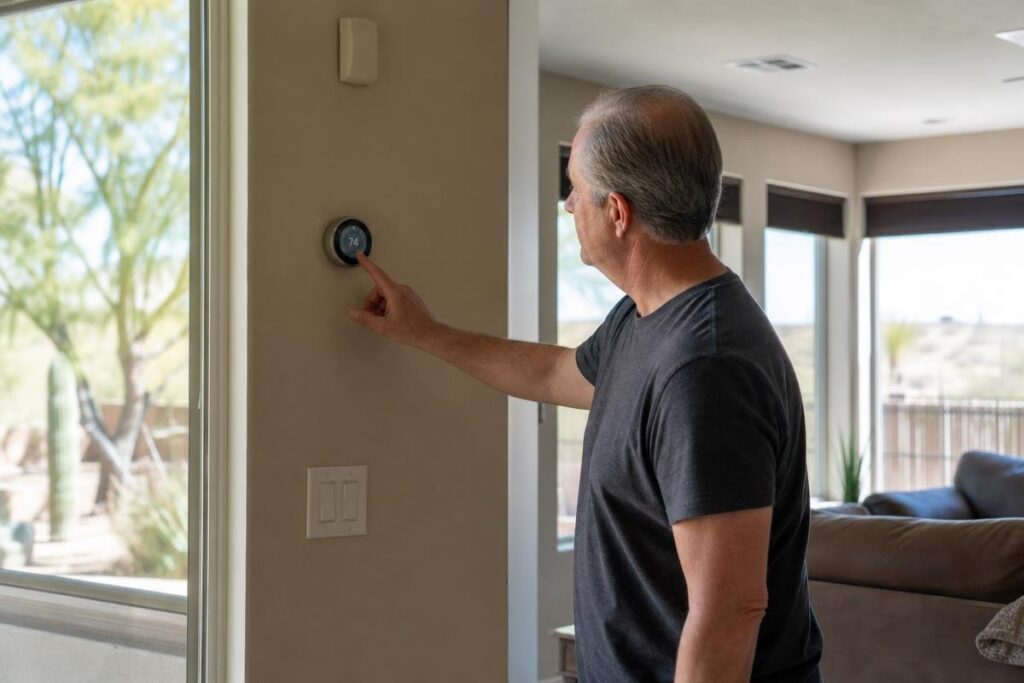
Smart home upgrades are one of the fastest-growing investments Phoenix homeowners are making right now, and it makes sense. With brutal summer heat and APS and SRP time-of-use rates hitting peak pricing in the late afternoon, automating your home’s energy use isn’t just convenient, it saves real money. At Penguin Air, Plumbing & Electrical, we cover HVAC, plumbing, and electrical under one roof, which means we can handle the full range of smart upgrades your home needs, from smart thermostats to whole-home surge protection. We’ve held a BBB A+ Rating since we opened our doors in 2011.
Ready to start upgrading your Phoenix home? Our team can help you figure out where to begin.
Key Takeaways
- Smart home upgrades in Phoenix deliver bigger energy savings than most U.S. cities because of extreme heat and time-of-use utility rates.
- A smart thermostat paired with your HVAC system is one of the highest-return upgrades a Phoenix homeowner can make.
- Monsoon season lightning and power surges make whole-home surge protection a smart home priority specific to the Valley.
- Many older Phoenix homes built between the 1970s and 2000s need an electrical panel check before adding EV chargers or smart load controllers.
- Homes with hard water from the Colorado River supply should account for mineral buildup when installing plumbing-connected smart devices.
Your AC kicks on at 5 a.m. before the sun even clears the McDowell Mountains. By the time July ends, your APS or SRP bill has climbed past anything you budgeted for. That is the reality for most homeowners across the Valley, and it is exactly why smart home upgrades are catching on so fast here in 2026.
The Valley is not like most U.S. cities. The cooling season stretches close to nine months, time-of-use rate plans from APS and SRP mean the hour you run your appliances actually changes what you pay, and a growing number of homes in areas like Laveen and Glendale are being retrofitted for solar-ready living. Smart home technology fits that reality better than almost anywhere else in the country. If you have been curious about where to start, our team put together this list of the 10 smart home upgrades Valley homeowners are adding right now, and why each one makes sense for Arizona’s climate specifically. Before diving in, it helps to review our Phoenix AC maintenance checklist so your system is ready to work alongside any new smart controls.
Why Phoenix Homes Are Built for Smart Upgrades
The Desert Climate Case for Home Automation
Phoenix averages 299 sunny days per year and summer temperatures that regularly push past 110°F. No other major U.S. city puts more pressure on your cooling system, and that pressure is exactly why these upgrades pay back faster in Phoenix than almost anywhere else in the country.
APS and SRP both run time-of-use rate plans that charge significantly more for electricity between 3 and 8 p.m. in summer. Smart thermostats, load controllers, and automated shading can shift your energy use away from those expensive peak windows automatically. That kind of automation is a real financial tool here, not just a convenience feature. If you want more detail on that, our guide to lowering your electric bill in Phoenix covers the specifics.
Monsoon season adds another layer. Lightning strikes and power surges between June and September can fry unprotected smart devices fast. Whole-home surge protection is not optional here. It is the foundation every other smart upgrade sits on.
New Builds vs. Existing Homes: Who This Guide Is For
Newer master-planned communities like Eastmark in Mesa or Verrado in Buckeye often come pre-wired for smart systems, and so do many recent builds in Surprise and north Scottsdale. That is a real advantage. But most of the Valley’s housing stock was built between the 1970s and 2000s, and those homes need retrofit smart upgrades, not plug-and-play installs.
Older neighborhoods in Ahwatukee and Maryvale frequently have electrical panels that were never sized for today’s load demands. Adding EV chargers, smart load controllers, or whole-home automation to an older panel without an evaluation first is a mistake. Our team has seen it cause real problems. If you are not sure where your home stands, our post on signs you need electrical rewiring in your Arizona home is a good starting point.
This guide is written for existing homeowners making smart, incremental improvements, not full-home automation overhauls. You do not need to gut your house to make it smarter.
The 10 Smart Home Upgrades Worth Installing in Phoenix Right Now
Here in the Valley, smart home upgrades are not just about convenience. They are about managing brutal summer heat, hard water, monsoon surges, and rising utility costs. These ten upgrades make the most sense for Arizona homeowners right now.
1. Smart Thermostat
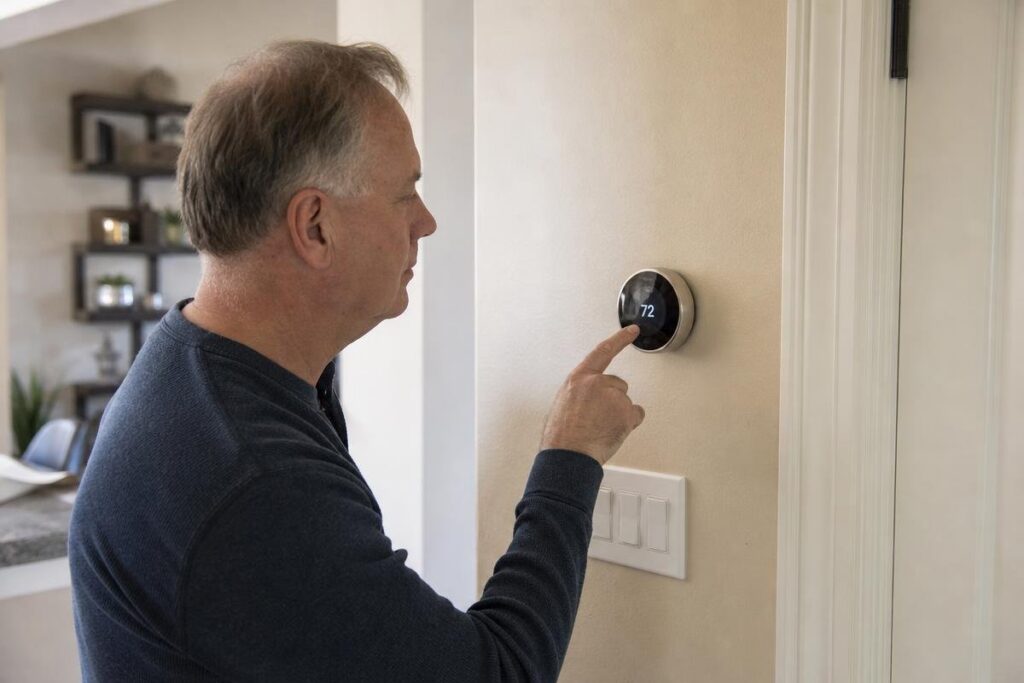
A smart thermostat automatically adjusts your AC schedule around those same peak rate windows, cutting cooling costs without any manual effort. Ecobee, Google Nest, and Honeywell Home T6 Pro are the top picks for homes here. Program setback temperatures from 78°F up to 85°F during work hours, so your AC is not running full blast in an empty house. Our NATE-certified technicians handle smart thermostat installation and can confirm compatibility with your existing HVAC system before install day. Check what SEER rating your AC unit needs to get the full benefit.
2. EV Charging Station
A Level 2 home charger delivers a full overnight charge on a dedicated 240V circuit, which is why it is becoming standard equipment for EV owners here. Adoption is rising fast across Tempe, Chandler, and Gilbert along the I-10 and Loop 101 corridors. This is not a DIY project. It requires a licensed electrician to run a dedicated circuit safely. Our licensed electricians, serving the Valley since 2011, handle EV charging installation from panel assessment through final inspection.
Ready to add a Level 2 charger? Schedule your panel assessment and we’ll size the circuit correctly the first time.
3. Smart Electrical Panel or Load Controller
A smart panel or load controller gives you circuit-level monitoring and automates load shedding during expensive peak hours. Span and Leviton load controllers pair well here because they can respond to SRP’s EZ-3 rate plan and APS demand-response events, shifting high-draw loads out of peak automatically. Older homes in Laveen and central Mesa often need a panel evaluation before adding this technology. Check your panel capacity before adding this technology and plan your budget accordingly.
4. Whole-Home Surge Protector
A whole-home surge protector installs at your main panel and shields every connected device from voltage spikes at once. It is the foundation of any smart home setup here, because monsoon lightning and utility fluctuations can destroy smart devices in seconds. Ask our team about home surge protection options and how to best prepare for monsoon season.
5. Smart Lighting and Switches
Smart switches let you schedule, dim, and voice-control lighting throughout the house without rewiring. Lutron Caseta and Leviton Decora switches are retrofit-friendly and work without a neutral wire in most cases, which matters in homes built before 2000. Pair them with outdoor motion sensors for security lighting around your entry and garage. They also integrate cleanly with most voice assistants and smart home hubs.
6. Smart Water Leak Detector
A smart leak detector sits at your supply line connections and alerts your phone the moment moisture appears, before a small drip becomes a flooded floor. Flo by Moen and SwitchBot sensors are reliable choices. Hard water from Colorado River canals accelerates corrosion in supply lines and water heater fittings, so leaks here tend to happen faster than in softer-water cities. If you suspect a bigger problem, our team also handles slab leak detection across the Valley.
7. Tankless Water Heater with Smart Controls
A smart tankless water heater delivers endless hot water while its app tracks usage, schedules recovery, and flags when descaling is due. Rinnai and Navien units lead the pack here. That descaling alert is especially useful in the Valley, where mineral hardness builds scale faster than nearly anywhere else in the country. Tankless units cost more upfront but deliver long-term savings, especially with Phoenix’s hard water conditions requiring annual descaling.
8. Indoor Air Quality Monitor and Purifier
An indoor air quality monitor tracks particulates, CO2, and humidity in real time so you know exactly when to run your purifier. Awair Element and IQAir are strong options. The Valley ranks among the worst U.S. cities for airborne particulates during haboob season, and a monitor tells you the moment your indoor air quality drops. Pair a monitor with an air scrubber for the best results. Our blog covers improving indoor air quality in Phoenix and explains how cleaning the air inside your home works.
9. Smart Irrigation Controller
A smart irrigation controller pulls local weather data and automatically skips watering cycles when rain is coming or soil moisture is sufficient. Rachio and RainBird controllers are the standouts. Maricopa County water conservation rebates are sometimes available, which can offset upfront cost. This upgrade pays for itself quickly in a desert climate.
10. Smart Garage Door Opener and Entry Lock
Smart garage openers and locks let you monitor and control your home’s entry points remotely from anywhere. Chamberlain myQ and Schlage Sense Pro are popular with snowbirds and frequent travelers. You can check whether your garage is closed or your front door is locked from your phone, no matter where you are. Pair them with a video doorbell for complete front-entry visibility.
Which Upgrades Actually Save Phoenix Homeowners Money?
Not every smart upgrade pays for itself at the same speed. Here in the Valley, three upgrades consistently deliver the fastest return, and the reasons are specific to how we live here.
High-ROI Upgrades for Arizona’s Climate
A smart thermostat tops the list. Our nine-month cooling season means savings compound far longer than in moderate climates. When it pre-cools your home ahead of those same afternoon peak windows, it trims your bill without you thinking about it. One to two cooling seasons is a realistic payback window for most Scottsdale and Chandler homeowners.
A whole-home surge protector ranks second. Monsoon season brings real lightning risk from June through September. One surge event can destroy thousands of dollars of smart devices, appliances, and HVAC equipment. The protector itself costs a fraction of that. If you want to understand how aging electrical panels in older homes handle that kind of load, our post on signs you need electrical rewiring in your Arizona home covers the warning signs.
Smart water leak detectors rank third. Hard water from the Salt River Project supply accelerates pipe scale in homes across Tempe and Gilbert. An undetected slab leak can cause tens of thousands in foundation and flooring damage. A leak detector under each sink and near the water heater costs very little and catches problems early.
Smart Home Upgrade Checklist for Phoenix Homeowners
Start here. You do not need to do everything at once. Pick two or three items this year and build from there.
- Smart thermostat installed and programmed for time-of-use rate windows
- Whole-home surge protector installed at the main panel
- Smart leak detectors under sinks and near the water heater
- EV charger on a dedicated 240V circuit
- Smart lighting on outdoor security zones
- Indoor air quality monitor active during dust season
- Smart irrigation controller connected to local weather data
- Smart locks and garage access configured
Want help figuring out where to start? Our team can assess your home and point you toward the upgrades with the best payback for your situation. Call us at (480) 525-5400.
What Does It Take to Install These Upgrades in an Existing Phoenix Home?
Most smart home upgrades fall into two camps: things a handy homeowner can handle on a Saturday, and things that legally require a licensed contractor in Arizona. Knowing the difference saves you time, money, and a potential insurance headache.
Electrical Work That Requires a Licensed Electrician
Anything that touches your electrical panel needs a pro. That includes EV charger installation, whole-home surge protectors wired at the panel level, smart load controllers, and any new dedicated circuit. Arizona ROC licensing requirements are strict, and DIY panel work can void your homeowner’s insurance or create a fire hazard. Our licensed electricians have been serving Valley homes since 2011 and carry the work from assessment through the final permitted inspection.
Older homes across Glendale and central Mesa often have undersized panels that were never designed to handle today’s loads. Before you add an EV charger or a smart panel controller, it’s worth having an electrician evaluate your current capacity. If your home is showing warning signs, read our guide on signs you need electrical rewiring in your Arizona home before moving forward.
Phoenix’s monsoon season brings real surge risk. A panel-level surge protector is one of the smartest electrical upgrades you can make, and it protects every connected device in the house. That’s a job for a licensed electrician, not a plug-in strip.
Plumbing-Connected Smart Devices: What to Know
Smart leak detectors that sit on the floor near a water heater or under a sink are typically battery-powered and DIY-friendly. Smart water shutoff valves are a different story. Devices like Flo by Moen or Phyn require cutting into your main supply line, which needs a licensed plumber. Tankless water heater upgrades with smart controls involve both plumbing and gas or electrical connections, so those require professional hands as well.
Valley water is hard, and mineral scale builds up faster here than in most U.S. cities. That affects plumbing-connected smart devices over time, so proper installation and periodic maintenance matter more than the packaging suggests.
DIY vs. Professional Installation: Where to Draw the Line
Smart plugs, smart bulbs, smart locks, and most smart switches are fair game for a capable homeowner. If the upgrade plugs in or replaces a switch without touching the breaker box, you can likely handle it yourself.
Gas lines, the main water supply, and your electrical panel are not DIY territory. Our team covers all three trades, so you won’t need to schedule three separate contractors for a single home automation project. For a broader look at what to check before starting, reviewing your home’s electrical setup before getting started is a solid starting point.
How Phoenix’s Climate Makes These Upgrades More Valuable Than Elsewhere
Most smart home guides are written for a national audience. But the Valley has conditions that change the math on nearly every upgrade on this list. The heat, the storms, and the water here all push the return on investment higher than you’d see in most other cities.
Cooling Season Automation in a City That Runs AC Nine Months a Year
In Scottsdale, Tempe, and Surprise, homeowners are running their AC from roughly March through November. That nine-month season is what separates a smart thermostat here from one installed in, say, Denver or Chicago. The savings compound over a much longer window.
A smart thermostat that learns your schedule and pre-cools your home before those afternoon peak hours kick in can cut your bill noticeably every single month of the cooling season. Pair that with a current Phoenix AC maintenance checklist and your system runs efficiently all season long. If your unit is aging, make sure your system is sized and serviced properly before the next summer hits.
Monsoon Season and the Case for Surge and Leak Protection
From early summer through early fall, the Valley gets hit with lightning, power surges, and sudden heavy rain. Flat-roof homes built before 1990 are common across the Valley, and their drainage systems can overflow fast when a monsoon cell drops an inch of rain in twenty minutes.
A whole-home surge protector installed at the panel shields every connected smart device at once. Smart leak detectors placed near flat-roof drain connections and under kitchen and bath fixtures catch water intrusion before it reaches your drywall. Whole-home surge protection and smart leak detectors work together to protect your home during monsoon season.
Hard Water and Smart Plumbing Monitoring
Water supplied through Salt River Project canals carries high mineral hardness. That hardness accelerates scale buildup inside pipes, water heaters, and any plumbing-connected smart device. It shortens equipment life and reduces flow over time.
Smart water monitors detect flow anomalies that can signal a developing leak or blockage well before it turns into a slab leak repair. If you are wondering whether your home needs treatment upstream of those devices, consider whether a water softener makes sense for your situation given the Valley’s high mineral hardness levels.
Frequently Asked Questions
What is the best first smart home upgrade for a Phoenix homeowner?
Start with a smart thermostat. Cooling accounts for the largest share of the average Arizona electric bill, and a smart thermostat pays back faster here than almost anywhere else. Most units work with your existing wiring, but our team can check compatibility before you buy so there are no surprises on install day.
Do smart thermostats really save money in Phoenix?
Yes, especially if you are on an APS or SRP time-of-use plan. Pre-cooling your home before the late-afternoon peak lets you avoid the highest rates without sacrificing comfort. The savings compound quickly because the cooling season here stretches close to nine months.
Can I install a smart home device myself, or do I need a licensed contractor?
Smart plugs, bulbs, and most switches are DIY-friendly. Anything that connects to your electrical panel, such as a whole-home surge protector, EV charger, or load controller, requires a licensed electrician under Arizona law. Plumbing-connected shutoff valves also need a licensed plumber. If you are unsure, our guide to signs you need electrical rewiring in your Arizona home can help you gauge where your home stands before you start.
Does Penguin Air, Plumbing & Electrical install smart home devices and EV chargers in Phoenix?
Yes. Our team handles smart thermostat installation, EV charger installation, whole-home surge protection, and smart plumbing devices across the Valley. Because we cover HVAC, plumbing, and electrical, you schedule one visit instead of three separate contractors. Reach out through our Phoenix contact page or book online at penguinair.com.
How does Phoenix’s hard water affect smart plumbing devices?
The Valley’s water supply is high in calcium and magnesium. That mineral load causes scale to build up on sensors inside smart shutoff valves, which can trigger false flow readings over time. Cleaning sensors periodically helps, and a whole-home water softener reduces scale buildup on both traditional and smart plumbing fixtures.
Are there rebates or incentives for smart home upgrades in Arizona?
APS and SRP both offer rebates for qualifying smart thermostats and energy-efficient HVAC systems, though the amounts change seasonally. The federal residential clean energy credit may apply to certain EV charger installations. Arizona does not currently have a state-level smart home rebate program. Review federal tax credits for energy-efficient improvements with a tax professional to see what applies to your situation.
Ready to add smart upgrades to your home? Our team handles smart thermostat installation, EV charger installation, whole-home surge protection, and smart plumbing devices, all three trades under one roof. Call us at (480) 525-5400 or schedule online at penguinair.com. We serve the greater Valley from our location at 3710 E University Dr #1, Phoenix, AZ 85034.
Ready to Get Started with Penguin Air, Plumbing & Electrical?
Call (480) 525-5400 to speak with our team directly. We’re ready to answer your questions, walk you through your options, and help you find the right solution for your needs. Whether you’re just starting to plan or ready to move forward, we’ll make the process simple and stress-free.
Reach out today and let’s talk about how we can help.