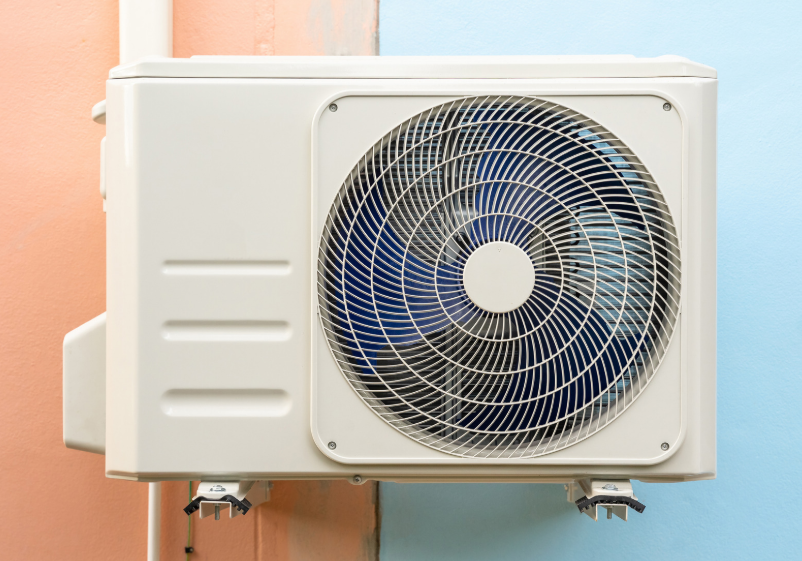
Walking outside to check your air conditioner on a Phoenix summer day and finding the outdoor fan blade completely still is a sinking feeling. Without the condenser fan spinning, your AC cannot release the heat it pulls from your home, and the system will quickly overheat, shut down, and potentially damage expensive components inside the unit.
At Penguin Air, Plumbing & Electrical, our technicians diagnose AC fan problems throughout the Phoenix Valley every summer. Here are the eight most common reasons your AC fan isn’t spinning and what can be done about each one.
1. A Failed Capacitor
The capacitor is a cylindrical component inside the outdoor unit that provides the initial electrical surge needed to start the fan motor, and keeps it running. Capacitors are one of the most common failure points on air conditioners in Arizona, and for good reason: the combination of intense heat and continuous operation wears them down faster here than almost anywhere else in the country.
A failed capacitor will often produce a humming sound from the outdoor unit while the fan blade sits still. In some cases, you can give the blade a gentle spin with a long stick (with the power OFF first) and the fan will start, this is a telltale sign the capacitor has failed. A capacitor is a relatively inexpensive part, but it carries a dangerous electrical charge even after the system is powered down. Always have a licensed HVAC technician perform this replacement.
2. A Burned-Out Fan Motor
If the capacitor is healthy but the fan still won’t spin, the fan motor itself may have burned out. Fan motors run continuously during Phoenix summers, and the heat stress accelerates wear on the motor’s windings and bearings. A motor that has seized or burned out will need to be replaced. Our air conditioning repair team can source the correct motor for your unit and get the fan running again, usually the same day.
Signs of a failing motor before it stops completely include the fan spinning slowly, making grinding or squealing noises, or the motor housing feeling excessively hot to the touch. Catching these symptoms early can prevent a complete motor failure during the hottest part of summer.
3. Debris Blocking the Fan Blade
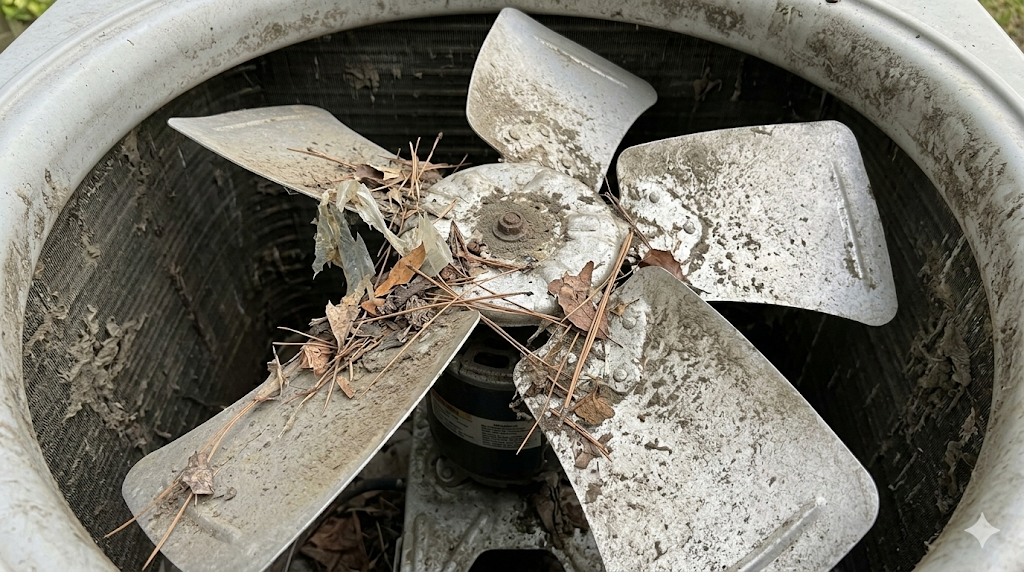
The outdoor condenser unit pulls in large volumes of air through its sides and top. Over time, especially after Phoenix’s monsoon season, leaves, twigs, cottonwood fluff, and other debris can work their way inside the unit and jam the fan blade. Even a small obstruction can prevent the blade from spinning freely.
Before calling a technician, turn off power to the unit at both the thermostat and the disconnect box, then carefully inspect the top of the unit and the fan blade. Remove any visible debris by hand. Once cleared, restore power and see if the fan starts normally. If debris has bent or cracked a fan blade, the blade will need to be replaced to prevent vibration damage to the motor.
4. Contactor Failure
The contactor is an electrical switch that allows power to flow to the compressor and the fan motor when the thermostat calls for cooling. A worn or failed contactor can prevent the fan from receiving power at all, even if the rest of the system appears to be running. Contactors burn out from normal wear, power surges, and voltage spikes, which is why whole-home surge protection is a smart investment for Phoenix homeowners. A licensed technician can test and replace a failed contactor quickly.
You may be able to see a failed contactor visually, look for black burn marks or pitting on the contactor’s contact points inside the electrical compartment of the outdoor unit. However, the electrical compartment carries dangerous voltages and should only be accessed by a licensed HVAC technician.
5. Low Refrigerant Levels
While low refrigerant doesn’t directly stop the fan blade from spinning, it causes the system to behave erratically. A severe refrigerant leak can trigger safety shutoffs within the unit that stop the fan. You may also notice the outdoor unit running but not cooling effectively, or ice forming on the refrigerant lines.
Refrigerant doesn’t simply run out on its own, if your system is low, there is a leak that needs to be found and repaired before refrigerant is recharged. Only licensed HVAC technicians are legally permitted to handle refrigerant. If you suspect a refrigerant issue, shut the system off and call a professional to avoid further damage to the compressor.
6. A Tripped Circuit Breaker
If the outdoor unit loses power entirely, the fan won’t spin. Check your electrical panel for a tripped breaker, AC units typically run on a dedicated double-pole breaker. Reset the breaker by pushing it fully to the “off” position before switching it back on. If the breaker trips again immediately or repeatedly, stop resetting it. A breaker that keeps tripping is signaling an electrical fault that needs professional attention. Our circuit breaker repair team can identify the root cause and resolve it safely.
In some cases, a tripped breaker is the result of the AC system drawing excess current due to a failing component, like a seized motor or failing compressor. Resetting the breaker without addressing the underlying cause risks damaging those components further.
7. A Faulty Thermostat or Control Board
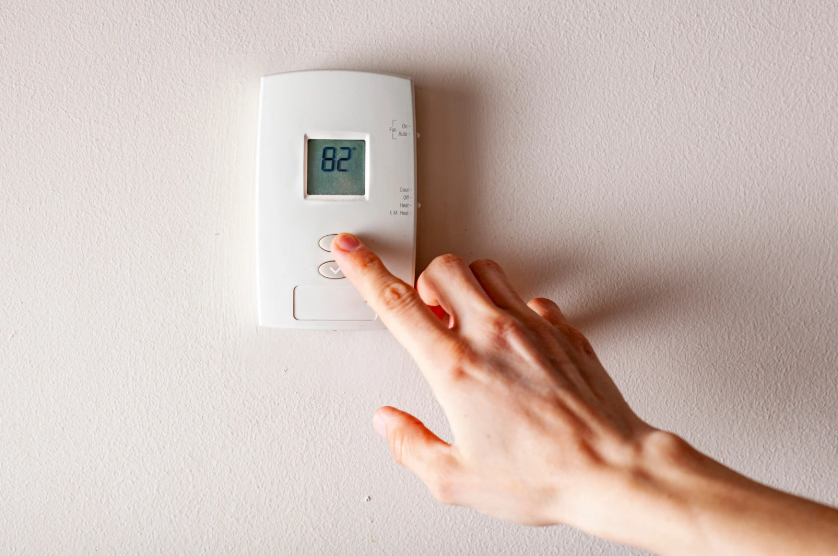
If the thermostat isn’t sending the correct signal to the air handler, the outdoor unit may not receive the command to run. Check that your thermostat is set to “Cool” mode and the setpoint is below the current room temperature. If the thermostat display is blank or unresponsive, try replacing the batteries. Upgrading to a programmable smart thermostat can also improve system communication and efficiency.
A malfunctioning control board inside the air handler can also prevent the outdoor unit and fan from operating. Control board failures are less common but do occur, particularly after power surges. A technician can test the control board and determine whether it needs repair or replacement.
8. Age and Deferred Maintenance
Air conditioners in the Phoenix Valley work harder and longer than in most parts of the country. A unit that has never had a professional AC tune-up is far more likely to fail at a critical moment. Accumulated dirt on the coils reduces heat transfer efficiency, forcing the fan and compressor to work harder. Worn bearings in the motor increase friction and heat. Small problems that would have been caught during a maintenance visit compound into major failures.
If your AC fan has stopped spinning and the unit is over 10-12 years old with no recent service history, it’s worth discussing whether repair or replacement makes more sense. A technician can assess the overall condition of the system and help you make an informed decision.
If your AC fan isn’t spinning, don’t wait, call Penguin Air, Plumbing & Electrical at (480) 525-5400. Our licensed HVAC technicians provide same-day AC repair throughout Phoenix, Scottsdale, Mesa, Chandler, Gilbert, Tempe, and the surrounding East Valley.
Frequently Asked Questions
What happens if the AC fan stops working in Phoenix summer heat?
Without the condenser fan running, the outdoor unit cannot release heat and the refrigerant pressure builds rapidly. Most modern units have safety shutoffs that will stop the system before the compressor overheats, but if the system keeps trying to run without the fan, compressor damage can result. Compressors are the most expensive component in an AC system, so it’s important to address a non-spinning fan quickly.
Can I run my AC if the outdoor fan is not spinning?
No. Running the air conditioner without the condenser fan spinning will overheat the unit, potentially damage the compressor, and put additional strain on all other components. Turn the system off at the thermostat and call for service.
How much does AC fan repair cost in Phoenix, AZ?
The cost depends on which component has failed. Capacitor replacement, fan motor replacement, and contactor replacement each vary in price depending on the unit and the extent of labor involved. Always get an upfront quote before authorizing repairs.
My AC fan was spinning slowly before it stopped, is that significant?
Yes. A fan spinning more slowly than normal is almost always a sign of a failing capacitor or a motor with worn bearings. Catching the problem at this stage is far preferable to waiting until the fan stops completely and potentially damages the motor or compressor in the process.
About Penguin Air, Plumbing & Electrical
Penguin Air, Plumbing & Electrical has been serving Greater Phoenix homeowners with trusted HVAC, plumbing, and electrical services since 2011. Founded by Wade Rusk and William Hallett, Penguin is locally owned and operated, available 24 hours a day, seven days a week. Our licensed, background-checked technicians serve Phoenix, Mesa, Scottsdale, Chandler, Gilbert, Tempe, Glendale, and communities throughout the Phoenix Valley.
Call Penguin Air at (480) 525-5400 to schedule service today.