
If your air conditioner suddenly stopped working on a hot Arizona day, a tripped float switch could be the reason. The float switch is a small safety device that plays a surprisingly important role in protecting your home, and most homeowners in the Phoenix area have never heard of it until something goes wrong.
At Penguin Air, Plumbing & Electrical, our HVAC technicians see float switch issues regularly, especially during the long cooling season in Arizona. Here’s everything you need to know about what a float switch does, why it trips, and what to do when yours shuts your system down.
What Is an HVAC Float Switch?
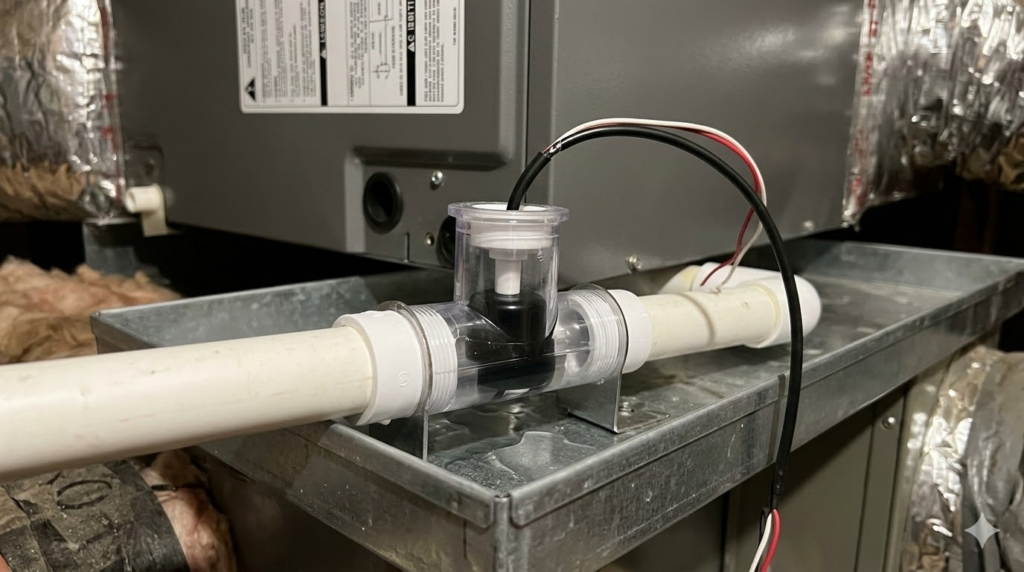
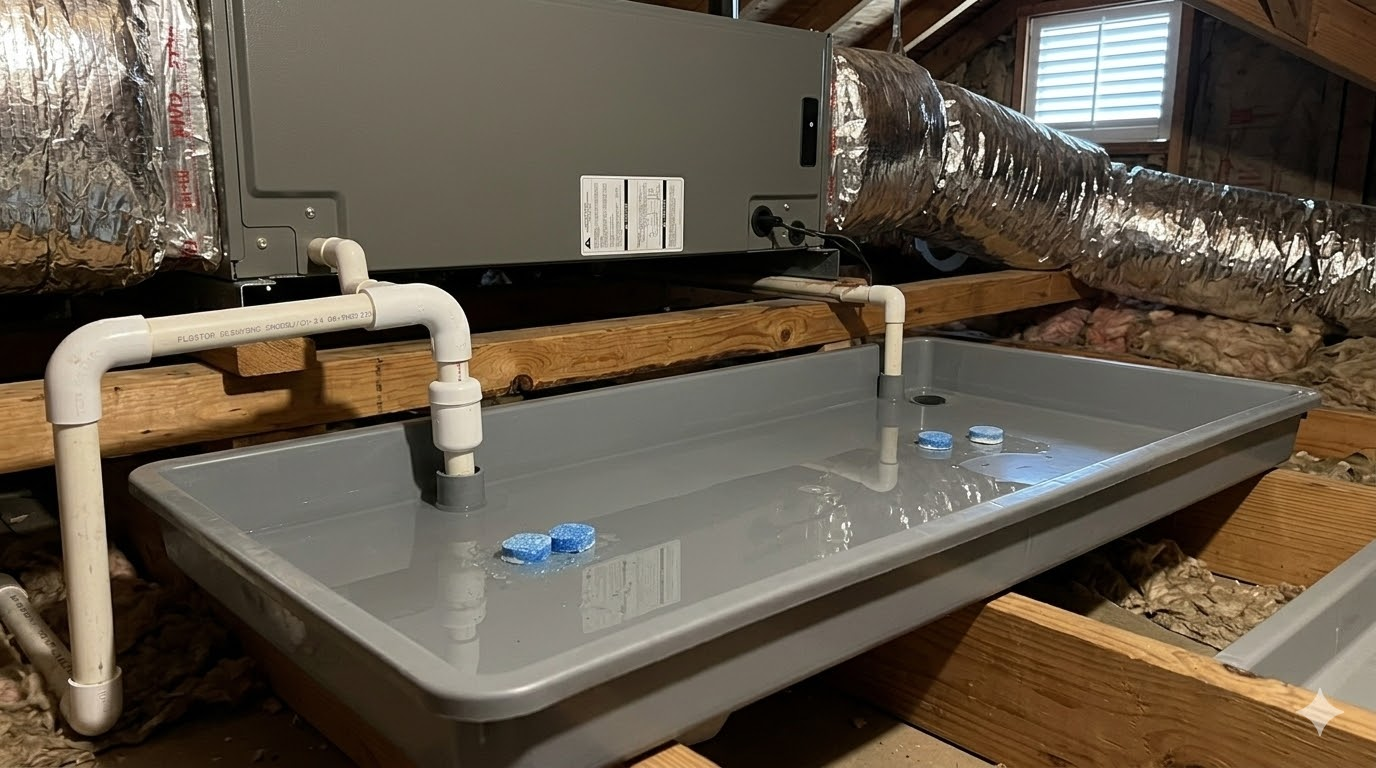
A float switch is a safety device installed in your air conditioning system’s condensate drain pan, the shallow tray beneath your indoor air handler that collects moisture as the AC removes humidity from your home’s air. Inside the switch is a small float that rises as water accumulates in the pan.
When the water level gets too high, indicating that the condensate drain line is clogged or backing up, the float rises and triggers the switch, cutting power to the air conditioner. This automatic shutdown prevents water from overflowing the pan and damaging your ceiling, walls, insulation, or flooring. Without a float switch, a clogged condensate line can cause thousands of dollars in water damage before you ever notice a problem.
Why Is the Float Switch So Important in Arizona?
In most parts of the country, air conditioners run seasonally. In Arizona, most homeowners run their AC eight to ten months a year, and during peak summer months the system may operate nearly continuously. This heavy use means your AC produces a large volume of condensate, and the drain line is under near-constant load.
Arizona’s hard water also contributes to the problem. Mineral scale from the East Valley’s calcium-rich water supply can build up inside condensate drain lines over time, narrowing the passage and slowing drainage. Combine that with algae growth encouraged by the warm temperatures, and clogged condensate lines become one of the most common AC service calls we receive throughout the Phoenix Metro area.
Common Reasons the Float Switch Trips
The float switch is doing its job when it shuts your system down, but understanding why it tripped helps you prevent it from happening again. The most common causes include:
- Clogged condensate drain line: Algae, mold, and mineral scale accumulate inside the PVC drain line over time, slowing or completely blocking drainage. This is by far the most common reason float switches trip in Arizona homes.
- Damaged or clogged drain pan: The pan itself can crack or become blocked with debris. If the pan cannot hold or drain water properly, it will fill quickly and trigger the switch.
- Frozen evaporator coil: A frozen coil can produce a sudden surge of water as the ice melts, overwhelming the drain system and raising the water level in the pan rapidly.
- Faulty float switch: Float switches themselves can fail over time, either sticking in the “on” position and shutting down the system needlessly, or failing to trip when they should.
What to Do When Your Float Switch Trips
If your air conditioner shuts off unexpectedly on a hot Arizona day, check the float switch before assuming a larger problem. Here’s what to do:
First, locate the condensate drain pan — it’s typically below your air handler in the attic, utility closet, or mechanical room. If you see standing water in the pan, the drain line is likely clogged. Do not reset the system until you’ve addressed the blockage.
You can attempt to clear a minor clog by pouring a cup of diluted bleach (one part bleach, three parts water) into the drain line access port, usually a PVC cap near the air handler. Allow it to sit for 30 minutes, then flush with clean water. This can dissolve minor algae and organic buildup.
If the line doesn’t clear or the water level doesn’t drop, call a licensed HVAC technician. Penguin Air, Plumbing & Electrical can clear the condensate line, inspect the drain pan for damage, check the float switch function, and get your system back up and running. Call us at (480) 525-5400 for same-day service throughout the Phoenix Valley.
How to Prevent Float Switch Issues

Regular maintenance is the best way to keep your condensate system clear and your float switch from tripping unexpectedly. We recommend these practices for Arizona homeowners:
- Flush the drain line monthly: During peak cooling season, pour diluted bleach or a drain cleaning tablet into the access port every 30 days to prevent algae and scale buildup.
- Schedule annual AC maintenance: A professional tune-up includes inspecting and clearing the condensate drain, checking the drain pan, and testing the float switch, helping you avoid mid-summer breakdowns.
- Replace your air filter regularly: A dirty filter restricts airflow and can cause the evaporator coil to freeze. As the ice melts, it can overwhelm the drain system and trigger the float switch.
- Consider a secondary float switch: Some homes only have a primary float switch in the drain pan. Installing a secondary switch in the overflow port provides an additional layer of protection against water damage.
If your AC shut off unexpectedly or your float switch is tripping repeatedly, contact Penguin Air, Plumbing & Electrical today. Call (480) 525-5400 to schedule an inspection. Our licensed technicians serve Phoenix, Scottsdale, Mesa, Chandler, Gilbert, Tempe, and communities throughout the Phoenix Valley.
Frequently Asked Questions
Why did my air conditioner suddenly stop working?
A tripped float switch is one of the most common reasons an AC unit shuts off without warning in Arizona homes. Check your condensate drain pan for standing water. Other causes include a tripped circuit breaker, a dirty air filter causing the coil to freeze, or a refrigerant issue. If you’re not sure, contact Penguin Air, Plumbing & Electrical for a diagnosis.
Can I bypass the float switch to get my AC running again?
You can temporarily bypass the float switch, but this is strongly discouraged. The switch is protecting your home from water damage. If the pan is filling with water, bypassing the switch without clearing the blockage will result in an overflow, potentially damaging your ceiling, insulation, and drywall. Address the root cause first.
How often should I flush my AC condensate drain line in Arizona?
For most Arizona homeowners, once a month during the cooling season is a good practice. If you have hard water or notice algae buildup quickly, you may want to flush more frequently or have a technician clear the line during your annual AC tune-up.
Where is the float switch located on my AC system?
The float switch is typically located in the secondary drain pan directly beneath your indoor air handler. It may also be mounted inline on the drain line itself. If you’re unsure where yours is or whether your system even has one, a licensed HVAC technician can inspect your system and advise you.
How much does it cost to fix a clogged condensate drain line?
Clearing a condensate drain line costs vary depending on the severity of the blockage and whether additional repairs are needed. Preventive maintenance during an annual tune-up is far less expensive than repairing water damage caused by an overflowing drain pan.
About Penguin Air, Plumbing & Electrical
Penguin Air, Plumbing & Electrical has been serving Greater Phoenix homeowners with trusted HVAC, plumbing, and electrical services since 2011. Founded by Wade Rusk and William Hallett, Penguin is locally owned and operated, available 24 hours a day, seven days a week. Our licensed, background-checked technicians serve Phoenix, Mesa, Scottsdale, Chandler, Gilbert, Tempe, Glendale, and communities throughout the Phoenix Valley.
Call Penguin Air at (480) 525-5400 to schedule service today.