
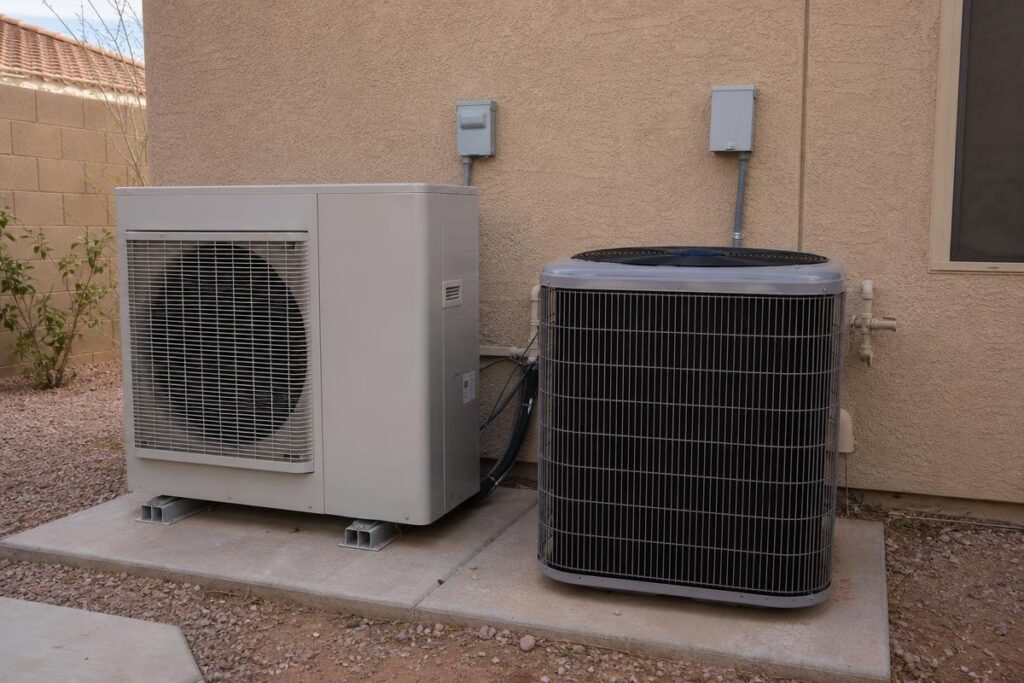
Trying to decide between a heat pump vs. air conditioner for your Phoenix home? It’s one of the most common questions we get, and the answer isn’t the same for every household. Phoenix summers push past 110°F, and most of us run cooling from roughly April through November, so picking the right system has a real impact on your monthly electric bill. We’ve been helping Greater Phoenix homeowners make this call since 2011, and this guide breaks down exactly what you need to know before you buy.
Not sure which system fits your home? Our team can walk you through your options fast. Call (480) 525-5400.
Key Takeaways
- In Phoenix’s hot-dry climate, both heat pumps and traditional AC systems can cool your home effectively, but efficiency ratings differ.
- A heat pump vs. air conditioner comparison matters most in Phoenix because we log more annual cooling hours than almost anywhere in the country, making SEER2 ratings a major cost factor.
- Heat pumps handle both cooling and heating in one system, which is a real advantage during Phoenix’s mild winters.
- The federal 25C tax credit plus periodic APS and SRP rebate programs can offset the higher upfront cost of a heat pump installation.
- The right system depends on your home’s size, your utility provider, and your long-term energy goals.
Should you get a heat pump or a central AC for your Greater Phoenix home? It’s a fair question, and honestly, a confusing one. Both systems cool your house. Both have an outdoor unit sitting in your yard. And the price tags can look surprisingly similar at first glance.
But in the Phoenix Valley, where summer temperatures push past 110°F and your cooling system carries the load for most of the calendar year, this decision matters more than it does almost anywhere else in the country. The wrong choice can cost you real money every month.
We’ve been helping homeowners across Chandler, Gilbert, and Glendale make this exact call since 2011. This article covers how these two systems actually work differently, what you’ll pay, how a heat pump performs in our extreme desert heat, and a simple guide to help you decide. This is Arizona-specific advice, not generic national information.
If you want a head start, our team offers heat pump installation in Phoenix with upfront pricing and no guesswork.
What Is a Heat Pump and How Is It Different from an AC?
Most homeowners in Scottsdale, Tempe, and across the Greater Phoenix area have lived with a central AC their whole lives. So when someone mentions a heat pump, the natural question is: what exactly is the difference? The answer is simpler than you might think.
How a Traditional Air Conditioner Works
A standard central AC runs on a refrigerant cycle. It pulls heat out of your indoor air and dumps that heat outside. That’s it. The process only moves in one direction.
Because it only cools, a traditional AC pairs with a separate furnace to handle winter heating. You’ve got two systems doing two separate jobs.
How a Heat Pump Works Differently
A heat pump uses the exact same refrigerant cycle as an AC. The key difference is a component called a reversing valve. That valve lets the system run the cycle in reverse during winter, pulling heat from the outdoor air and moving it inside your home.
One system. Two jobs. That’s the whole idea behind heat pump installation in Phoenix. Modern heat pumps are rated to operate efficiently down to around 0°F, so our mild winters sit comfortably within the range where the system barely has to work to find heat in the outdoor air.
The One Big Thing They Have in Common
Both systems use the same ductwork, air handler, and thermostat already in your home. If you’re replacing an existing ducted AC in Glendale or Mesa, either option drops in without a major renovation. Your existing ducts work just fine.
No existing ductwork? Older homes, casitas, and room additions are great candidates for ductless mini-split installation, which comes in heat pump form as well.
The short version: a heat pump is an air conditioner that can also heat your home.
How Do Heat Pumps and ACs Compare on Energy Efficiency?
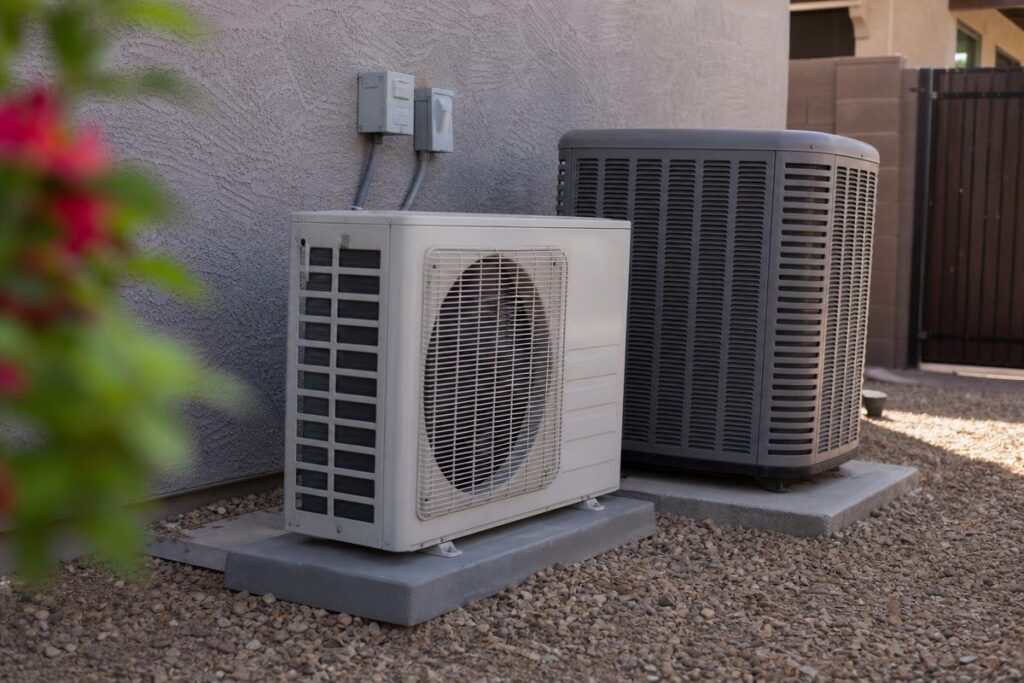
Here’s the short answer: for cooling, a heat pump and a central AC at the same SEER2 rating cost almost exactly the same to run. The efficiency number matters far more than the system type. Where the two systems really split apart is on the heating side.
SEER2 Ratings: What the Numbers Mean for Your Electric Bill
SEER2 is the current federal efficiency standard for cooling equipment. Arizona’s minimum for new systems is 15.2 SEER2. High-efficiency models from both heat pumps and traditional ACs can reach 20+ SEER2.
A higher SEER2 number means less electricity used per hour of cooling. Here’s what that looks like in real dollars: a 3-ton system running at 15.2 SEER2 versus 18 SEER2 over a full Phoenix cooling season can mean roughly $150 to $250 in annual savings at current APS rates, depending on your thermostat habits and home size. Stretch that over a system’s 15-year life and the higher SEER2 unit often more than pays back its premium.
Heating Efficiency: Where Heat Pumps Pull Ahead
A gas furnace burns fuel and converts it to heat at 80 to 98% efficiency. A heat pump doesn’t generate heat at all. It moves heat from outdoor air into your home, which is why it can deliver 200 to 400% efficiency, or a coefficient of performance between 2 and 4.
Phoenix’s average January low sits around 44°F. That’s mild enough that a heat pump barely has to work to pull warmth from outdoor air. This is the single biggest efficiency argument for a heat pump in the Valley. You get electric heat at a fraction of the operating cost of a gas furnace. If you want to dig deeper into that comparison, our heating repair and maintenance in Phoenix team is happy to walk through the numbers with you.
Phoenix’s Extreme Heat and What It Does to Efficiency Ratings
SEER2 ratings are calculated in a lab, not at 115°F on a Peoria afternoon in July. Every cooling system loses some efficiency in extreme heat. That’s true for heat pumps and standard ACs equally.
What actually drives real-world summer performance is proper sizing through a Manual J load calculation, a correct refrigerant charge, and clean coils. Those factors matter more than which system type you chose. A well-installed, right-sized system at 17 SEER2 will outperform a poorly installed 20 SEER2 unit every time.
Heat Pump vs. AC Cost in Phoenix: What Should You Expect to Pay?
Cost is usually the first question homeowners ask when comparing these two systems. The honest answer: a heat pump costs more upfront, but the full picture is more nuanced than that. Here is what you should actually expect.
Upfront Equipment and Installation Costs
A standard central AC system in the Valley typically runs between $4,000 and $8,000 installed, depending on tonnage and SEER2 rating. A heat pump system runs closer to $5,000 to $10,000 because the unit itself costs more to manufacture.
That gap narrows fast in one specific situation. If your furnace still has several good years left, replacing just the cooling side with a straight AC is often the smarter upfront move. But if you are replacing both heating and cooling at the same time, a heat pump can be cost-competitive because you are buying one system instead of two. For a full breakdown of what a new AC system costs in Phoenix, we have a dedicated guide that covers tonnage, SEER2, and labor in detail.
Long-Term Operating Costs in Phoenix’s Climate
Because our cooling season stretches across most of the year, your SEER2 rating becomes a bigger cost driver than almost anything else. A higher-efficiency heat pump or AC will pay back the difference in lower monthly bills over time.
Heat pump heating is efficient during our mild winters, typically November through February. But compared to a high-efficiency gas furnace, the heating savings are modest given how short and mild our cold season actually is. Your utility rate with APS or SRP is the biggest variable in any operating cost estimate.
Federal Tax Credits and Arizona Utility Rebates Worth Knowing
This is where heat pumps pull ahead in a way most homeowners miss. The IRA Section 25C federal tax credit gives you up to $2,000 back on a qualifying heat pump installation. That credit runs through 2032. A standard AC replacement does not qualify.
Current Incentives at a Glance
- Federal 25C credit: up to $2,000 for qualifying heat pump systems, claimed on IRS Form 5695.
- APS rebates: APS has historically offered rebates in the range of a few hundred dollars for qualifying high-efficiency heat pump and AC installs through its residential energy programs. Amounts and eligibility change, so confirm the current offer on the APS website before you buy.
- SRP rebates: SRP runs a similar cooling equipment rebate program for residential customers, also typically a few hundred dollars for qualifying high-efficiency systems. Verify current amounts directly with SRP, since program funding is updated periodically.
- State-level: Arizona has no separate statewide heat pump rebate at this time, so your savings come from the federal credit plus your utility’s program.
Stacked together, the $2,000 federal credit and a utility rebate can close most of the upfront cost gap between a heat pump and a standard AC. These are among the most underused incentives we see homeowners leave on the table. Because the exact figures shift, we always confirm what you actually qualify for before we quote a job.
Does a Heat Pump Actually Work in Phoenix’s Extreme Heat?
This is the question we hear most from homeowners who are considering a switch. The short answer: yes, a heat pump will keep your home cool at 112°F. Here is why the concern is mostly based on a myth that does not apply to our climate.
The ‘Heat Pumps Struggle in Hot Climates’ Myth, Addressed
The traditional knock on heat pumps is their heating performance in freezing temperatures. That argument was built around Minnesota winters, not Arizona ones. In cooling mode, a heat pump is an air conditioner. Same refrigerant cycle. Same compressor technology. Same SEER2 ratings. System type does not determine cooling performance. Proper sizing and installation do.
In Phoenix, the cold-climate argument against heat pumps simply does not apply.
If you have been researching gas vs. electric furnace options in Arizona, you already know our winters are mild, with January highs around 67°F. A heat pump handles those temperatures with ease, and at a fraction of the operating cost of a gas furnace.
When Phoenix Summers Push a Heat Pump to Its Limits
At 110°F and above, every HVAC system works harder. Compressors run longer cycles. Refrigerant pressures rise. Efficiency drops across the board. This is a Greater Phoenix summer problem that affects every system equally, not a heat pump-specific issue.
The mitigation steps are identical for both system types:
- Correct sizing for your home’s square footage and sun exposure
- Annual maintenance before the summer cooling season
- Clean condenser coils, especially after monsoon season (June through September) when dust and debris build up fast
- Verified refrigerant charge at the correct level
Watch for signs you need AC repair in Phoenix before the hottest stretch of summer hits. Catching a small issue in May is far less stressful than dealing with it in July.
What About Phoenix Winters? The Case for Dropping the Furnace
For homeowners replacing both an aging furnace and an aging AC at the same time, a heat pump is a compelling all-in-one option. It eliminates the gas furnace entirely, reduces your maintenance schedule to one system, and qualifies for federal IRA tax credits that a standard AC replacement does not.
Our mild winters mean heat pump heating mode rarely has to work hard. That translates directly to lower operating costs from October through March. For most Valley homeowners, the math favors the heat pump.
Still wondering if a heat pump is worth it for your home? Our team can walk you through the right fit for your specific setup. Call us at (480) 525-5400 or reach out online.
Which System Is Right for Your Phoenix Home? A Simple Decision Guide
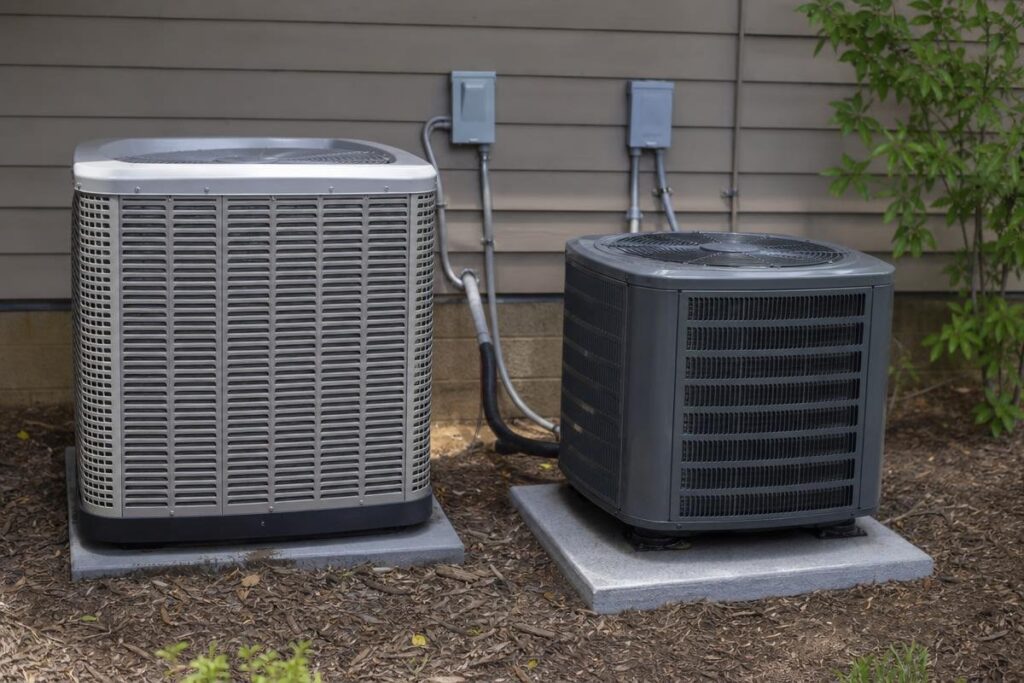
Not every home needs the same system. The right call depends on what you already have, what you’re replacing, and how you plan to power your home. Here’s a clear way to think through it.
Choose a Traditional AC If…
- You have a gas furnace with several good years left on it. No reason to replace both systems at once.
- Lowest upfront cost is your top priority right now.
- Your home is large and the ductwork is already sized for high-tonnage central AC.
- Your APS or SRP rate structure makes natural gas heating cheaper than running an electric heat pump in winter.
- You prefer sticking with a familiar system type your current contractor already services.
Choose a Heat Pump If…
- You’re replacing both your AC and furnace at the same time. One system, one maintenance schedule, one contractor.
- You want to claim the IRA federal tax credit, which can cover up to $2,000 of your installation cost.
- Your home has no existing gas service. Electric-only makes a heat pump the natural fit.
- You’re adding solar panels. Heat pumps pair well with home solar, and solar adoption is growing fast across the Scottsdale and Tempe areas.
What About a Ductless Mini-Split Heat Pump?
If your home has no ductwork, a ductless mini-split system in Phoenix is often the best answer. This is especially true for older homes, casitas, home additions, and detached garages across the Valley. Mini-splits cool and heat individual zones without any ductwork at all. Modern units handle our summers without issue, and they qualify for the same IRA tax credit as full heat pump systems.
One thing worth checking regardless of which system you choose: leaky air ducts can undermine any system’s efficiency, no matter how high the SEER2 rating is on the equipment you install.
Why Phoenix Homeowners Trust Penguin Air, Plumbing & Electrical for Heat Pump and AC Installations
Choosing between a heat pump and a central AC system is a $5,000 to $10,000 decision. You want a team that actually knows the Valley’s climate, not one reading off a spec sheet. Penguin Air, Plumbing & Electrical has been doing this work since 2011, founded by Arizona natives who understand what 110-degree summers do to HVAC equipment over time.
Our team carries a BBB A+ Rating, has held BBB Accreditation since our founding, and earned the Business Ethics Award. We have more than 30 years of combined industry experience across our technicians. Every one of them is background-checked before they step into your home.
Across 6,437 reviews and a 4.7 out of 5 rating, homeowners in Scottsdale, Tempe, Mesa, and across the metro consistently say the same things: our techs walked them through everything, were patient with every question, and diagnosed the problem fast. That kind of feedback matters when you’re making a major investment.
We also give you a flat-rate price before any work begins. What we quote is what you pay. No surprises on the invoice.
After installation, pairing your new system with a smart thermostat installation in Phoenix is one of the best ways to maximize efficiency year-round, especially through our long April-to-November cooling stretch.
Our office is at 3710 East University Dr Suite 1, Phoenix, AZ 85034. Our team is ready to walk you through the right system for your home, your budget, and your neighborhood. Give us a call or reach out to schedule a visit.
Frequently Asked Questions
Can a heat pump cool my home as well as a traditional AC?
Yes. In cooling mode, a heat pump is an AC. It runs the exact same refrigerant cycle and carries the same SEER2 efficiency ratings. Proper sizing for your square footage is what determines cooling performance, not the equipment type.
How much more does a heat pump cost than an AC?
Typically $1,000 to $2,000 more upfront. The IRA’s 25C Energy Efficient Home Improvement Credit can cover up to $2,000 of that gap, claimed on your federal return via IRS Form 5695 for the year of installation. The credit runs through 2032, so there’s real money available right now.
Is a heat pump worth it in Arizona if I barely use heat?
It depends on your situation. If your furnace is newer and you’re only replacing the AC, a straight AC swap is perfectly practical. But if you’re replacing both systems, or thinking about dropping gas service entirely, a heat pump is often the smarter financial move. Scottsdale and Tempe homeowners with aging dual systems see the biggest payoff here.
Do heat pumps work when it’s 110°F outside?
Yes. Cooling mode performance is not uniquely affected by high outdoor temps compared to a standard AC. Both systems work harder in extreme heat. The cold-climate concerns you may have read about simply do not apply in the Valley, where average lows in the coldest months stay around 44°F.
How long does a heat pump last compared to an AC?
Both average 15 to 20 years. Our extreme heat cycles can push either system toward the lower end of that range. Consistent heating maintenance in Phoenix is the single biggest factor in getting full life out of either system.
Should I replace my furnace and AC at the same time with a heat pump?
If both are 10 or more years old, yes. Replacing them together with a heat pump avoids a second installation cost down the road, qualifies you for the IRA credit, and simplifies everything to one system. It’s one of the best financial moves a Tempe or Avondale homeowner can make on aging equipment.
Ready to figure out which system is right for your home? Call us at (480) 525-5400 or schedule online. Our team will assess your current setup, walk you through the numbers, and give you a firm quote before any work begins. No pressure, just honest answers from people who work in Phoenix heat every day.
Ready to Get Started with Penguin Air, Plumbing & Electrical?
Call (480) 525-5400 to speak with our team directly. We’re ready to answer your questions, walk you through your options, and help you find the right solution for your needs. Whether you’re just starting to plan or ready to move forward, we’ll make the process simple and stress-free.
Reach out today and let’s talk about how we can help.