
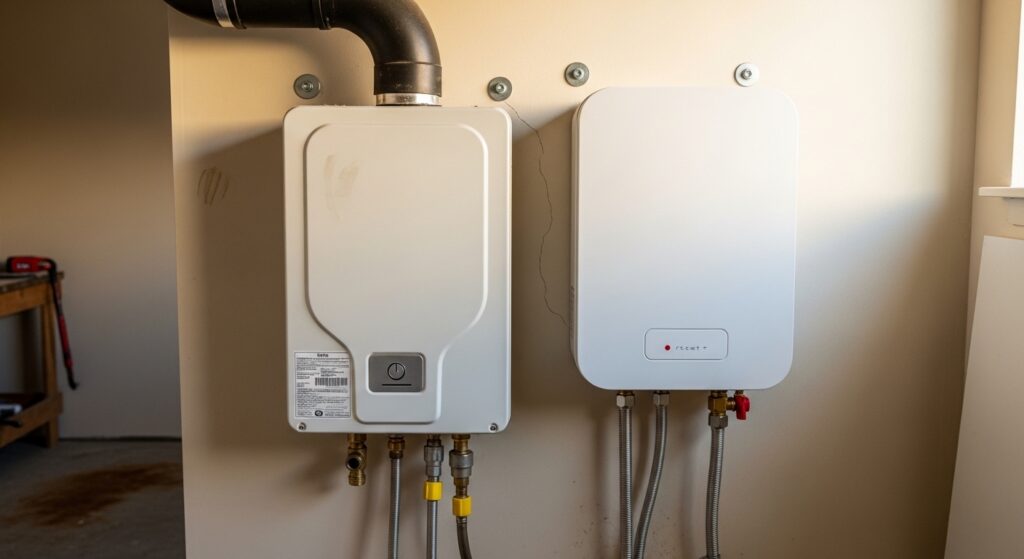
Choosing between a gas vs. electric tankless water heater is one of the more common calls we get from Phoenix Valley homeowners, and the answer isn’t one-size-fits-all. Phoenix’s hard water, rising utility rates, and extreme summer heat all factor into which unit actually saves you money long-term. Our licensed plumbing team has been helping Greater Phoenix homeowners make this call since 2011, and we hold a BBB A+ Rating, so you’re getting real local experience, not generic advice.
Not sure which tankless unit fits your home? Schedule a call with a licensed Phoenix plumber today.
Key Takeaways
- Gas tankless water heaters typically deliver higher flow rates, making them better for larger Phoenix homes with heavy hot water demand.
- Electric tankless units cost less upfront but may struggle to keep pace with Phoenix’s high simultaneous hot water draw.
- Phoenix’s hard water shortens the lifespan of both unit types without regular descaling maintenance.
- Your choice between a gas vs. electric tankless water heater should factor in how long you plan to stay in your home.
- APS and SRP electric rates directly affect whether an electric tankless unit will save you money versus gas in the Phoenix Metro.
Gas vs. Electric Tankless Water Heater: Which One Actually Fits Your Phoenix Home?
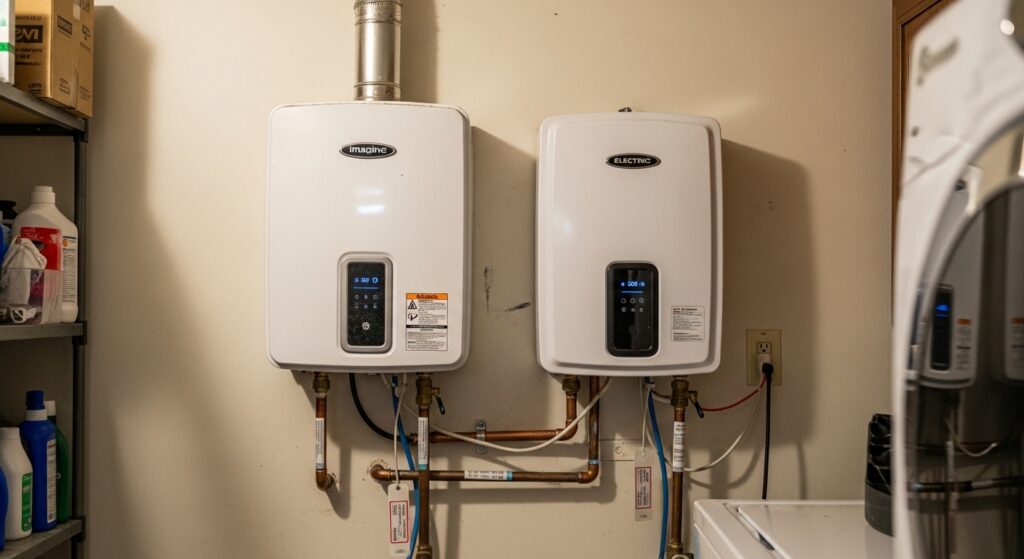
Gas or electric tankless water heater? That question lands in our inbox every week from homeowners in Scottsdale, Tempe, Mesa, and all across the Valley. And the honest answer is: it depends on your home.
Here in the Phoenix Metro, the math shifts in ways most national comparison guides miss. Your incoming groundwater runs around 65 to 72°F year-round. That warmer baseline means electric tankless units don’t have to work as hard as they do in colder climates, which closes the performance gap with gas more than most homeowners expect.
This article covers the real differences in flow rate, installation cost, and long-term running costs using actual APS and Southwest Gas rates. We’ll also flag how the Valley’s hard water affects each unit type differently. By the end, you’ll know which option makes sense for your home’s existing setup and your household size. Our team has been doing this since 2011, and we hold a BBB A+ Rating you can verify.
How Do Gas and Electric Tankless Water Heaters Actually Work?
Both types heat water the same way in one key sense: on demand. You turn on the hot tap, water starts moving, and the unit fires up instantly. No storage tank sitting there losing heat all day. That is where the similarities end. The mechanics inside are completely different, and those differences drive every cost and installation decision you will face.
How a Gas Tankless Unit Heats Water on Demand
The moment water flows through the unit, a flow sensor tells the gas burner to ignite. Water passes through a copper or stainless steel heat exchanger, picks up heat fast, and exits at your set temperature in seconds. The whole sequence happens before you get to the bathroom sink.
Gas units need three things that electric units do not: a dedicated natural gas or propane supply line, a direct-vent or power-vent exhaust system, and a condensate drain if you have a high-efficiency condensing model. In Scottsdale and Peoria, a lot of homes keep the water heater in a garage or an exterior block wall closet. That layout can actually simplify the venting run, since the exhaust has a short path to the outside. Older homes in Mesa or Tempe with interior utility closets sometimes need more work to route that vent properly.
Flow rate is the number to watch. Most residential gas units produce 6 to 10 GPM. That is enough to run two showers at the same time in most Valley homes without losing temperature.
How an Electric Tankless Unit Heats Water on Demand
An electric unit skips combustion entirely. The flow sensor activates two to four inline heating elements directly in the water path. No burner. No exhaust. No vent stack to install. That makes the physical footprint smaller and the install cleaner, which is why you see them in newer all-electric builds in communities around Goodyear and Surprise.
The trade-off is electrical demand. A whole-home electric tankless unit typically pulls 150 to 200 amps on 240V circuits. Many homes in the Valley do not have that capacity available without upgrading your electrical panel first. Point-of-use units are a different story. They handle a single fixture at 0.5 to 2 GPM and draw far less power, so no panel work is needed.
Flow rate matters just as much here. Electric whole-home units can struggle to hit the same GPM output as gas, especially when ground water temperatures dip slightly in winter months across the East Valley. That gap in flow rate is exactly why understanding your household’s peak demand is the first step in comparing gas tankless vs electric tankless for your specific home.
Gas vs. Electric Tankless: Head-to-Head Comparison for Phoenix Homeowners
Here’s the honest version of this comparison, the kind you’d get sitting at the kitchen table with a plumber who’s installed both types across Scottsdale, Tempe, Mesa, and Surprise. Neither unit is universally better. The right call depends on your home’s existing setup, your household’s hot water demand, and what you’re actually paying for gas versus electricity each month.
Flow Rate and Hot Water Output
Gas tankless units are the clear winner on raw output. A whole-home gas unit typically delivers 6 to 10 GPM, enough to run two showers and a dishwasher at the same time without anyone going cold. That matters in larger homes in Peoria or Goodyear where multiple family members are getting ready at once.
Electric whole-home units land closer to 3 to 5 GPM. In Minnesota, that number would be a dealbreaker, but here in the Valley, it’s more competitive than you’d think. Our groundwater stays around 65 to 72°F year-round. An electric unit doesn’t have to work nearly as hard to hit your target shower temperature compared to a unit dealing with 35°F incoming water up north. For most smaller households in Avondale or Laveen, a whole-home electric unit keeps up just fine.
Point-of-use electric units deserve a mention here too. If you have a casita, a detached guest suite, or a master bath at the far end of a long floor plan, a small electric unit installed right at that fixture solves the hot water delay problem without taxing your main heater at all.
Energy Efficiency and Operating Costs in Phoenix
Electric tankless units run close to a 1.0 energy factor because there’s no combustion heat escaping up a flue. Gas non-condensing models run 0.82 to 0.95, and condensing models can hit 0.98. On paper, electric looks like the efficiency champion. In practice, that’s not the whole story.
APS and SRP electricity rates in the Valley run roughly 12 to 14 cents per kWh. Southwest Gas natural gas rates are significantly lower per equivalent BTU of heat. That gap means gas typically costs less per month to operate even though its EF rating is a bit lower. The concern about higher electric operating costs is real.
Gas wins on monthly operating cost for most Greater Phoenix households running the numbers honestly.
The bright side for both: our mild winters mean operating costs here run below the national average regardless of which fuel type you choose.
Installation Requirements and Upfront Cost
This is where the decision often gets made. Here’s a straightforward side-by-side:
- Gas tankless, installed: $1,800 to $3,500 depending on BTU load, gas line distance, and venting path
- Electric whole-home, installed: $800 to $2,500 for the unit, plus $500 to $2,000 more if your panel needs an upgrade to support it
If your home in Chandler or Gilbert already has a gas line and exterior venting from an old tank water heater, the gas swap is often the more straightforward and lower-cost path. You’re reusing infrastructure that already exists. Starting completely fresh with gas in a home that’s never had it adds gas line materials and permitting that can push total cost toward the higher end of that range.
Electric installs look cheaper upfront until panel capacity enters the picture. A whole-home electric tankless unit typically pulls 150 to 200 amps. Many older homes in Glendale or Tempe with 100-amp panels need electrical service work before that unit can even run safely. Factor that in before assuming the electric route saves you money at installation.
Planning to stay in your home fewer than five years? The lower upfront cost of an electric unit with an already-capable panel often makes more sense. Staying long term? Gas typically pays back faster through lower monthly operating costs.
Which Type Do Phoenix Plumbers Recommend Most Often?
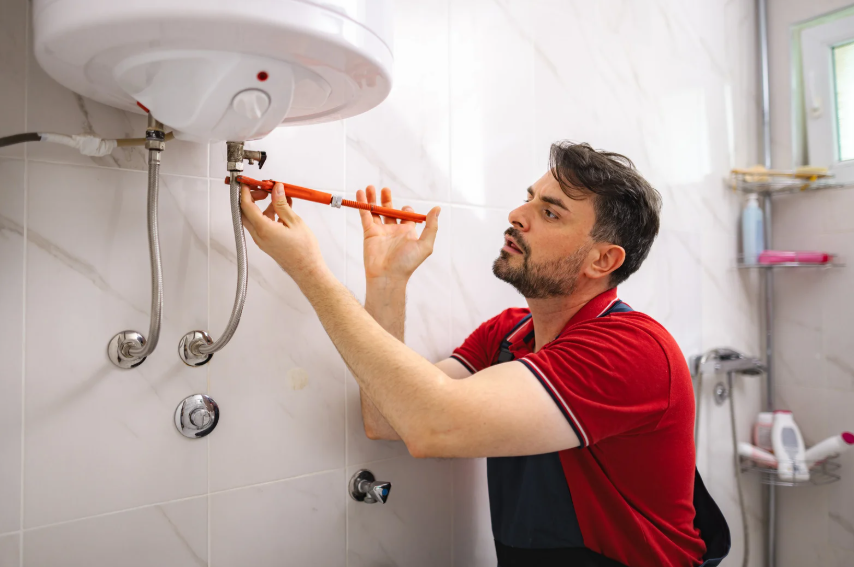
Honestly, there is no single right answer. What we tell homeowners in Tempe is different from what we tell homeowners in Buckeye. It depends on your gas line, your panel, your household size, and how long you plan to stay in the house. Here is how we break it down on every job.
When a Gas Tankless Unit Makes More Sense
For homes with existing gas line installation running to the water heater location, gas is almost always worth using. We see this constantly in older neighborhoods like Arcadia, Encanto, and Ahwatukee, where homes built in the 1980s and 1990s were plumbed for gas from the start. Swapping a tank unit for a gas tankless in those homes is straightforward. The infrastructure is already there.
Gas also makes more sense if you have three or more people in the household with overlapping hot water demand. Running the dishwasher, a shower, and the laundry at the same time takes real flow capacity, and gas units deliver higher GPM output more reliably. If you are planning to stay in the home ten or more years, the higher upfront cost of a gas unit is easier to recover through lower monthly bills compared to electric at current APS and SRP rates.
Go with gas if:
- You already have a gas line at the water heater location
- Your household regularly runs multiple hot water fixtures at once
- You want the lowest possible monthly operating cost over a long ownership horizon
- You are in an older Mesa, Scottsdale, or central Valley neighborhood with existing gas infrastructure
When an Electric Tankless Unit Makes More Sense
All-electric homes are increasingly common in newer master-planned communities on the far West Valley and Southeast Valley, places like Peoria, Surprise, and parts of Queen Creek. No gas line, no venting requirement, cleaner installation. If running a new gas line means cutting through finished walls or a concrete slab, the added cost usually wipes out any long-term savings. An electric unit starts to look a lot smarter.
The other case we see often involves detached casitas and guest suites. A point-of-use electric unit mounted near the fixture handles the load perfectly without sizing up your whole-house system. Large single-story ranch footprints with long pipe runs to a master bath are another common scenario. If you are waiting 90 seconds for hot water to reach the far end of the house, a small point-of-use electric unit at that end solves the problem immediately, without replacing your main system at all.
Go with electric if:
- Your home has no gas line and adding one is costly or structurally difficult
- You have a detached casita, guest suite, or home office with its own bathroom
- Your household is one or two people with modest hot water demand
- You have a recently upgraded 200-amp panel with available breaker capacity
If you already have a tankless or tank unit and it is underperforming, check out our guide on why your water is not heating up before assuming you need a full replacement. Sometimes the fix is simpler than you think.
Still not sure which unit fits your home? Penguin Air, Plumbing & Electrical serves Valley homeowners with same-week tankless water heater installations and free on-site assessments. Schedule online. Our team checks your gas line, panel capacity, and household demand before recommending anything, so you get the right unit the first time.
Frequently Asked Questions
How Long Does a Tankless Water Heater Last in Phoenix’s Hard Water Conditions?
Both gas and electric tankless water heaters typically last 15 to 20 years, but Phoenix’s notoriously hard water can shorten that lifespan if the unit is not maintained properly. Mineral scale buildup inside the heat exchanger is the most common cause of early failure in the Valley. Penguin Air, Plumbing & Electrical recommends annual descaling flushes to protect your investment and keep the unit running at peak performance.
Do I Need a Water Softener Before Installing a Tankless Water Heater?
A water softener is not strictly required, but it is strongly recommended for Phoenix homes given the city’s high mineral content. Without one, scale deposits can accumulate inside the heat exchanger within just a few years, reducing efficiency and triggering error codes. Installing a softener or at minimum a dedicated descaling filter before the unit will significantly extend its service life.
Can a Tankless Water Heater Handle a Phoenix Home with Multiple Bathrooms Running at Once?
Yes, but the unit must be sized correctly for your household’s simultaneous demand. A single electric tankless unit often struggles to supply two or more hot water fixtures running at the same time in larger homes, while a properly sized gas unit typically handles that load more comfortably. Penguin Air, Plumbing & Electrical can perform a flow rate assessment before installation to match the right unit to your actual usage patterns.
Will Switching to a Tankless Water Heater Qualify Me for a Federal Tax Credit?
Qualifying tankless water heaters may be eligible for the federal Residential Clean Energy Credit or the Energy Efficient Home Improvement Credit, depending on the unit’s Uniform Energy Factor rating. As of 2025, homeowners can claim up to 30 percent of installation costs for certain high-efficiency models. You should consult a tax professional to confirm eligibility, and ask Penguin Air, Plumbing & Electrical for the specific efficiency ratings of any unit you are considering.
How Often Does a Tankless Water Heater Need to Be Serviced in Phoenix?
Most manufacturers and plumbers recommend a professional service visit once a year for homes in the Phoenix area, primarily to flush out mineral scale from the heat exchanger. Gas units also require periodic inspection of the burner assembly and venting components to ensure safe operation. Skipping annual maintenance in a hard water market like Phoenix is one of the most common reasons homeowners face costly repairs or premature replacement.
Is There a Noticeable Delay in Hot Water Delivery with a Tankless System?
Yes, tankless water heaters do not store pre-heated water, so there is typically a brief wait of 5 to 15 seconds before hot water reaches your fixture, depending on how far the unit is from the tap. Adding a recirculation pump to the system eliminates most of that delay by keeping hot water moving through the pipes. Penguin Air, Plumbing & Electrical can install a recirculation pump alongside your new unit if immediate hot water delivery is a priority.
What Happens to a Tankless Water Heater During a Phoenix Summer Power Outage?
Both gas and electric tankless water heaters require electricity to operate their control boards, so even a gas unit will stop working during a power outage. This is a common misconception among homeowners who assume a gas appliance will function without electricity. If outage resilience is a concern, discuss backup power options such as a standby generator with the team at Penguin Air, Plumbing & Electrical before finalizing your purchase.
Ready to Get Started with Penguin Air, Plumbing & Electrical?
Ready to book with Penguin Air, Plumbing & Electrical? Contact us today through our contact page to connect with our team directly.