
Your electric bill in Phoenix doesn’t just creep up in summer. It spikes. With AC systems running well over half the day during triple-digit heat, even small inefficiencies get expensive quickly. At Penguin Air, Plumbing & Electrical, we’ve been helping homeowners across the Valley lower their electric bills since 2011, and we know exactly where the money is going. This guide covers the practical steps that actually work here in the desert, not generic advice written for cooler climates.
Ready to stop overpaying on your summer cooling costs? Our team is here to help. Call (480) 525-5400 today.
Key Takeaways
- Phoenix AC systems run 12 to 16 hours daily in summer, making efficiency upgrades far more impactful here than in mild-climate cities.
- APS and SRP time-of-use plans charge peak rates in the afternoon and evening, so shifting energy use outside that window can lower your electric bill noticeably.
- Valley attics can hit 160°F in July, causing leaky ductwork to waste a large share of your cooled air before it reaches your living space.
- A garage refrigerator running in 120°F heat can cost $20 to $40 extra per month and is one of the easiest phantom energy drains to fix.
- Simple steps like sealing ducts, upgrading insulation, and scheduling an AC tune-up deliver real savings in the desert climate.
Why Phoenix Electric Bills Hit So Hard in Summer
If you moved to the Valley from another state, your summer bill probably shocked you. You’re not imagining it. Our region runs hotter, longer, and harder on your AC than almost anywhere else in the country.
How Many Hours Your AC Actually Runs Each Day
In a mild-climate city, a central AC system might run 4 to 6 hours a day. In Chandler, Gilbert, Goodyear, or anywhere across the metro area, that same system runs 12 to 16 hours a day during July heat waves when temperatures push past 110°F. Over a single cooling season, that can add up to well over 700 hours of runtime.
More runtime means more kilowatt-hours consumed. It’s simple math. And if your system is aging or overdue for maintenance, it runs even longer because it struggles to hit your thermostat setpoint. That extended runtime can mean an extra $60 to $100 on a single July bill. Watch for signs your AC needs repair before it breaks down so you’re not paying for a system working twice as hard as it should.
Phoenix also sees 100 or more days per year above 100°F, with July highs averaging 106°F. There is no off-season break for your equipment.
The APS and SRP Time-of-Use Rate Factor
Here’s something most national energy-saving guides miss entirely. Both APS (Arizona Public Service) and SRP (Salt River Project) offer time-of-use rate plans that charge significantly more per kilowatt-hour during peak hours. Peak windows vary by plan, so check your APS or SRP rate schedule, but most summer peak periods fall between 3 and 8 p.m. Some SRP plans extend earlier or later depending on the option you selected.
That means the same kilowatt-hour costs more at 5 p.m. than it does at 10 p.m. Running your dishwasher, doing laundry, or charging devices during peak hours quietly inflates your bill every single day. Shifting those tasks to off-peak hours cuts your energy costs without reducing how much electricity you actually use. This is a Phoenix-specific cost driver. Understanding it is the first step to reducing what you pay this summer.
9 Tips That Actually Work in the Phoenix Valley
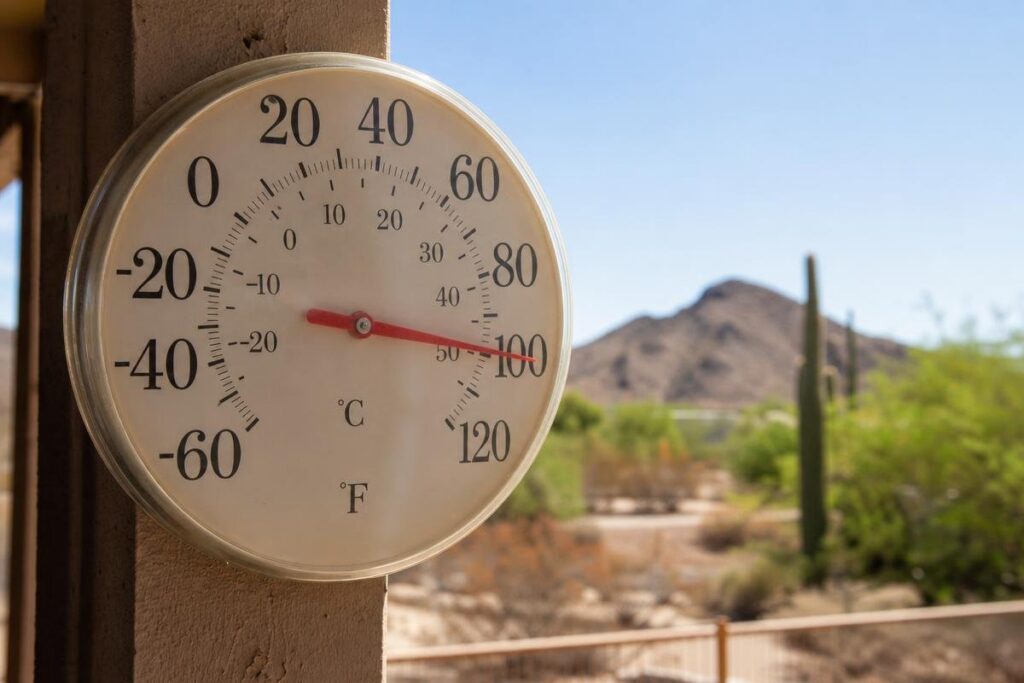
Is your summer bill hitting $300, $400, even $500 a month? You are not alone. Homeowners across the Valley see this every year, and it is not because you are doing something wrong. Desert summers simply push cooling equipment to its limit from May through September.
The good news is there are real things you can do about it. Some cost nothing. Others are one-time upgrades that pay you back for years. We have put together 9 practical, Phoenix-specific tips that actually move the needle on your energy costs.
This list covers everything from zero-cost habit changes to equipment upgrades like smart thermostat installation that can cut your cooling costs significantly. Scan the tips, pick what fits your situation, and start saving.
Tip 1: Get Your AC Tuned Up Before the Heat Peaks
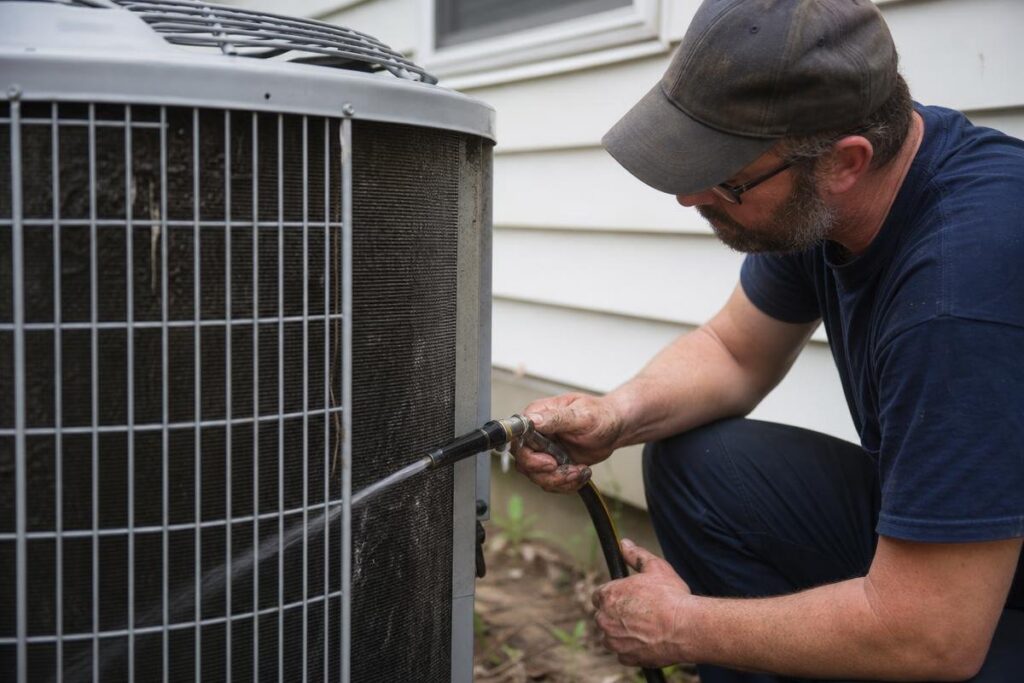
Yes, a tune-up makes a real, measurable difference on your bill. A dirty condenser coil, low refrigerant, or a clogged filter forces your AC to run longer to hit the same temperature. That extra runtime is costly when your system is already grinding through 12-plus hours a day of a Chandler or Goodyear summer.
What a Tune-Up Actually Does for Efficiency
A professional tune-up is not just a filter swap. Our technicians clean the condenser coil, check refrigerant levels, inspect electrical connections, and confirm the system is running at its rated efficiency. Based on typical Phoenix summer bills of $300 to $400, a system operating at 85 percent efficiency instead of 100 percent can quietly add $40 to $80 to a single month’s bill. That is real money, and it is money most homeowners do not realize they are losing.
Here is what a standard tune-up covers:
- Condenser coil cleaning to restore heat transfer
- Refrigerant level check and leak inspection
- Electrical connection inspection and tightening
- Air filter replacement or cleaning
- Blower motor and capacitor check
- Overall efficiency verification against manufacturer specs
Booking professional AC maintenance in Phoenix before summer arrives is one of the highest-return moves you can make for your energy bill. Our ROC-licensed technicians have been performing these tune-ups across the Valley since 2011.
When to Schedule It in Phoenix
The ideal window for homeowners in Avondale, Gilbert, and across the Valley is March through April. Temperatures are still manageable, and our team has open availability. By June, every HVAC company in the metro area is fully booked with emergency calls.
If you missed the spring window, do not wait until fall. We offer same-day availability for homeowners who need help once summer has already arrived. Getting your system running efficiently mid-summer still cuts your bill for the remaining hot months ahead.
Book your AC tune-up before the summer rush and start saving now.
Tip 2: Install a Smart Thermostat and Program It for Phoenix Summers
Set your smart thermostat to 78°F when you’re home and 85°F when you’re away. Those are the DOE-recommended settings for Phoenix summers, and programming it correctly for our climate matters far more than the generic defaults that come out of the box.
The Right Temperature Schedule for a Phoenix Home
Here is what actually works in the Valley. Set your thermostat to 78-80°F when you are home and active. Bump it up to 85°F when the house is empty during the day. Then here is the insider tip most national guides miss: start pre-cooling around 2:30 p.m.
Why 2:30? APS and SRP time-of-use plans typically kick into peak pricing around 3 p.m. If you let your AC ramp down to your comfort temperature before that window opens, you ride out the most expensive hours without your system working overtime. That is a strategy built for Chandler, Goodyear, and Gilbert homeowners, not somewhere with mild summers.
Many Nest and Ecobee models connect directly to APS and SRP demand-response programs. That means your utility can automate the schedule for you and may even put bill credits back in your pocket. Our team can help you set that up when we handle your smart thermostat installation in Phoenix.
How Much a Smart Thermostat Can Save
The EPA ENERGY STAR program estimates a properly programmed thermostat saves about 8 percent on heating and cooling costs annually. Run that math on a typical Valley summer bill, which often runs around $400 a month, and you are looking at roughly $32 back each month. Over a three-month peak season, that is close to $100 saved. Most smart thermostats pay for themselves in a single summer.
Tips 3 and 4: Seal Air Leaks and Fix Leaky Ductwork
Where Phoenix Homes Lose the Most Conditioned Air
Your AC could be running perfectly and you’d still waste money if conditioned air is slipping out before it reaches you. In the desert heat, dried-out weatherstripping and cracked caulk are far more common than in humid climates. The heat simply bakes those materials faster.
The biggest culprits in Ahwatukee and Maryvale homes built in the 1980s and 1990s are usually these four spots:
- Uninsulated attic hatch covers
- Recessed light fixtures that open directly into the attic
- Gaps around plumbing and electrical penetrations
- Dried, cracked weatherstripping on exterior doors
Here is a free DIY test you can do today. Light an incense stick and hold it near each of those spots on a windy afternoon. If the smoke drifts sideways, you have a leak. Sealing with caulk, foam backer rod, or weatherstripping tape costs under $30 at any hardware store.
The Hidden Cost of Leaky Air Ducts in the Attic
Duct leaks are a different problem, and a much more expensive one. The EPA estimates leaky ducts waste 20 to 30 percent of conditioned air in a typical home. Now factor in that Valley attics commonly hit 150 to 160 degrees in July and August. Every cubic foot of cool air that escapes into that heat is gone for good.
That is why leaky ducts hurt so much more here than they do in cooler cities. If you notice hot spots in certain rooms or your bills keep climbing despite a healthy AC system, check out 5 signs your Phoenix home has leaky air ducts wasting cooling to see if your ductwork is the real culprit. Our team can inspect and seal ducts professionally, which is the only real fix for ductwork running through an unconditioned attic.
Sealing air leaks yourself is a great start. Fixing ductwork usually needs a pro. Not sure how much cool air your ducts are losing? Let our team take a look.
Tips 5 and 6: Switch to LED Lighting and Unplug Phantom Loads
LED Bulbs in Phoenix: Savings on Lighting AND Cooling
Most homeowners think of LED bulbs as a lighting upgrade. In the Valley, they’re also a cooling upgrade. Incandescent and halogen bulbs release about 90 percent of their energy as heat. When it’s 115°F outside and your AC is already running most of the day, every bulb inside your home adds to the heat load your system has to fight.
LEDs use 75 percent less energy than incandescent bulbs. Swap out 20 bulbs and you’re cutting both your lighting bill and the heat your AC has to remove. That’s a double benefit you won’t get in Flagstaff. If you’re ready to upgrade, our team can handle lighting installation in Phoenix the right way.
Which Electronics Are Draining Power When You Think They’re Off
Phantom loads are real. Electronics that stay plugged in keep drawing power even when you’re not using them. In Goodyear, Laveen, and Avondale homes, this silent drain quietly inflates your bill.
Phantom loads typically account for 5 to 10 percent of your home’s electricity use. On a $400 summer bill, that’s $20 to $40 every single month going nowhere.
The biggest offenders in most homes are:
- Cable and satellite boxes running 15 to 30 watts around the clock
- Gaming consoles left in standby mode
- Older desktop computers and monitors
- Phone chargers left plugged into the wall
- Garage refrigerators
That last one is a local insider tip. A standard fridge sitting in a 120°F Buckeye or Glendale garage in August can consume two to three times its rated energy. That one appliance can add $20 to $40 per month on its own. Plug your garage fridge into a smart power strip or unplug it entirely when it’s not stocked.
Want to stop paying for electricity you’re not even using? Our team can help. Call us at (480) 525-5400 to schedule a visit.
Tips 7 and 8: Run Appliances at Night and Fix Water Heater Inefficiency
Shifting Laundry, Dishes, and Pool Pumps to Off-Peak Hours
If you’re on an APS or SRP time-of-use plan, the electricity you buy during the afternoon and evening peak window costs significantly more per kilowatt-hour than what you buy at night. Running high-draw appliances during those hours is one of the easiest ways to inflate your bill without realizing it.
The fix costs you nothing. Just shift when you run things:
- Use your dishwasher’s delay-start feature and run it at 9 or 10 p.m.
- Do laundry in the morning or after 8 p.m.
- Program your pool pump timer to run midnight to 6 a.m. Pool pumps are a heavy draw, and this one change alone can move the needle for Goodyear and Buckeye homeowners with larger lots.
Same electricity. Same clean dishes. Lower rate. That’s the whole idea.
How an Inefficient Water Heater Adds to Your Electric Bill
Your water heater is typically the second-largest energy consumer in your home after the AC. Most homeowners in Avondale and Laveen never think about it until it fails. But an aging tank unit with sediment buildup has to work harder to heat every gallon, and it runs constantly to maintain that stored temperature around the clock.
In our year-round heat, there’s no cool season to offset that standby loss. A tank water heater wastes energy every single day, summer and winter. A tankless unit heats water only when you need it, eliminating that ongoing drain entirely. If you’re weighing your options, check out our breakdown of gas vs. electric tankless water heater options for Phoenix homes before you decide.
Not ready to replace it? At minimum, flush your tank once a year to clear sediment. It’s a small step that helps your unit run more efficiently right now.
Tip 9: A Mini-Split Can Help You Lower Your Electric Bill in Stubborn Rooms
Why Certain Rooms in Phoenix Homes Stay Hot All Summer
Do you have one room that stays miserable no matter how low you set the thermostat? You are not imagining it. West-facing bedrooms, rooms above garages, casitas, and garage conversions are the most common hot spots in Valley homes.
Two things usually cause this. First, those rooms absorb brutal afternoon sun from the west and have minimal insulation. Second, the duct runs serving them are often too long or undersized. In the Goodyear and Laveen areas, we see this constantly in homes with garage conversions and added-on casitas. The ductwork was never designed to reach those spaces properly.
Your central AC works harder trying to satisfy a thermostat that never quite gets there. That extra runtime shows up directly on your bill.
How a Mini-Split Can Cut Whole-Home AC Runtime
A ductless mini-split cools a problem room independently, without adding load to your central system. When the hot room is handled on its own, you can raise the central thermostat one or two degrees. That small shift reduces your whole-home AC runtime and helps you lower your electric bill overall.
This is especially practical for home offices, workshops, and casitas common across the Buckeye and Avondale areas. You condition only the space you are using, not the whole house.
If you are tired of fighting one stubborn room all summer, ask our team about mini-split installation in Phoenix. It is one of the smarter ways to lower your electric bill without overcooling the rest of your home.
Frequently Asked Questions
What is a normal Phoenix summer electric bill?
For most Valley homeowners, summer bills run between $200 and $500 per month. A 2,000 square foot home with a well-maintained AC and a programmed thermostat typically lands between $200 and $300. Aging systems or thermostats set below 75°F around the clock can push that past $400 fast.
What uses the most electricity in my home during summer?
Your AC accounts for roughly 50 to 70 percent of your summer electricity bill here in the Valley. That is well above the national average of about 40 percent. After AC, electric water heaters and pool pumps are the next biggest consumers. Lighting, appliances, and electronics make up the rest.
Is it really cheaper to let my house heat up during the day in Phoenix?
Yes, and this is one of the most common myths we hear. Letting your home warm while you are away and pre-cooling before you return uses less total energy than holding a constant cool temperature all day. Your AC works hardest to maintain a low setpoint during peak heat hours. A smart thermostat automates that ramp so you never have to think about it.
How much can a smart thermostat actually save me?
The EPA estimates about 8 percent in annual heating and cooling savings with a properly programmed thermostat. In the Greater Phoenix area, that translates to roughly $25 to $40 per month during peak summer. APS and SRP demand-response programs can add bill credits on top of that, especially if your thermostat integrates with their systems.
How do I know if my AC is causing my bill to spike?
Compare your bills month-over-month and year-over-year. If your bill is climbing but your habits have not changed, the AC system is usually the culprit. Watch for warning signs like constant runtime without reaching your setpoint, unusual sounds, or warm air from vents. Our blog covers the signs your AC needs repair in Phoenix before it turns into a bigger problem.
Can an electrical inspection actually find energy waste?
Absolutely. An electrical safety inspection in Phoenix can uncover overloaded circuits, outdated wiring, and inefficient panels that quietly drive up your bill every month. These issues also create real safety risks. It is a smart step if your home is more than 20 years old.
How do I schedule service with your team?
Ready to stop overpaying on your summer electric bill? Penguin Air, Plumbing & Electrical serves Valley homeowners with same-day AC tune-ups, smart thermostat installation, duct inspections, and electrical safety checks. Call us at (480) 525-5400. Our office is at 3710 East University Dr Suite 1, Phoenix, AZ 85034, and our background-checked technicians can often be there the same day you reach out.
Ready to Get Started with Penguin Air, Plumbing & Electrical?
Call (480) 525-5400 to speak with our team directly. We’re ready to answer your questions, walk you through your options, and help you find the right solution for your needs. Whether you’re just starting to plan or ready to move forward, we’ll make the process simple and stress-free.
Reach out today and let’s talk about how we can help.