
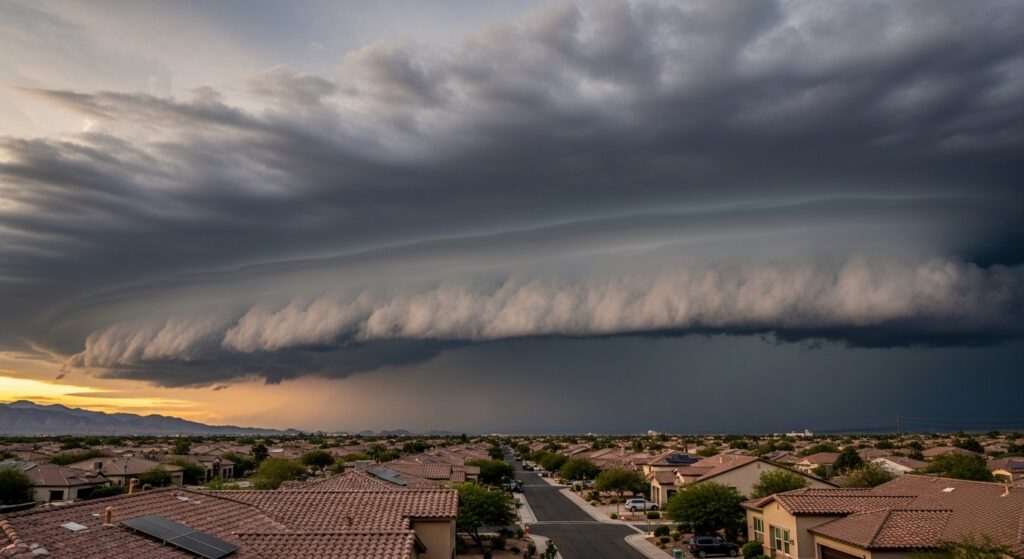
Monsoon season in Phoenix hits hard and fast, usually rolling in mid-June and sticking around through September. One afternoon you’re baking in 110-degree heat, the next you’re watching a wall of dust swallow the Valley followed by a flash flood down your street. Getting your home ready before the first storm saves you from emergency repairs, water damage, and power headaches later. Penguin Air, Plumbing & Electrical has been helping Phoenix Valley homeowners storm-proof their homes since 2011, and we’ve seen what monsoon damage looks like when folks wait too long.
Beat the next storm. Schedule your monsoon-ready home check online.
Key Takeaways
- Monsoon season in Phoenix runs June 15 through September 30, bringing high winds, dust storms, lightning, and flash flooding.
- Have your AC, roof, and drainage checked before the first storm to avoid costly emergency repairs.
- Surge protectors and a backup plan for power outages protect your electronics and keep your family safe.
- Clear gutters, trim trees, and secure outdoor items so wind gusts don’t turn them into projectiles.
Monsoon season in the Valley runs from June 15 through September 30. That window brings four big threats to your home: haboobs (massive dust storms), flash flooding, lightning strikes, and high winds that can hit 60+ mph. Phoenix monsoon season dates are set by the National Weather Service, and every Valley homeowner needs a plan before the first storm rolls in.
This guide walks you through HVAC prep, plumbing checks, electrical safeguards, and what to inspect after each storm clears. We’ve handled monsoon damage calls across the Valley since 2011 at Penguin Air, Plumbing & Electrical, so the tips below come straight from real service calls in Scottsdale, Mesa, Chandler, and Glendale.
What Is Monsoon Season in Phoenix and Why Does It Matter for Your Home?
Monsoon season is the stretch from June 15 through September 30 when shifting winds pull tropical moisture into Arizona, triggering thunderstorms, dust walls, and flash flooding across the Valley. The National Weather Service sets these Phoenix monsoon season dates every year, with peak storm activity clustering late July into mid-August. For homeowners, it matters because this short window delivers more than half of the Valley’s annual rainfall, and our desert ground is not built to absorb it.
Caliche soil sits just under the surface in most Greater Phoenix yards. It acts almost like concrete, so water runs sideways instead of soaking down. That’s why a 30-minute storm can flood a yard, a patio slab, or a low garage entry in neighborhoods from Glendale to Chandler.
When Does Monsoon Season Start and End in Arizona?
Officially, June 15 to September 30. From a meteorology perspective, the season begins June 15 and continues through September 30 regardless of when the first storm actually hits. Some years the first real downburst doesn’t roll in until early July.
Peak activity usually lands between July 15 and August 20. That’s when most monsoon storm damage in the Valley happens, AC units take lightning hits, and emergency calls spike for our team.
What Kinds of Storms Hit Phoenix Valley Neighborhoods?
Three main threats show up every summer:
- Haboobs. Massive dust walls that can top 5,000 feet. West Valley areas like Laveen, Buckeye, and Goodyear sit right in the corridor and see the worst of it. Dust clogs condenser coils and air filters fast.
- Flash flooding. Storms can drop 1 to 2 inches of rain per hour. With caliche underneath and hardscape on top, central Valley streets, washes near Tempe, and low spots in Mesa flood in minutes.
- Lightning and high winds. Microbursts hit 60-80 mph regularly. They snap branches into roofs, knock out power, and send surges through your electrical panel.
If you live in a flood-prone pocket, near a wash, or in a haboob corridor, your prep list looks different from someone in a newer master-planned community on higher ground. We see this every year working homes from Scottsdale to Avondale, and the damage patterns are predictable once you know what’s coming. The next section covers exactly what to check before the first storm hits.
7 Ways to Get Your AC and HVAC System Ready Before Monsoon Hits
Monsoon punishes your AC in three ways. Blowing dust packs into your condenser fins like insulation, forcing the compressor to work harder. Lightning surges fry circuit boards. And the sudden jump from dry heat to humid heat overworks a system that’s already been running flat-out since April.
Here’s your Arizona monsoon home checklist for the AC side of things.
- Clear 2 feet around your outdoor condenser. Pull weeds, trim shrubs, and move pots. Airflow is everything.
- Rinse the condenser coils before June 15. Use a garden hose on low pressure, top-down. Never a pressure washer.
- Swap your air filter every 2-4 weeks during peak dust. Standard 90-day filters can’t keep up with haboob season in the Valley.
- Test your thermostat. Run a full cooling cycle and confirm the temperature drops within 15 minutes.
- Inspect refrigerant line insulation. That black foam on the copper line cracks from UV exposure. Cracked insulation kills efficiency.
- Clear the AC drain pan and condensate line. Most Valley homeowners never touch this because we run dry most of the year. Monsoon humidity changes that fast.
- Book a pre-monsoon tune-up. Catches weak capacitors and worn contactors before lightning season finds them first.
Clear Debris From Your Outdoor Condenser Unit
Walk out to your condenser right now. Look at the fins. If you can see dust caked between them, your system is already losing efficiency.
Haboob dust is fine particulate. It wedges deep into the aluminum fins and acts as a heat blanket, trapping warmth inside the coil. Your compressor then runs longer cycles to hit the same temperature. That’s higher bills and shorter equipment life.
Shut off power at the disconnect box. Rinse from the inside out with a gentle hose stream. If your system is already struggling, check out our guide on signs you need AC repair in Phoenix before it breaks down.
Check Your Air Filter and Indoor Air Quality Before Dust Season Peaks
You should change your filter every 2 to 4 weeks during monsoon. Not every 90 days like the package says.
Here’s why. Valley dust combined with sudden monsoon humidity creates mold spore spikes inside your ductwork. A loaded filter stops trapping particles and starts dumping them back into your living room. If anyone in the home has allergies or asthma, this is when symptoms get ugly.
Pull your filter out. Hold it up to a light. If you can’t see through it, replace it today.
Schedule an AC Inspection if You Haven’t Already This Year
Yes, you really need a pre-monsoon tune-up. Your AC has been running since March in the Valley. Monsoon adds humidity, dust, and lightning surges on top of that workload.
Our team does this work daily during May and early June. Background-checked technicians, flat-rate pricing so there are no surprises, and same-day availability for most appointments. We’ll check refrigerant pressures, clean the coils, test the capacitor, flush the condensate line, and confirm your surge protection is intact.
Book before the first storm rolls in. Once lightning hits, our schedule fills overnight.
How to Monsoon-Proof Your Plumbing Before the Rains Arrive
Most homeowners don’t connect monsoon storms to their plumbing. They should. When 1 to 2 inches of rain dumps in under an hour, the Valley’s caliche and clay-heavy soil can’t absorb it fast enough. That pressure pushes back through floor drains, clean-outs, and sewer lines, turning a storm outside into a backup inside.
Phoenix monsoon prep means looking at your plumbing now, before saturated soil starts shifting under your slab foundation. Here’s what to check.
Inspect Your Drains and Clean Out Any Blockages Now
Test every drain in your home before the first storm. Pour a bucket of water down each floor drain in your garage, utility room, and patio. Listen and watch.
- Gurgling sounds mean trapped air from a partial clog deeper in the line
- Slow draining means buildup is already restricting flow
- Smells coming back up mean your trap is dry or your vent stack is blocked
A plunger won’t fix any of this. Roots, sediment, and years of grease need hydro jetting or professional drain clearing to fully clear the line. Knock that out before a storm forces the issue at 2 a.m.
Check for Existing Leaks Before Flash Flooding Adds Pressure
Slab leaks are the silent disaster of monsoon storm damage in Phoenix homes. When soil saturates and shifts under a slab foundation, a small existing leak becomes a major one fast. Here’s how to spot one before the rain finds it for you.
- Warm spots on tile or concrete floors (hot water line leaking under the slab)
- Your water bill jumped with no change in usage
- You hear running water when every fixture is off
- Cracks appearing in drywall or flooring near interior walls
If any of these sound familiar, get professional slab leak detection on the schedule now. Our team uses electronic listening equipment and thermal imaging to find leaks without tearing up your floors guessing.
Protect Your Water Heater and Outdoor Plumbing
Garage-mounted water heaters are standard in Valley housing stock, and they sit low to the ground. A few inches of standing water in the garage will wreck a gas unit’s burner assembly or short out an electric unit’s controls. If your heater sits directly on the slab, ask about elevating it on a code-approved stand.
Walk your exterior too. Check every hose bib, irrigation connection, and outdoor faucet. A small drip you’ve ignored for months becomes a real problem once soil shifts under saturation and pulls on the supply line.
To protect your home from monsoon damage in Arizona, our team handles these pre-storm checks all summer from our shop at 3710 East University Dr in Phoenix. We see the same preventable failures every year. Don’t make it onto that list.
Don’t wait for the first haboob to find out your AC can’t keep up or your drains are blocked. Schedule a pre-monsoon home check with Penguin Air, Plumbing & Electrical online. Same-day availability, flat-rate pricing, and background-checked technicians who know what Valley storms do to homes here.
Frequently Asked Questions
How Long Does It Take Penguin Air, Plumbing & Electrical to Complete a Pre-Monsoon Home Inspection?
A typical pre-monsoon inspection covering your HVAC, plumbing, and electrical systems usually takes between two and four hours depending on the size of your home and how accessible key components are. Penguin Air, Plumbing & Electrical technicians work efficiently to assess all major systems in a single visit when possible, reducing the need for multiple appointments before storm season arrives. Scheduling early in June gives you the best chance of getting same-week availability before demand spikes.
Does Homeowners Insurance Cover Monsoon Storm Damage in Phoenix?
Most standard homeowners insurance policies in Arizona cover wind and rain damage caused by monsoon storms, but flood damage from flash flooding is typically excluded and requires a separate flood insurance policy. It is worth reviewing your policy details before monsoon season starts so you know exactly what is and is not covered. Documenting the condition of your home with photos before the season begins can also strengthen any claim you need to file later.
Can Monsoon Dust Storms Damage My Electrical Panel or Wiring?
Haboobs and dust storms can force fine particulate matter into outdoor electrical components, junction boxes, and even unsealed panel enclosures, which can cause corrosion or create fire risks over time. Power surges from lightning strikes during monsoon storms are also a common cause of electrical panel damage in Phoenix Valley homes. Penguin Air, Plumbing & Electrical recommends having a licensed electrician inspect your panel and consider installing a whole-home surge protector before the season peaks.
Is It Safe to Run My AC During a Dust Storm?
Running your AC during a haboob is generally safe for you and your family, but it can accelerate clogging in your air filter and strain your system if the outdoor condenser is engulfed in thick dust. Many Phoenix homeowners switch their thermostat fan setting to “off” rather than “auto” during the worst part of a dust storm to limit how much particulate gets pulled through the system. After any major haboob, inspect your filter and condenser fins before returning to normal operation.
How Soon After a Monsoon Storm Should I Call a Plumber?
You should contact a plumber within 24 to 48 hours of a significant storm if you notice slow drains, standing water near your foundation, unexplained wet spots, or a sudden drop in water pressure. Waiting longer allows water to migrate further into walls and flooring, which can dramatically increase repair costs. Penguin Air, Plumbing & Electrical offers emergency plumbing services throughout the Phoenix area if you need same-day assistance after storm damage.
Do I Need a Permit to Install Monsoon Shutters or a Whole-Home Generator in Phoenix?
Phoenix requires building permits for permanent storm shutter installations and for standby generator hookups that connect directly to your home’s electrical system. Portable generators used outdoors do not typically require a permit, but improper connection to your home’s wiring without a transfer switch is both illegal and extremely dangerous. Penguin Air, Plumbing & Electrical can handle the permitting process and installation for generator systems so the work meets city code from the start.
What Is the Biggest Mistake Phoenix Homeowners Make When Preparing for Monsoon Season?
The most common mistake is waiting until the first storm has already hit to address maintenance issues, at which point appointment availability shrinks and storm-related stress makes decisions harder. Many homeowners also focus only on the exterior of their home and overlook interior vulnerabilities like aging water heaters, corroded pipe fittings, or outdated electrical panels that monsoon conditions can push to the breaking point. Starting your checklist in May or early June gives you enough lead time to book Penguin Air, Plumbing & Electrical for all three trades before the seasonal rush begins.
Call to Schedule Your Expert Repair Now!
Ready to book with Penguin Air, Plumbing & Electrical? Contact us today through our contact page to connect with our team directly.