

Heat pumps have become one of the most talked-about HVAC technologies in recent years, and for good reason. They offer efficient heating and cooling in a single system. But for homeowners in Greater Phoenix, the question isn’t just how heat pumps work, it’s whether they make sense in a desert climate where heating loads are modest and cooling demands are extreme.
At Penguin Air, Plumbing & Electrical, our licensed HVAC technicians help Phoenix-area homeowners evaluate their options every day. Here’s a complete guide to heat pumps, what they do, how they work in Arizona, and how they compare to traditional air conditioners.
What Is a Heat Pump?
A heat pump is an HVAC system that moves heat rather than generating it. In cooling mode, it works exactly like a standard air conditioner, it absorbs heat from inside your home and releases it outdoors. In heating mode, it reverses the process, extracting heat energy from outdoor air (even when it’s cold outside) and transferring it into your home.
This heat-transfer mechanism is far more energy-efficient than electric resistance heating, which simply converts electricity to heat. A heat pump can deliver two to four times more heating energy than the electrical energy it consumes, because it’s moving existing heat rather than creating new heat.
How Does a Heat Pump Work?
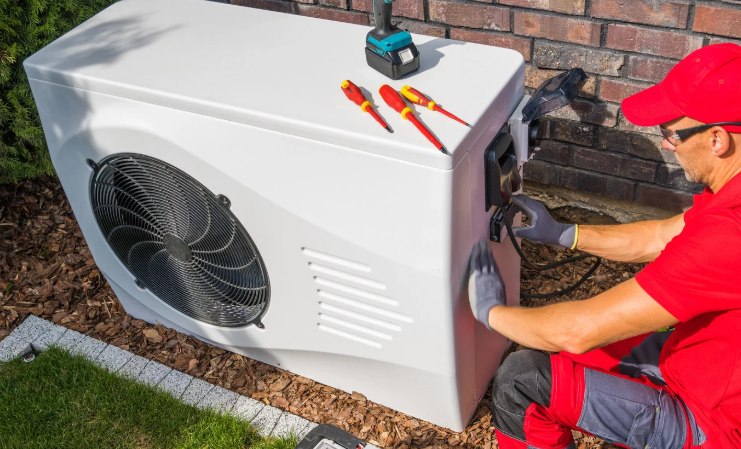
A heat pump system has four main components, a compressor, a condenser coil, an expansion valve, and an evaporator coil, plus refrigerant that circulates between them. Here’s how the cycle works:
- Cooling mode: The refrigerant absorbs heat from indoor air at the evaporator coil, travels to the outdoor unit where it releases that heat through the condenser coil, and returns inside to repeat the process. Identical to how a standard AC works.
- Heating mode: A reversing valve flips the direction of refrigerant flow. Now the outdoor coil acts as the evaporator, absorbing heat energy from outdoor air. The refrigerant carries that heat inside, where it’s released through the indoor coil to warm your home.
Modern heat pumps can extract usable heat from outdoor air even when temperatures drop below freezing, though efficiency decreases as outdoor temperatures fall. This is the key limitation in cold climates, but it’s less of a concern in Phoenix, where winter temperatures rarely approach freezing.
Heat Pump vs. Air Conditioner: What’s the Difference?
A standard central air conditioning system only cools, it doesn’t have a reversing valve or heating capability. To heat your home, you need a separate furnace or electric heat strips. A heat pump is essentially an air conditioner with a reversing valve that allows it to provide both cooling and heating from a single outdoor unit.
The practical differences for Phoenix homeowners:
- Equipment cost: Heat pumps typically cost more upfront than a standard AC unit of similar capacity, because of the additional reversing valve and heating capability.
- Operating cost in cooling mode: Essentially identical to a comparable air conditioner, heat pumps don’t offer efficiency advantages in cooling mode.
- Operating cost in heating mode: Heat pumps are significantly more efficient than electric resistance heat strips. If your current system uses heat strips for winter heating, switching to a heat pump can meaningfully reduce winter energy bills.
- Replacement of gas furnace: If your home has a gas furnace, a heat pump may not offer a cost advantage for heating given Arizona’s low natural gas prices relative to electricity.
Are Heat Pumps a Good Choice for Phoenix?
The answer depends on your current heating system. Heat pumps are an excellent choice for Phoenix homeowners who currently rely on electric heat strips for winter heating, the efficiency improvement is substantial. They’re also worth considering for all-electric homes where adding a gas furnace isn’t practical.
For homes with gas furnaces, the calculus is more complex. Gas is generally less expensive per BTU than electricity in Arizona, so replacing a gas furnace with a heat pump for heating purposes may not reduce operating costs meaningfully. In this case, a high-efficiency traditional AC paired with your existing gas furnace is often the more economical approach.
One important consideration for Arizona: heat pumps must work very hard during our summer months. Choosing a heat pump with a high SEER2 (Seasonal Energy Efficiency Ratio) rating is critical, as is ensuring the unit is properly sized for your home’s cooling load.
Mini-Split Heat Pumps
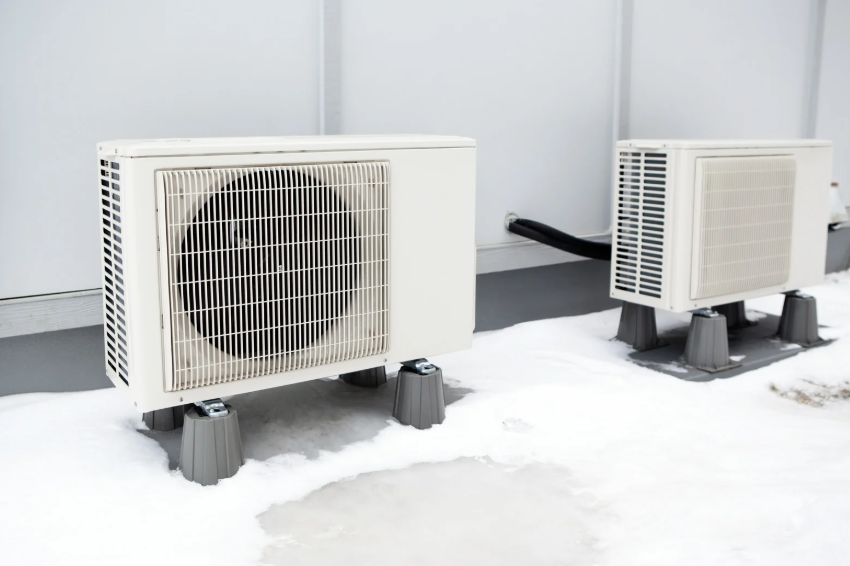
Mini-split (ductless) heat pumps are a growing option for Phoenix homeowners adding cooling to a room addition, garage, or space without existing ductwork. Our mini-split repair and installation team can assess whether a ductless system is a good fit for your home.
Mini-splits are highly efficient, offer individual room-by-room temperature control, and eliminate the energy losses associated with ductwork in hot attic spaces, a real advantage in the Phoenix summer.
Whether you’re considering a heat pump, a new AC system, or a mini-split, the team at Penguin Air, Plumbing & Electrical can help you evaluate your options and choose the right system for your home and budget. Call us at (480) 525-5400 to schedule a consultation.
Frequently Asked Questions
Do heat pumps work well in Phoenix heat?
Heat pumps work fine in Phoenix’s climate. Their cooling mode performance is equivalent to a standard air conditioner. The key is choosing a properly sized unit with a high SEER2 rating to handle Arizona’s long, hot summers efficiently. Our technicians can help you select a unit rated for high ambient temperatures.
Can a heat pump replace my air conditioner in Phoenix?
Yes. A heat pump provides both heating and cooling, so it can replace both your air conditioner and your electric heat strips in a single system. If you currently have a gas furnace, you’d need to evaluate whether replacing it with a heat pump makes financial sense given gas vs. electricity pricing in your area.
What maintenance does a heat pump need?
Heat pump maintenance is similar to standard AC maintenance: annual professional tune-ups, regular filter changes every 30-60 days, keeping the outdoor unit clear of debris, and occasional coil cleaning. Because a heat pump runs year-round (both heating and cooling), it typically requires more frequent attention than a system that only operates seasonally.
How long do heat pumps last in Arizona?
Heat pumps in the Phoenix area typically last 12-15 years with proper maintenance, though the intensive cooling season does accelerate wear. Systems that receive regular annual tune-ups consistently outlast those that don’t.
About Penguin Air, Plumbing & Electrical
Penguin Air, Plumbing & Electrical has been serving Greater Phoenix homeowners with trusted HVAC, plumbing, and electrical services since 2011. Founded by Wade Rusk and William Hallett, Penguin is locally owned and operated, available 24 hours a day, seven days a week. Our licensed, background-checked technicians serve Phoenix, Mesa, Scottsdale, Chandler, Gilbert, Tempe, Glendale, and communities throughout the Phoenix Valley.
Call Penguin Air at (480) 525-5400 to schedule service today.