
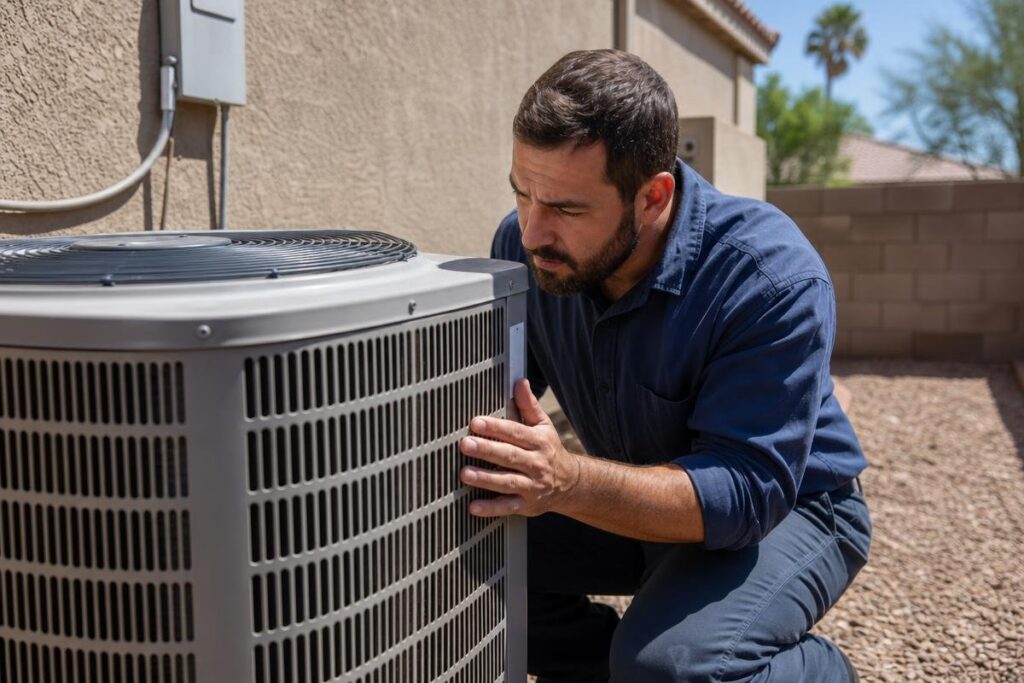
Your AC works harder here than almost anywhere else in the country. Because of Phoenix’s extreme run hours, the question of how often your AC should be serviced has a different answer here than it does in, say, Denver or Dallas. Our team at Penguin Air, Plumbing & Electrical has been servicing homes across metro Phoenix since 2011, and in that time we have kept tens of thousands of desert systems running through the worst of summer. The short answer: once a year is not enough here. Twice a year keeps your system running efficiently and helps you avoid breakdowns when summer temperatures push past 110 degrees.
Ready to get your AC on a maintenance schedule that actually fits Phoenix’s climate?
Key Takeaways
- Phoenix AC systems should be serviced twice a year, once in spring and once in fall, due to extreme run hours.
- Most AC systems nationwide need service once a year, but the desert climate changes that recommendation significantly.
- Monsoon season blows dust and debris into your outdoor condenser unit, making a fall tune-up especially important across the Greater Phoenix area.
- Skipping regular maintenance leads to higher electric bills, faster component wear, and mid-summer breakdowns when you need your AC most.
- A licensed technician checks capacitors, refrigerant levels, coils, and filters during a standard AC service visit.
Your AC runs almost every day from April through October in metro Phoenix. That is not an exaggeration, and it is why generic advice online saying “service your AC once a year” was not written with your home in mind. That kind of run time puts real stress on your system. Capacitors wear down faster. Compressor windings take a beating. Condenser coils get fouled by monsoon dust and desert debris in ways that homeowners in cooler states never deal with. A maintenance schedule built for Cleveland or Denver is not going to keep your system running reliably through a 115-degree summer afternoon.
That is exactly why we put this guide together. By the time you finish reading, you will know how often to schedule professional service for your air conditioner, what a tune-up actually covers, what you can handle yourself between visits, and which warning signs mean you should call sooner rather than later. Our AC maintenance checklist is a good companion resource if you want a printable reference alongside this guide.
The bottom line: standard national advice on how often AC should be serviced does not account for an air conditioner maintenance schedule built for Phoenix’s desert climate. Let’s fix that.
The Short Answer: How Often Should Your AC Be Serviced in Phoenix?
Schedule AC maintenance at least once a year, minimum. But if your system is older than seven years or runs year-round, twice a year is the right call in the desert.
The National Standard vs. the Phoenix Reality
Most national HVAC guidelines are built around systems that log 750 to 1,000 operating hours per year. That works fine in Denver or Chicago. Here in the desert, your AC runs roughly 3,300 hours annually, three to four times the national average. That is three to four times the wear on blower motors, capacitors, and condenser coils compared to a system in a moderate climate.
Annual-only maintenance made sense when your AC was a seasonal appliance. In Ahwatukee, Chandler, and every neighborhood in between, your system never really gets a break. One visit per year leaves a long gap where small problems compound into expensive failures. If you want to understand why AC tune-up matters and why each step matters at this run rate, that breakdown covers it in full.
Why Twice a Year Makes Sense Here
Two visits per year is not upselling. It reflects a documented difference in how hard desert systems work compared to the rest of the country. Here is the framework our team recommends:
- February or March: Your pre-summer cooling check. Technicians inspect refrigerant levels, test capacitors, clean condenser coils, and confirm the system is ready before triple-digit heat arrives. Capacitor failures spike in July because sustained 110-plus-degree ambient temperatures push these components past their rated operating temperature, so catching a weak capacitor in spring is far cheaper than replacing a failed one mid-heat wave.
- October or November: Your fall visit. This one doubles as a heating system check. Mild winters can still drop into the 30s in December and January, and a heat pump or furnace that has not been inspected will not be ready when you need it. This visit also clears the monsoon dust that has packed your condenser coils since June.
Monsoon season runs June through September and blows fine desert dust and debris directly into outdoor condenser units. That accelerates coil fouling well beyond what summer heat alone causes. A fouled coil can raise head pressure enough to trip the compressor’s thermal overload on the hottest afternoons, which is exactly the failure mode a fall cleaning prevents.
Your Phoenix AC Maintenance Calendar: Season by Season
Most homeowners only think about AC service when something breaks. That’s the wrong approach. A simple twice-a-year schedule keeps your system running efficiently, avoids emergency repair bills, and gives you peace of mind before the brutal summer heat arrives.
February to March: Pre-Summer Tune-Up
This is the most important appointment on your annual maintenance calendar. Book it in February or early March. Once temperatures climb into the 90s in April, our schedule fills up fast and parts lead times stretch out.
A spring tune-up catches the problems most likely to cause a breakdown on a 115-degree day: low refrigerant, failing capacitors, and dirty evaporator coils. Those are exactly the issues that leave Scottsdale and Tempe homeowners waiting days for a repair tech in peak summer. Pair your AC service with a broader home maintenance checklist to cover your plumbing and electrical systems at the same time.
October to November: Post-Summer Check
Your system just survived four to five months of near-constant operation through extreme heat. The fall visit addresses that wear directly. Technicians clean condenser coils fouled by monsoon dust, inspect refrigerant lines for stress damage, and check heating components before December arrives.
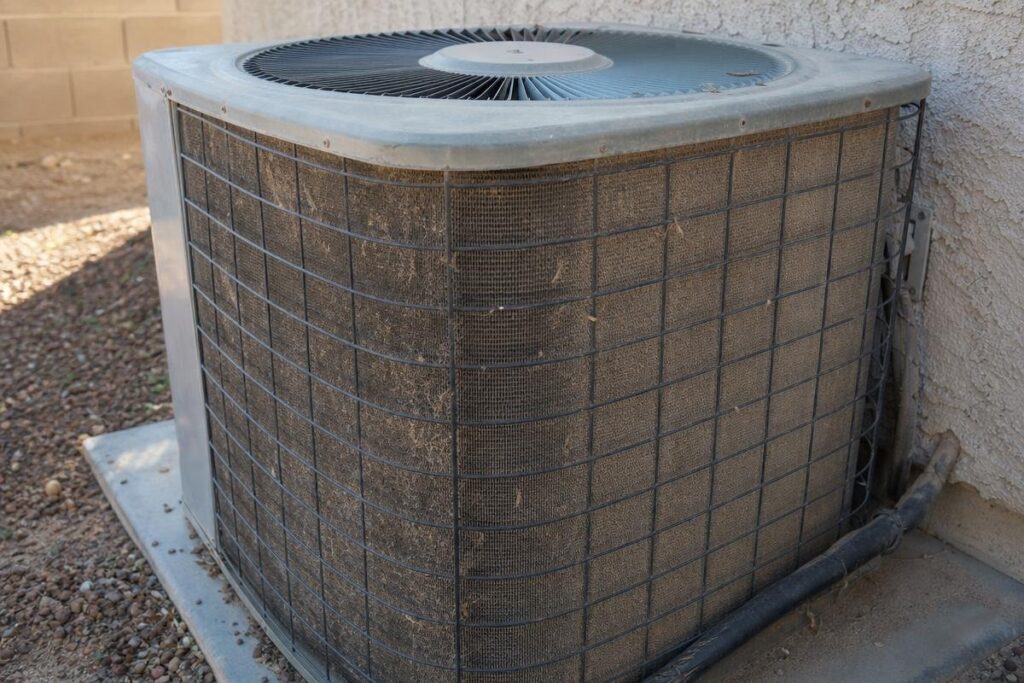
Monsoon season is the detail that makes this fall visit more important here than in almost any other climate. Storms from June through September push fine desert dust, pollen, and debris deep into outdoor condenser units, fouling coils faster than summer heat alone would. Skipping the fall visit means carrying that buildup into next year.
Want the wear of an extreme summer handled before winter sets in? Ask about our maintenance plan and see exactly what’s included in a tune-up visit.
Year-Round DIY Tasks
Professional visits are not a substitute for basic upkeep between appointments. These tasks take minutes and protect your investment:
- Replace 1-inch filters every 30 to 60 days. Surprise and Peoria homeowners deal with heavy dust loads that clog filters faster than the filter packaging suggests.
- Keep the outdoor condenser unit clear of debris, especially after monsoon storms.
- Check the condensate drain line monthly during summer. A clog causes water damage quickly.
- Listen for unusual sounds like rattling, grinding, or clicking and call for service if anything changes.
These steps supplement professional service. They do not replace it. For a full breakdown of what to check yourself versus what needs a licensed tech, see our blog on AC maintenance checklist.
What Does a Professional AC Tune-Up Actually Include?
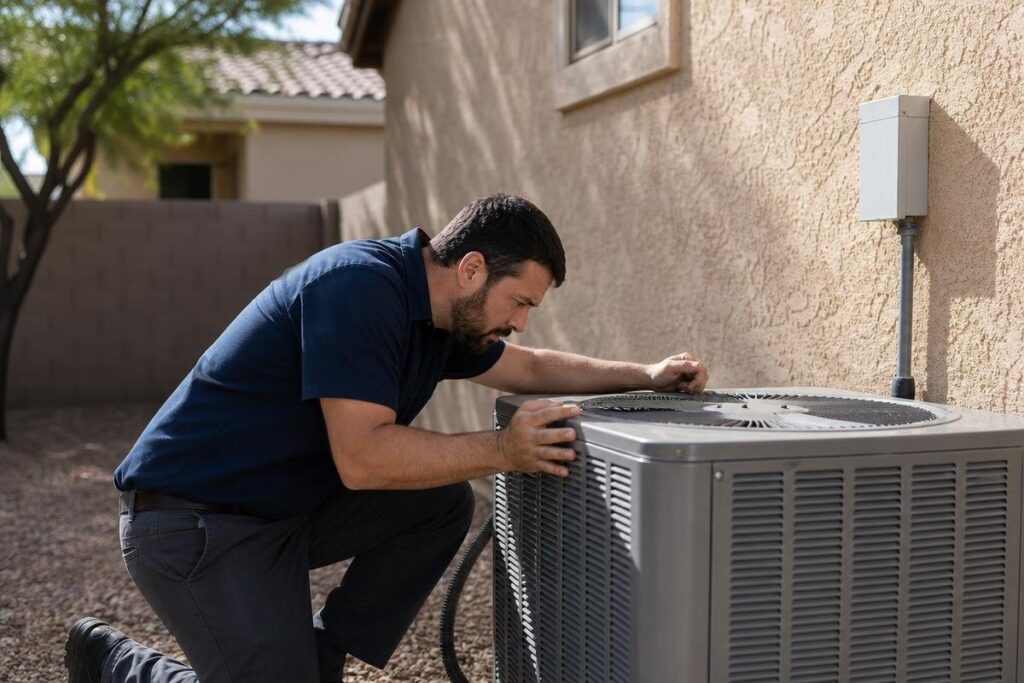
A lot of homeowners wonder what they’re actually paying for during a tune-up visit. It’s a fair question. Given the workload a desert system carries, a tune-up covers a lot more ground than a simple filter swap.
What Your Technician Checks and Why It Matters
Our technicians work through a full checklist on every visit. Each item has a specific reason it matters in the desert. You can also review our HVAC tune-up checklist and our AC maintenance checklist to see exactly what’s covered before your appointment.
- Refrigerant level check: Low refrigerant forces your compressor to work harder in 110-degree heat, shortening its life fast.
- Capacitor test: Capacitors fail more often here because sustained heat degrades them faster than in cooler climates. They’re one of the most common breakdown causes in Scottsdale and Surprise homes alike.
- Condenser coil cleaning: Monsoon season blows dust and debris into your outdoor unit. Fouled coils can cut efficiency by up to 30 percent.
- Evaporator coil inspection: Dirty evaporator coils cause your system to freeze up during heavy cooling loads, a complaint we hear often from homeowners in Ahwatukee and Gilbert.
- Blower motor and belt check: Worn components reduce airflow and make your system run longer to hit your set temperature.
- Condensate drain line flush: Algae and debris clog drain lines, causing water damage and humidity problems inside your home.
- Thermostat calibration: Even a small calibration error drives up your APS or SRP bill every month during summer.
- Electrical connection tightening: Heat causes connections to loosen over time, creating safety risks and efficiency losses.
Professional Service vs. DIY: What You Cannot Do Yourself
There are two things you can safely handle yourself: replacing your air filter regularly and keeping the area around your outdoor condenser clear of debris. That’s it.
Everything else on that list requires a licensed technician. Refrigerant handling requires EPA Section 608 certification. Testing capacitors and electrical components requires proper metering equipment. Cleaning condenser coils with the wrong product can permanently bend the aluminum fins and reduce airflow for the life of the unit. These aren’t tasks to guess at when temperatures outside hit 115 degrees.
What Happens If You Skip AC Maintenance in Phoenix?
Skipping a tune-up once might not feel like a big deal. But in a climate where your system runs nearly nonstop for months, small problems compound fast. Here is what actually happens when maintenance gets pushed off year after year.
Higher Energy Bills
A dirty or poorly tuned system works harder to move the same amount of cool air. Dirty condenser coils alone can cut efficiency by up to 30 percent. That shows up directly on your APS or SRP bill every single month.
During peak demand periods, an inefficient system does not just cost more to run. It strains harder under 110-plus-degree heat, accelerating wear on every component. If you want to lower your electric bill this summer, a tuned system is one of the most direct ways to do it.
Shorter System Lifespan
A well-maintained AC system in the Greater Phoenix area lasts 12 to 15 years. Skip regular service and that drops to 8 to 10 years. That is a five-year gap between a manageable maintenance budget and a full replacement bill.
Homeowners in Ahwatukee and Mesa face the same desert conditions, and early replacement hits just as hard regardless of zip code. Before you decide maintenance is optional, look at the cost of a new AC system in Phoenix and weigh that against a twice-yearly tune-up.
Breakdowns at the Worst Possible Time
System failures cluster in July and August, exactly when every HVAC company is slammed and wait times stretch out. A failing capacitor caught during a spring tune-up costs a fraction of what an emergency call runs in peak summer heat.
That is the real value of staying on schedule. Know the signs you need AC repair before your system quits on a 115-degree afternoon. Catching problems early is almost always cheaper and faster than reacting to a full breakdown.
Do not wait for a breakdown to find out what deferred maintenance costs. Call our team at (480) 525-5400 to schedule your next AC service visit before summer peaks.
Signs Your AC Needs Service Before Your Next Scheduled Visit
Your scheduled tune-up keeps your system on track, but sometimes your AC tells you it needs attention right now. Don’t wait if you notice any of these warning signs, especially during peak cooling season.
Performance Warning Signs
- Home not reaching set temperature. If your AC runs constantly but your home stays warm, something is wrong. A dirty coil, low refrigerant, or a failing compressor are common causes.
- Weak or uneven airflow. Some rooms cool fine while others stay stuffy. This often points to a clogged filter, blocked ducts, or a blower motor losing power.
- Unexplained electric bill spike. If your usage habits haven’t changed but your APS or SRP bill jumps, your system is working harder than it should.
- Short-cycling. Rapid on-off cycling is a red flag. In extreme heat, this often means a refrigerant leak or a failing capacitor that will get worse fast.
- Ice on refrigerant lines. Ice forming on your lines or indoor coil is a common complaint during heavy cooling loads. Learn more about the causes and fixes of AC freezing up and what causes it.
Sound and Smell Warning Signs
- Banging or clanking. A loose or broken internal component. Shut the system down and call for service.
- Squealing or grinding. Points to a failing blower motor. This won’t fix itself.
- Burning smell. Could be an electrical issue. Don’t ignore it.
- Musty odor. Mold or mildew in the evaporator coil or drain pan. Common after monsoon season in Scottsdale, Surprise, and nearby communities.
If you notice any of these signs, contact us online before your next scheduled visit. Catching a problem early costs far less than an emergency repair in the middle of a heat wave.
Why Phoenix’s Climate Demands More from Your AC System
If you moved here from Denver, Chicago, or anywhere with a mild summer, you probably noticed your electric bill doubled and your AC never seemed to stop running. That is not your imagination. A typical AC system in a moderate climate logs roughly 750 to 1,000 operating hours per year. In metro Phoenix, that same system accumulates approximately 3,300 hours annually, compressed into one relentless season.
Summer temperatures that regularly hit 110 to 115 degrees Fahrenheit place sustained thermal stress on compressors, capacitors, and refrigerant lines that moderate climates simply never produce. Components degrade faster. Refrigerant pressure spikes. Capacitors fail earlier than their rated lifespan. That is why our team recommends treating annual maintenance as a starting point, not a finish line.
Extreme Heat and Run Hours
Your AC system was not designed to run eight or nine months straight under triple-digit heat. The math is straightforward: more run hours equal faster component wear. A system in Scottsdale faces the same thermal load as one in Tempe or Sun City. The twice-a-year service recommendation applies across every zip code in the Greater Phoenix area for exactly this reason. One spring tune-up before peak heat and one fall check after the season wraps gives your system a real fighting chance to last its full lifespan.
Monsoon Season and Air Quality
The heat is only part of the story. Monsoon season, which runs from mid-summer through early fall, pushes massive amounts of dust, pollen, and debris straight into your outdoor condenser unit and through your return air vents. That accelerates coil fouling and filter clogging well beyond what heat alone causes. Clogged filters restrict airflow and force your system to work harder, a problem that compounds quickly. If you want to understand how monsoon debris affects what is happening inside your ducts, our guide on leaky air ducts and indoor air quality covers the connection in detail.
Plan to inspect and replace your filter more often during and right after monsoon season. Your fall tune-up should always include a thorough condenser coil cleaning to clear out whatever the storms left behind.
Frequently Asked Questions
How often should an AC be serviced in Phoenix, AZ?
Once a year is the minimum, but twice a year is smarter for older systems or units that run year-round. Our desert climate pushes AC systems far harder than most parts of the country, so annual-only service leaves a lot of wear unaddressed between visits.
What is the best time of year to schedule AC maintenance in Phoenix?
February or March is the sweet spot. You beat the spring booking rush, and if a part needs to be ordered, there is time to get it before the heat arrives. Our checklist on spring home maintenance covers what else to knock out at the same time.
How long does a professional AC tune-up take?
Plan for one to two hours for a single-system home. Homes with multiple units, or systems that need repairs, take longer. Our technician walks you through every finding before any additional work begins.
Can I service my own AC unit to save money?
Filter swaps, clearing debris around the condenser, and checking the condensate drain are all fair homeowner tasks. Refrigerant handling, electrical testing, and coil cleaning require professional equipment and EPA certification. Skipping those steps is where real damage starts.
How does regular AC maintenance affect my system’s lifespan?
Maintained systems typically last 12 to 15 years here in the desert. Skip service consistently and that drops to 8 to 10 years. Compressor and capacitor wear compounds fast under sustained 110-plus-degree heat.
Does Penguin Air, Plumbing & Electrical offer AC maintenance plans in Phoenix?
Yes. Call our team at (480) 525-5400 or contact us to ask about maintenance plan options. A spring tune-up booked now costs far less than an emergency call on a 115-degree afternoon. Our office is at 3710 E University Dr # 1, Phoenix, AZ 85034, and we serve homeowners across the Greater Phoenix area. Do not wait for a breakdown to find out your system needed attention months ago.
Ready to Get Started with Penguin Air, Plumbing & Electrical?
Call (480) 525-5400 to speak with our team directly. We’re ready to answer your questions, walk you through your options, and help you find the right solution for your needs. Whether you’re just starting to plan or ready to move forward, we’ll make the process simple and stress-free.
Reach out today and let’s talk about how we can help.